Street appeal starts before anyone reaches your front door. The right front yard landscape design ideas can make a home look more polished, more welcoming and far easier to maintain, especially in Melbourne conditions where weather, water use and sun exposure all matter.
A good front yard should do more than look nice from the road. It needs to suit the way you live, frame the house properly and hold up over time. That might mean a low-maintenance layout with artificial grass, a more structured garden with retaining walls and edging, or a practical mix of hardscaping and planting that keeps everything neat without feeling too rigid.
What makes front yard landscape design ideas work
The best designs usually balance four things – presentation, practicality, maintenance and proportion. A front yard can have beautiful plants and still feel awkward if the paths are too narrow, the garden beds overpower the facade or the materials clash with the house.
That is why design matters more than simply adding features. A smaller front yard might benefit from strong lines, layered planting and a defined entry path. A larger block often needs zoning so the space does not feel empty or unfinished. Corner sites, sloped blocks and newer estates all come with different requirements, and each one needs a layout that responds to the site rather than a one-size-fits-all approach.
1. Create a clear path to the entry
One of the simplest front yard landscape design ideas is also one of the most effective – make the route to the front door obvious and attractive. A well-designed path gives the yard structure and instantly improves how the whole space feels.
Concrete paths are a popular choice because they are durable, clean-looking and easy to maintain. Steppers can work well too, particularly in modern gardens, but they need enough spacing and stability to be practical. If the path is too narrow or visually lost within the garden, the front yard can feel unplanned even when the planting is strong.
The path should relate to the house style. Straight lines often suit contemporary homes, while soft curves can work better in more relaxed or cottage-inspired landscapes.
2. Use layered planting instead of scattered plants
A common mistake in front yards is planting individual shrubs or flowers with no real structure. It often ends up looking patchy and harder to maintain. Layered planting creates depth and gives the garden a more finished appearance.
This usually means placing taller plants toward fences or walls, medium-height shrubs through the middle and lower-growing border plants at the front. Groundcovers can soften edges and reduce bare soil, which helps with both presentation and weed control.
In Australian conditions, plant choice should also reflect sun, soil and water needs. A planting plan that looks great in winter but burns off in summer is not doing the job. Native and drought-tolerant selections are often a smart fit, but the right mix depends on the aspect of the site and how much upkeep you want to take on.
3. Add artificial grass for a cleaner, lower-maintenance finish
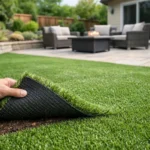
For homeowners who want the look of lawn without constant mowing, watering and patch repair, artificial grass is worth considering. In front yards, it works best when it is integrated into a full design rather than treated as a quick fix.
Artificial turf can be especially effective in smaller front yards, awkward side strips or spaces where natural turf struggles due to shade, poor soil or foot traffic. It keeps the space looking neat year-round and pairs well with garden edging, feature planting and paved walkways.
That said, it is not always the answer for every property. In large open front yards, a full artificial lawn can feel flat if there is no contrast. It usually works better when balanced with garden beds, trees or hardscape elements that add shape and interest.
4. Define the space with edging and borders
Good edging makes a surprising difference. It separates lawn from planting, gives garden beds a sharper outline and helps the whole front yard look intentional.
There are plenty of ways to do it, from concrete mow strips to stone borders and steel edging. The best option depends on the style of the home and the broader landscape palette. What matters most is consistency. Too many different materials in one front yard can make the design feel busy.
Defined borders also make ongoing maintenance easier. Grass stays where it should, mulch remains contained and the overall finish stays cleaner for longer.
5. Work with the slope, not against it
Many Melbourne properties have some level of fall in the front yard. Rather than trying to flatten everything, smart design works with that slope to create a stronger result.
Retaining walls can turn an awkward incline into a series of functional levels. That can create space for lawn, planting or a more practical path to the entry. It also improves drainage and helps prevent erosion in exposed areas.
The material choice matters here. Concrete sleepers, rendered walls, natural stone and block walls each create a different look. The right retaining solution should support the site structurally while still fitting the style of the home. This is one area where proper planning is essential, because the visual result depends heavily on the levels being designed correctly from the start.
6. Use feature planting with restraint
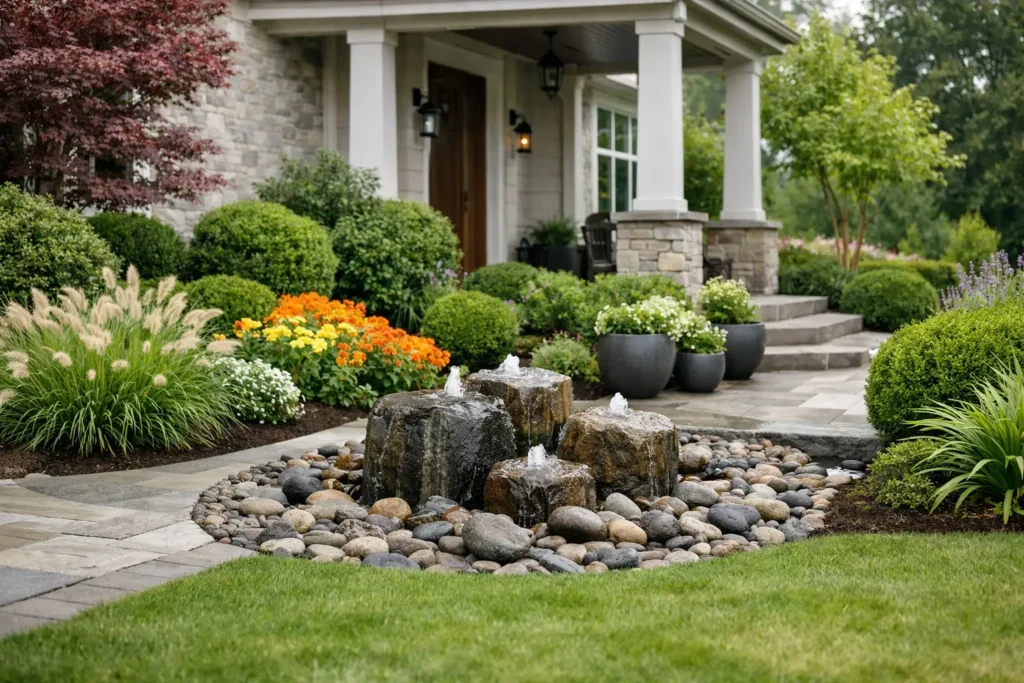
A feature tree or sculptural plant can anchor a front yard beautifully. It draws the eye, softens the architecture and creates a focal point that gives the design purpose.
The key is not overdoing it. One well-positioned feature usually has more impact than several competing statement plants. In smaller yards, oversized selections can quickly overwhelm windows, paths and facades. Root systems, leaf drop and future height all need to be considered before planting.
When chosen well, feature planting adds character without clutter. It can also help new builds feel more established far sooner.
7. Mix hardscaping with greenery
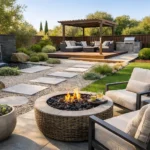
Some of the most effective front yard landscape design ideas rely on contrast. Hard surfaces such as concrete, pavers, stone and decking give the yard shape and usability, while planting softens those edges and keeps the space feeling welcoming.
This approach is particularly useful for homes that need a cleaner, more modern finish. A strong hardscape base can frame the front yard, improve access and reduce maintenance, while garden beds stop the space from looking too stark.
There is a balance to strike. Too much paving can make the front yard feel hot and lifeless. Too much planting without structure can look untidy. The most successful result usually comes from combining both in a deliberate way.
8. Make low maintenance part of the design
A front yard should suit your schedule, not create another weekend job. Low-maintenance landscaping does not mean plain or uninspired. It means using materials and planting choices that hold up well and do not demand constant attention.
Mulched garden beds, drip irrigation, hardy plant varieties and durable hardscape materials all help reduce ongoing work. So does simplifying the layout. A front yard with ten different surface changes and fiddly garden edges might look interesting on paper, but it often becomes harder to keep tidy.
For investment properties, commercial sites or busy households, practical design matters just as much as appearance. A polished front yard loses value quickly if it is difficult to maintain.
9. Frame the home instead of hiding it
Landscaping should complement the home, not cover it up. This is especially important at the front, where the garden and facade need to work together.
Windows, entry points, driveways and architectural lines should all be considered in the layout. Tall shrubs pushed tight against the house can make everything feel boxed in. On the other hand, gardens that sit too far away from the building can feel disconnected.
Good design frames the key features of the home and softens the less attractive ones. It can highlight a porch, improve the look of a plain facade or bring better balance to a wide frontage.
10. Think about the driveway as part of the design
The driveway often takes up a major portion of the front yard, yet it is sometimes treated as separate from the landscaping. In practice, it has a big impact on the look and function of the space.
A clean concrete driveway, smart edging and coordinated planting along the sides can lift the whole frontage. If there is enough room, a planting strip or border between the driveway and footpath can also soften the look of a large paved area.
This is another case where proportions matter. Narrow frontages need careful planning so the driveway, entry path and garden beds do not compete for space.
11. Design for the local conditions
Not every trend suits Melbourne homes. Front yards here need to cope with shifting temperatures, periods of dry weather and varying soil conditions across suburbs. A design that looks good in a display photo is not always the one that performs best on your block.
That is why materials, drainage, irrigation and plant selection should all be chosen with local conditions in mind. Sustainability matters, but so does durability. If a front yard looks great for six months and then starts failing, the design was never right in the first place.
At Australian Landscape Hub, this is where experience makes a real difference. A front yard is not just about selecting plants or laying turf. It is about bringing together levels, surfaces, structure and planting into one result that looks sharp and lasts.
Choosing the right front yard landscape design ideas for your property
The best design depends on your block, budget and goals. If street appeal is the priority, focus on layout, structure and a strong entry sequence. If maintenance is the concern, simplify the planting palette and consider more hardwearing materials. If the site has drainage or slope issues, those need to be addressed before cosmetic improvements.
It also helps to think long term. A front yard should still look right in a few years, not just straight after installation. Plants grow, materials weather and family needs change. A practical design allows for that from the beginning.
The strongest front yards are the ones that look effortless because everything has been considered properly. When the path sits naturally, the planting feels balanced and the materials suit the home, the result is hard to miss. If you are planning an upgrade, start with the layout first and let every other decision support it.