The front of your property makes its impression before anyone reaches the door. A tired lawn, cracked path, overgrown shrubs or bare garden bed can make an otherwise well-kept home or business look neglected. Knowing how to improve curb appeal is less about adding more features and more about creating a clean, welcoming entry that suits the building, the site and the way it is used.
For Melbourne properties, the strongest results come from practical landscaping choices that handle changing weather, look good across the seasons and do not create a high-maintenance burden. Start by viewing the property from the street, then work your way towards the entrance. This helps you see what visitors, buyers, tenants and customers see first.
Start With the Street View
Stand on the nature strip or across the road and look at the property as a whole. Is the entry obvious? Does the front garden frame the house or compete with it? Are hard surfaces clean and level? Small visual distractions add up quickly, particularly where the facade is simple or the block is compact.
The most effective front-yard upgrades usually improve three things at once: presentation, access and maintenance. A defined path makes the entrance easier to find. Fresh planting softens fences and building lines. A neat lawn or artificial grass area gives the property an immediate sense of care.
Before choosing plants or materials, make a list of what needs attention. This may include patchy turf, uneven paving, drainage issues, exposed soil, damaged edging, poor lighting or a letterbox that no longer suits the property. Addressing these fundamentals first prevents a cosmetic refresh from becoming a short-lived fix.
Create a Clear, Welcoming Entry
A front entry should lead people naturally from the footpath, driveway or car park to the door. If visitors have to step around garden beds, navigate loose gravel or guess which gate to use, the space is not working as hard as it should.
Paths need to be wide enough for comfortable access and built with a surface appropriate for the site. Concrete is a reliable choice for a clean, durable path, while pavers can add texture and character. On sloping blocks, careful levels, drainage and retaining may be needed to keep the route safe and prevent water from moving towards the building.
The path does not need to be elaborate. A simple, well-finished walkway with neat edges often has more impact than a complicated design with too many materials. Match the colour and finish to the home or commercial facade, driveway and existing outdoor features for a considered result.
Make the Front Door a Focal Point
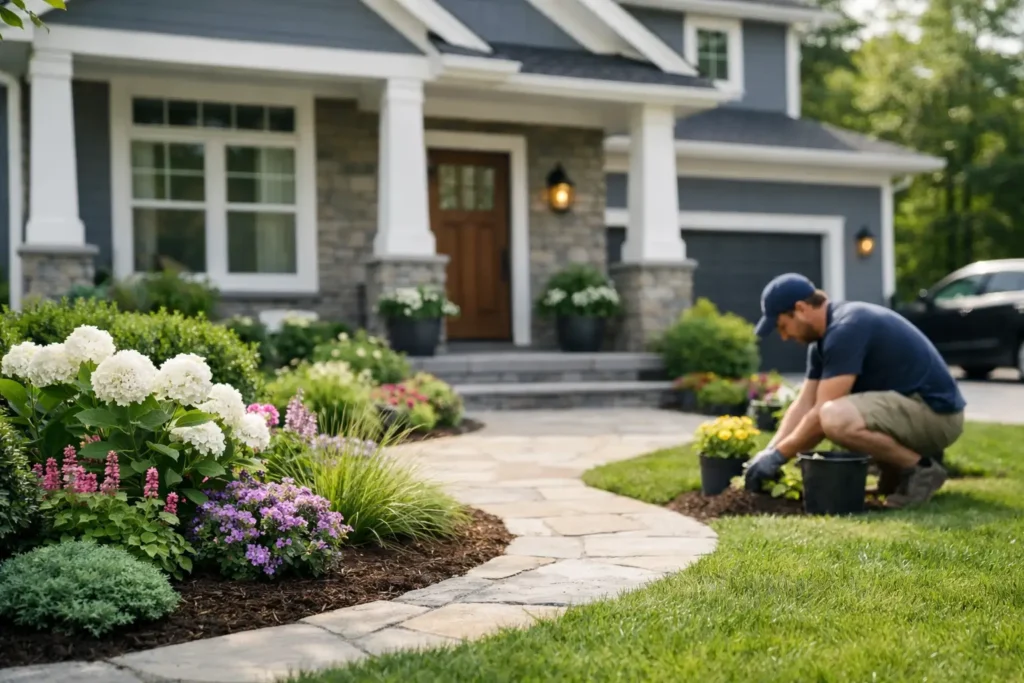
The entrance is where curb appeal becomes personal. Clean the door, replace dated hardware where needed and ensure house numbers are visible from the street. A well-positioned feature planter, compact garden bed or low planting on either side can make the doorway feel more inviting without crowding it.
For commercial and industrial sites, entry presentation also supports confidence in the business. Clearly marked access, tidy planting, functioning lights and clean hardscape areas show customers and contractors that the premises are cared for.
Improve Lawn, Edges and Garden Beds
A healthy green lawn remains one of the fastest ways to lift the appearance of a front yard. Natural turf works well where there is enough sunlight, suitable soil and a realistic plan for mowing, watering and seasonal care. It gives a softer feel underfoot and can help cool the area around the home.
Artificial grass can be the better option for shaded spaces, high-traffic areas or owners wanting a consistently neat look with less ongoing upkeep. Quality installation matters. The base must be properly prepared, drainage considered and edges secured so the surface remains smooth and durable over time.
Whichever option you choose, crisp edges are essential. Define the lawn against garden beds, paving and driveways with practical edging materials. It reduces soil spill, makes mowing easier and gives the landscape a finished appearance. A freshly edged lawn can make even a modest front yard look more intentional.
Garden beds should be full enough to look established, but not so crowded that plants fight for space or require constant pruning. Refresh bare areas with mulch to hold moisture, reduce weeds and give the soil a uniform, darker backdrop. Keep mulch clear of walls and trunks to reduce moisture-related problems.
Choose Plants for Melbourne Conditions
Plant selection is where many curb appeal projects either become easier or much harder to maintain. A plant may look excellent at the nursery, yet struggle if it is placed in the wrong soil, shade level or exposure. Consider full sun, afternoon heat, frost pockets, wind and the amount of watering available before making decisions.
Use a simple planting structure. Low groundcovers and small shrubs can define the front edge, medium-height plants add body through the middle, and a limited number of taller plants create height near fences or corners. Repeating a few plant varieties generally looks calmer and more professional than using one of everything.
Native and drought-tolerant plants can be a practical choice for Melbourne gardens, particularly when paired with efficient irrigation and mulch. That does not mean every garden needs to look native or informal. The right mix can support a contemporary, coastal, structured or classic landscape design while reducing water demand.
Avoid plants that will quickly outgrow the space, block windows, conceal house numbers or spill across paths. Mature size matters more than the size of the pot on installation day.
Use Hardscaping to Add Structure
Soft landscaping brings colour and movement, but hardscaping gives a property its framework. Driveways, retaining walls, decking, paving, steps and garden edging all influence how neat and valuable the front of a property feels.
If a driveway is stained, broken or poorly drained, replacing or resurfacing it may deliver more visible impact than adding extra plants. The same applies to leaning retaining walls, loose pavers and cracked concrete. These issues affect safety as well as appearance, so they should be assessed before decorative work begins.
Retaining walls are particularly useful on sloped Melbourne blocks. They can create level planting zones, improve usable space and prevent soil erosion. The material should suit the property and be built for the height, loads and drainage conditions involved. A retaining wall that looks good but lacks proper drainage will not stay that way.
Keep material choices restrained. Two or three complementary finishes, such as concrete, timber and natural stone tones, are usually enough to create depth without making the frontage look busy.
Add Lighting That Works After Dark
Curb appeal does not stop when the sun goes down. Well-placed exterior lighting improves safety, highlights the entry and makes a home or business feel occupied and welcoming at night.
Prioritise the practical areas first: the house number, path, steps, gate and doorway. Low-glare path lights, wall-mounted fittings and subtle uplighting can then add character to key trees, feature walls or planting. Avoid placing lights where they shine directly into windows, dazzle drivers or create harsh shadows.
Solar lights can suit small decorative applications, but wired low-voltage lighting is often more reliable for frequently used paths and commercial entries. The best choice depends on the desired effect, site access and how much consistent illumination is needed.
Keep the Frontage Maintained
A good landscape design makes maintenance simpler, but no front yard stays sharp without regular attention. Mow or tidy the lawn, prune plants before they obstruct access, remove weeds early and clear leaves from paths, drains and garden beds. Clean paved areas and driveway surfaces as needed, especially after wet weather.
For rental, commercial and industrial properties, planned maintenance is often the most cost-effective way to protect the initial investment. A frontage that is kept tidy throughout the year supports tenant appeal, customer confidence and property value far more effectively than occasional major clean-ups.
How to Improve Curb Appeal Without Overcapitalising
The right budget depends on the property’s purpose. If you are preparing a home for sale, focus on changes that photograph well and make the entrance feel cared for: lawn repair, mulch, pruning, a clean path, refreshed edging and a defined entry. These upgrades can create a significant visual lift without rebuilding the entire front yard.
If you plan to stay long term, it may be worth investing in drainage, irrigation, retaining, durable paving and a landscape layout that will mature well. These less visible foundations often determine whether a front garden remains attractive after several summers and winters.
For businesses, prioritise access, safety, visibility and low-maintenance planting. A polished frontage should strengthen the brand without disrupting operations or creating excessive upkeep for site staff.
A well-designed front landscape does more than improve the view from the road. It makes arriving home, welcoming clients or presenting a property for sale feel easier and more confident. When the work is planned around the site rather than a passing trend, the result continues to earn its place long after the first impression.