A great outdoor area can look sharp on day one and still become a headache two winters later if the wrong materials were chosen. That is why comparing the best hardscaping materials for outdoors is not just about appearance. It is about how each surface handles weather, drainage, foot traffic, maintenance, and the way you actually want to use the space.
For Melbourne properties, that balance matters even more. A courtyard that gets harsh summer sun, a driveway dealing with daily vehicle loads, or a commercial frontage that needs to stay presentable with minimal upkeep will all call for different hardscaping choices. The right material should suit the site, the budget, and the long-term performance you expect.
What makes the best hardscaping materials for outdoors?
The best material is rarely the fanciest or the most expensive. It is the one that fits the job properly. When we assess hardscaping materials, we look at durability first, then slip resistance, maintenance requirements, installation cost, drainage performance, and how well the finish suits the overall landscape design.
There is also a practical difference between residential and commercial use. A family backyard might prioritise comfort, visual warmth, and easy cleaning. A retail or industrial site usually needs tougher surfaces, simpler maintenance, and stronger load-bearing performance. That is why there is no single winner for every project.
Concrete
Concrete remains one of the most reliable outdoor materials because it is versatile, cost-effective, and long-lasting when installed correctly. It works well for driveways, paths, pool surrounds, patios, and service areas. It can also be finished in several ways, including plain, exposed aggregate, coloured, or textured finishes, which gives property owners more design flexibility than many people expect.
Its biggest advantage is strength. For high-traffic areas or spaces where vehicles are involved, concrete is often the practical choice. It is also relatively low maintenance compared with materials that shift, stain easily, or encourage weed growth between joints.
The trade-off is that concrete can crack if the base preparation is poor or if drainage is not handled properly. It can also feel visually hard if it is used everywhere without soft landscaping to balance it out. Good design makes the difference.
Concrete pavers
Pavers are popular for patios, courtyards, pathways, and entertaining areas because they give a cleaner, more modular finish. They are available in a wide range of sizes, colours, and textures, so it is easier to create a contemporary look or match an existing home style.
One of the biggest benefits of pavers is repairability. If a section becomes damaged or stained, individual units can often be replaced without removing the whole area. That makes them appealing for both homeowners and commercial sites that want a polished finish with practical long-term maintenance.
Pavers do need proper installation. If the base is rushed or edges are not secured, movement can occur over time. Weeds can also become an issue between joints if the area is not maintained. Still, when laid well, pavers offer an excellent balance of appearance and function.
Natural stone
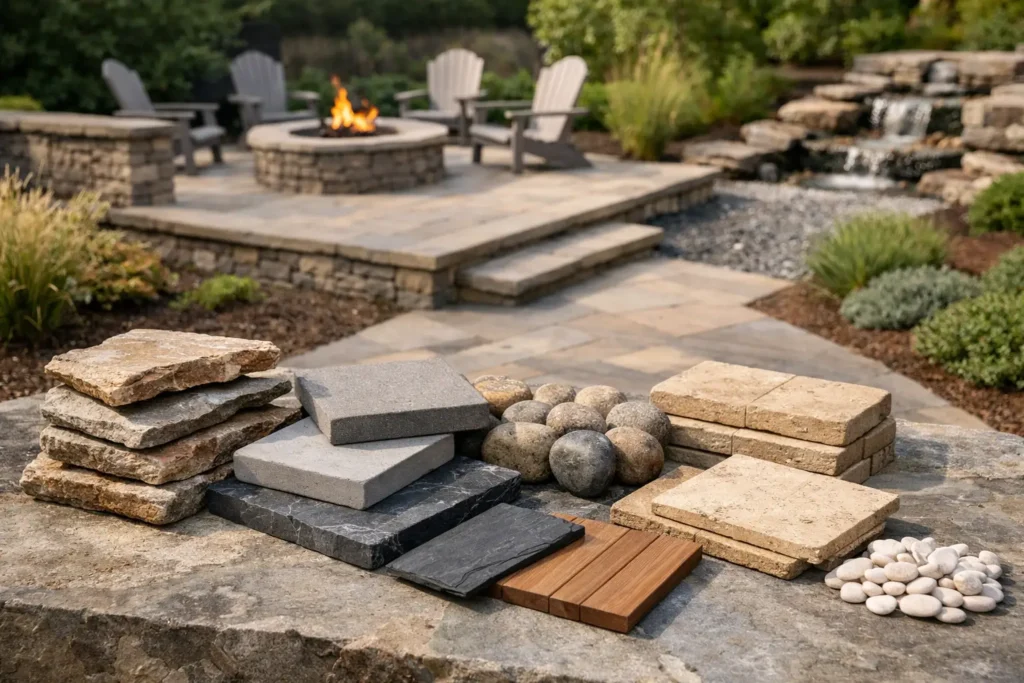
Natural stone brings a premium feel that few other materials can match. Bluestone, granite, travertine, and sandstone are all used in Australian landscapes, and each creates a different look. Stone is especially effective in feature pathways, alfresco spaces, pool surrounds, and front entries where presentation matters.
The appeal is obvious. It has character, texture, and variation that manufactured products usually try to imitate. It can lift the value and visual impact of a property quickly, especially when paired with thoughtful planting and lighting.
But stone is not always the cheapest or easiest option. Material costs are higher, installation requires experience, and some stone types need sealing or more regular care. Surface temperature and slip resistance can also vary, so the selection needs to suit the location. Around pools and wet areas, that detail matters.
Brick
Brick is a proven hardscaping material that still works extremely well in many outdoor settings. It suits older homes, traditional garden layouts, and projects where warmth and character are more important than a sleek modern finish. Brick can be used for pathways, edging, patios, and even small courtyards.
Its strength lies in its timeless appearance and decent durability. It also tends to age in a way many property owners like. Slight weathering can add charm rather than making the space feel worn out.
The downside is that brick may not suit every design style, particularly very contemporary landscapes. It can also shift over time if not installed correctly, and moss or weed growth may appear in shaded or damp areas. For the right property, though, brick remains a smart and dependable choice.
Exposed aggregate
Exposed aggregate is technically a concrete finish, but it deserves separate attention because it performs and looks quite different from plain concrete. It is made by revealing the decorative stones within the surface, creating more texture and visual interest.
This finish is especially popular for driveways, paths, and pool surrounds because it offers strong durability and generally better slip resistance than smoother surfaces. It also handles modern Australian home styles very well and can be customised with different stone blends and colours.
The main consideration is quality control during installation. A poor mix or rushed finishing work can affect consistency across the surface. It is not a material to cut corners on. When done properly, exposed aggregate gives a durable, professional finish that suits many outdoor applications.
Gravel
Gravel is one of the more affordable options and can work well for informal paths, side access, utility zones, and certain driveway applications. It is quick to install, drains well, and suits properties aiming for a more natural or relaxed landscape style.
From a budget point of view, gravel can be very attractive. It is also useful where permeability matters and where a rigid surface is not necessary. In larger rural or semi-rural properties, it often makes practical sense.
However, gravel is not ideal everywhere. It can migrate into garden beds or onto footpaths, it is less comfortable underfoot, and it may not suit households wanting a clean, low-fuss finish. For commercial settings or formal entertaining areas, it often lacks the stability and polish clients want.
Timber decking
Timber brings warmth that hard mineral surfaces cannot always achieve. For alfresco areas, pool surrounds, and raised outdoor living spaces, decking can create a more comfortable and inviting finish. It is particularly useful where the site has level changes that make paving or concrete less practical.
A good timber deck feels great underfoot and softens the overall landscape. It can also connect indoor and outdoor areas beautifully, which is a major advantage for homes designed around entertaining.
The trade-off is maintenance. Timber needs ongoing care to preserve its look and protect it from weathering, moisture, and movement. In some cases, composite decking is considered instead for lower maintenance, but that comes with a different appearance and cost profile. If you want natural character and are prepared for upkeep, timber can be an excellent investment.
Retaining wall materials
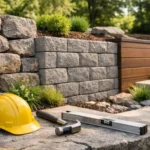
When outdoor spaces need structure as well as surface treatment, retaining wall materials become part of the hardscaping decision. Concrete sleepers, natural stone, brick, and concrete block systems each offer different strengths depending on the height, load, and style of the project.
For sloped sites, retaining walls do more than improve appearance. They create usable zones, manage soil pressure, and support drainage outcomes across the landscape. In practical terms, the wrong wall material or poor construction can lead to far bigger issues than an unattractive finish.
This is where expert planning matters. The best-looking wall is not always the best-performing one, especially on sites with drainage pressure or difficult access.
How to choose the right material for your property
Start with function before style. If the area needs to support cars, heavy foot traffic, or frequent commercial use, durability should lead the decision. If it is an entertaining space, comfort, heat retention, and visual appeal may matter more.
Then look at maintenance honestly. Some clients love the look of natural timber or stone but do not want the upkeep that comes with it. Others would rather invest more upfront in a surface that stays stable and easy to clean for years.
Site conditions should also guide the choice. Drainage, slope, sun exposure, surrounding architecture, and how the hardscape connects with turf, planting, and irrigation all affect performance. At Australian Landscape Hub, this is where experience helps most, because selecting materials in isolation often leads to expensive compromises later.
Best hardscaping materials for outdoors depend on the job
If you want a dependable all-rounder, concrete is hard to beat. If appearance is the priority, natural stone and pavers usually offer more design impact. If budget and drainage matter most, gravel may be enough. If you want warmth in an outdoor living zone, timber decking often makes the space feel more inviting.
The strongest outdoor results come from matching the material to the way the space will actually be used, not just the way you want it to look in a photo. A well-built hardscape should make daily life easier, improve the value of the property, and still perform properly years after the install. That is always the better investment.