A patchy lawn can drag down an otherwise well-kept property fast. In Sunbury, where hot summers, dry spells and heavy wear can all hit the same yard, more property owners are asking whether artificial grass Sunbury installations are actually worth the spend.
The short answer is yes – in the right space, for the right reason. But synthetic turf is not a one-size-fits-all fix. It performs brilliantly in some areas and makes less sense in others. If you are weighing up natural lawn against a low-maintenance alternative, the details matter.
Why artificial grass Sunbury appeals to local property owners
For many homes and commercial sites, the biggest drawcard is consistency. Natural turf can look excellent for part of the year, then struggle through heat, shade, pets, foot traffic or patchy irrigation. Artificial grass gives you a neat, green finish across all seasons without mowing, edging, fertilising or regular watering.
That matters in a place like Sunbury, where outdoor areas do a lot of work. Front yards need street appeal. Backyards need to handle kids, entertaining and pets. Commercial spaces need to stay tidy without constant upkeep. For busy homeowners and site managers, synthetic grass can reduce ongoing labour while keeping the property presentable.
There is also a practical budgeting angle. Natural lawns may seem cheaper at the start, but over time the costs add up through watering, lawn care products, equipment, repairs and maintenance visits. Artificial turf has a higher upfront cost, but it often delivers value over the long term if you want a cleaner, more predictable result.
Where synthetic turf works best
Artificial grass tends to perform best in spaces where real lawn struggles or where maintenance is a constant frustration. Small and medium backyards are a strong fit, especially when families want a tidy play area without muddy patches after rain. It also works well in narrow side access zones, shaded sections, unit courtyards, rooftop spaces and pool surrounds.
For commercial and industrial properties, synthetic turf is often used to improve presentation in high-visibility areas. Entryways, office frontages, display homes, childcare centres and shared outdoor zones can all benefit from a clean green finish that does not need regular mowing crews coming through.
That said, not every outdoor area should automatically be covered in artificial grass. Large open blocks may be more cost-effective with a mix of natural turf, mulch, planting and hardscaping. If a space gets intense direct heat all day and is used heavily barefoot in summer, material choice and installation method become especially important.
The main benefits – and the trade-offs
The biggest benefit is low maintenance. There is no mowing, no reseeding, no muddy bare spots and no need to constantly chase a greener lawn through changing weather. For rental properties and investment homes, that can remove a common pain point.
Durability is another major advantage. Quality synthetic turf, installed properly over a prepared base, can cope well with regular use. Kids can run on it, pets can use it, and foot traffic will not wear tracks into the middle the way natural grass often does.
Water savings also matter. While artificial turf is not maintenance-free, it does reduce dependence on irrigation. In Australian conditions, that can make a real difference to running costs and resource use over time.
Still, there are trade-offs. Artificial grass can get hotter than natural lawn in full sun, particularly during peak summer afternoons. It also needs proper drainage and base preparation. If corners are cut during installation, you can end up with sinking, wrinkling, pooling water or an obviously fake appearance.
There is also the question of feel and finish. Modern products look far better than older versions, but quality varies. A cheap turf product usually looks cheap. The blade shape, pile height, colour variation and density all affect whether the result feels realistic or overly plastic.
What makes a good artificial grass installation
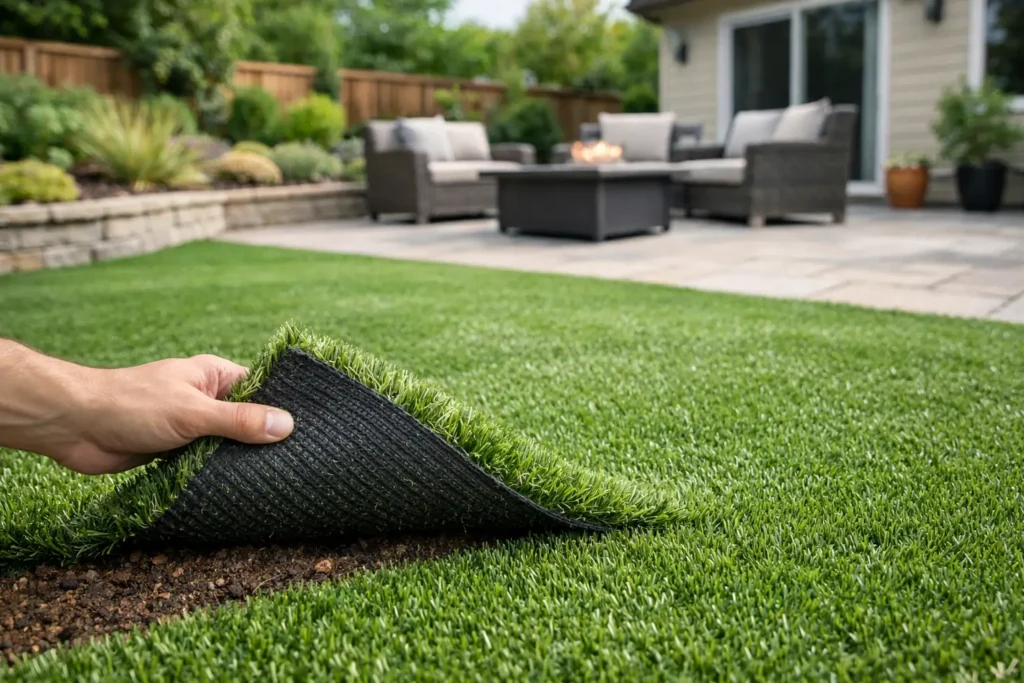
The turf itself matters, but the installation underneath matters just as much. A quality result starts with excavation and a stable compacted base. Without that, even premium turf can fail early.
Drainage is a key part of the job. Water needs to move through and away from the area properly, especially around pool zones, pet areas and high-use spaces. The edges also need to be secured neatly so the lawn stays in place and keeps a crisp outline against garden beds, paving or concrete.
The right underlay or shock pad may be worth considering in some settings, particularly where comfort or safety matters. Childcare spaces, play zones and some recreational areas can benefit from extra cushioning. For residential yards, it depends on how the space is used and what finish you want.
Professional planning also helps you avoid the common mistake of treating artificial turf as a standalone product. The best outdoor spaces are balanced. Synthetic grass often works best when paired with garden edging, stepping stones, drainage solutions, retaining walls, planting zones or decking. That creates a finished landscape rather than a green rectangle dropped into the yard.
How to tell if it is right for your property
If you are constantly spending time and money trying to keep a lawn alive, artificial grass is worth a serious look. It is especially practical if your site has poor soil, heavy shade, pet damage, drainage issues or limited access for ongoing maintenance.
It also makes sense when presentation matters every day. A business frontage or rental property does not always have the luxury of seasonal ups and downs. A reliable, tidy finish can be a better investment than chasing a natural lawn that never quite performs.
On the other hand, if you enjoy gardening, have good soil, proper irrigation and enough time to maintain turf, natural grass may still suit you better in some areas. Many of the best landscapes use both. A family backyard might combine synthetic grass in high-wear zones with planting beds and natural elements elsewhere. That kind of tailored approach usually gives a more practical and better-looking result than forcing one material into every corner.
Cost expectations for artificial grass in Sunbury
Cost depends on more than square metre rates. The size of the area matters, but so do access conditions, existing site levels, drainage requirements, edge details and the quality of the turf selected. A simple flat courtyard is very different from a sloped backyard with old concrete, poor drainage and awkward access.
This is why quotes can vary. One installer may price for the turf alone, while another includes excavation, waste removal, base works, compaction, joining, edging and finishing. When comparing options, the cheapest price is not always the best value. You are not just buying grass – you are paying for how well the area is built underneath it.
A good quote should clearly explain the scope of works and the turf product being used. That gives you a fairer basis for comparison and reduces the risk of hidden shortcuts.
Choosing a contractor without the guesswork
Experience counts with synthetic turf. It is a product that looks simple from a distance, but poor workmanship shows up quickly once the surface settles and gets used.
Look for a landscaping contractor that understands full-site preparation, drainage and how the turf fits into the broader outdoor design. That is often more valuable than hiring someone who only installs turf but does not address surrounding levels, edges or access issues. For many clients, working with one team from concept to completion is simply easier and produces a cleaner result.
Australian Landscape Hub approaches artificial turf the same way as any other landscape feature – as part of a practical, well-built outdoor space that needs to perform properly over time. That matters when you want more than a quick cosmetic upgrade.
A smarter way to think about lawn replacement
Artificial grass is not about copying natural turf perfectly. It is about solving a problem. Sometimes that problem is maintenance. Sometimes it is presentation. Sometimes it is the frustration of a lawn that never grows evenly no matter how much effort goes into it.
The right question is not whether synthetic turf is better than real grass in every situation. It is whether it is better for your situation. If your goal is a tidy, durable and low-maintenance outdoor area that holds up well in local conditions, artificial grass can be a very smart investment.
A good landscape should make life easier, not create another weekend job. If your lawn has become more trouble than it is worth, it may be time to choose a surface that works as hard as the rest of your property.