A retaining wall that looks great on day one can become an expensive problem a year later if it is the wrong fit for the site. That is why knowing how to choose retaining walls matters before any excavation starts. The right wall does more than hold back soil – it protects structures, manages water, improves safety and gives your outdoor space a cleaner, more usable layout.
For homeowners, property managers and commercial clients, the challenge is not finding a wall type. It is choosing one that suits the land, the load behind it, the finished look you want and the budget you need to stay within. In Melbourne, where sites can vary from flat suburban blocks to sloping developments with reactive soils, that choice needs to be practical first and attractive second.
How to choose retaining walls for your site
The first thing to understand is that retaining walls are not one-size-fits-all. A low garden edge holding back a small amount of soil is very different from a structural wall supporting a raised driveway, car park edge or sloping backyard. If the wall is taking serious pressure, the wrong design can lead to movement, cracking, drainage failure and a shorter lifespan.
Start with the purpose of the wall. Are you trying to level a yard, create terraces, support a boundary, stabilise a slope or improve usable space? Once the purpose is clear, the technical decisions become easier. A decorative wall can prioritise finish and style. A structural wall needs engineering, drainage and construction quality to lead the conversation.
Height changes everything. As walls get taller, the soil pressure behind them increases. So does the need for stronger materials, better footings and more careful drainage design. What works for a 500 mm garden wall may be completely unsuitable for a 1.5 metre retaining wall near a fence or building.
The ground conditions matter more than most people expect
One of the biggest mistakes in retaining wall planning is choosing based on appearance alone. The site conditions should drive the material and construction method.
Soil type makes a major difference. Clay-heavy soil can expand and contract with moisture changes, which puts extra pressure on walls. Sandy soil drains differently and may behave more predictably, but it can still shift if not properly compacted. If your block has poor drainage, a slope, or signs of previous movement, those issues need to be addressed before the wall is built.
Water is often the real reason retaining walls fail. It is not just the weight of soil pushing on the wall. It is hydrostatic pressure from trapped water behind it. That is why drainage is never an optional extra. A well-built wall usually includes appropriate backfill, agricultural drainage and outlets to move water away from the structure.
If the wall will sit near a house, pool, driveway, boundary or other structure, loading becomes even more important. Extra weight from nearby features can increase pressure behind the wall and change the design requirements. This is where professional advice saves money later.
Choosing the right retaining wall material
The best material depends on the wall height, the site, the look you want and how much maintenance you are willing to take on.
Concrete sleeper retaining walls are a popular choice because they are strong, durable and suited to a wide range of residential and commercial applications. They can handle significant loads when properly designed, and they offer a clean, modern finish. Many clients like them because they combine structural performance with low ongoing maintenance.
Timber retaining walls can work well for smaller projects and can be more affordable upfront. They suit some garden styles and can look natural in the right setting. The trade-off is lifespan. Even treated timber will not usually match concrete or masonry for long-term durability, especially in areas with moisture exposure or where the wall is carrying substantial loads.
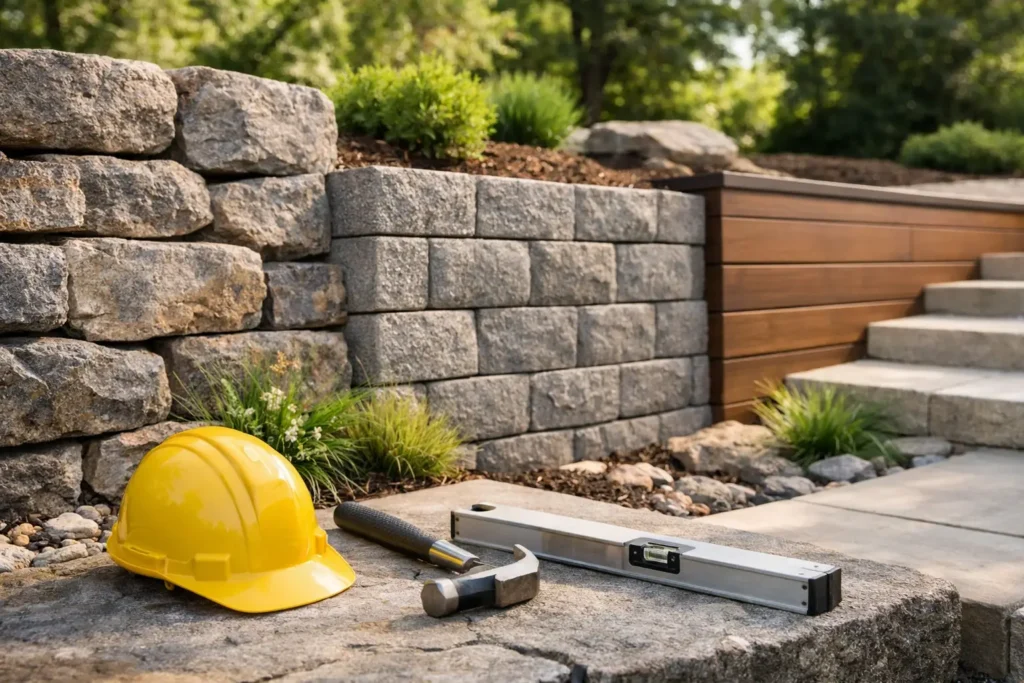
Masonry and block retaining walls can create a premium look and suit homes or developments where presentation is a priority. They can be highly durable, but they also require proper footing design, drainage and skilled installation. They are rarely the option to choose purely to save money.
Natural stone retaining walls bring strong visual appeal and can work beautifully in higher-end landscapes. They are ideal when the goal is a more organic or architectural finish. The trade-off is cost and complexity. Stone requires experience to install properly, and not every site justifies the extra spend.
For some sites, a segmental block system may be suitable. These systems can be effective when correctly specified, but they still need proper preparation and drainage. They are not a shortcut around structural requirements.
Budget matters, but value matters more
It is reasonable to compare retaining wall costs, but the cheapest quote is not always the most economical option. If a wall is underdesigned or poorly drained, repair or replacement costs can quickly outweigh any initial saving.
When reviewing options, look beyond the material price. Ask what is included in site preparation, excavation, spoil removal, drainage, backfill, footings and finishes. Two quotes can look similar at first glance while covering very different scopes of work.
A wall that lasts, performs properly and suits the rest of the landscape usually delivers better value than a cheaper installation that needs attention far too soon. This is especially true for sloping sites or properties where access is tight and repairs would be disruptive.
Appearance still counts
A retaining wall is a structural feature, but it is also a visible part of the landscape. If it cuts across the yard or frames an outdoor area, it needs to suit the overall design.
Think about the style of the home or site. A sleek concrete sleeper wall may suit a modern build, while stone or textured finishes may work better in a softer garden setting. Colour, texture and wall thickness all affect the final look.
It is also worth considering scale. A large wall can dominate a backyard if the design is too heavy. In some cases, breaking the height into tiers creates a better visual result and can improve usability by allowing garden beds, steps or planting zones between levels.
Good retaining wall design should make the landscape feel intentional, not like a last-minute fix for a slope problem.
Council rules and engineering are part of the decision
If you are working out how to choose retaining walls, do not leave approvals until the end. Depending on the wall height, location and site conditions, you may need council approval, engineering or both. This is particularly relevant if the wall is near boundaries, supports a surcharge load, or forms part of a larger landscaping or development project.
Requirements can vary across Melbourne municipalities, so it pays to confirm what applies before construction begins. This avoids redesigns, delays and unexpected costs.
Professional construction also matters because retaining walls are not just cosmetic features. They are load-bearing structures. Even if a wall seems straightforward, poor installation can create drainage issues, movement or safety risks over time.
When to get professional advice
Some low garden retaining walls are relatively simple. Many are not. If the site has a noticeable slope, a taller wall, poor access, drainage concerns or nearby structures, professional assessment is the smart move.
An experienced landscaping team can help you weigh the site conditions, material options, design finish and practical use of the space. That matters because the best result is not just a wall that stands up. It is a wall that improves the way the whole property works.
For clients across Melbourne’s outer and western suburbs, this often means planning the retaining wall as part of the wider landscape rather than treating it as a standalone job. When excavation, levels, drainage, hardscaping and planting are considered together, the final result is cleaner, stronger and better value.
Australian Landscape Hub approaches retaining walls this way – as part of a complete outdoor solution built for local conditions, long-term performance and a finish that adds real value to the property.
The best choice is the one that fits the whole job
The right retaining wall is not simply the strongest material or the lowest quote. It is the option that suits your soil, drainage, site levels, design goals and long-term expectations. A wall that is right for one property can be completely wrong for the next.
If you are weighing up materials or trying to make sense of differing quotes, focus on how the wall will perform over time, not just how it will look at handover. A retaining wall should make your site safer, more usable and easier to enjoy for years to come. Choosing with that in mind usually leads to a better build and fewer headaches later.