
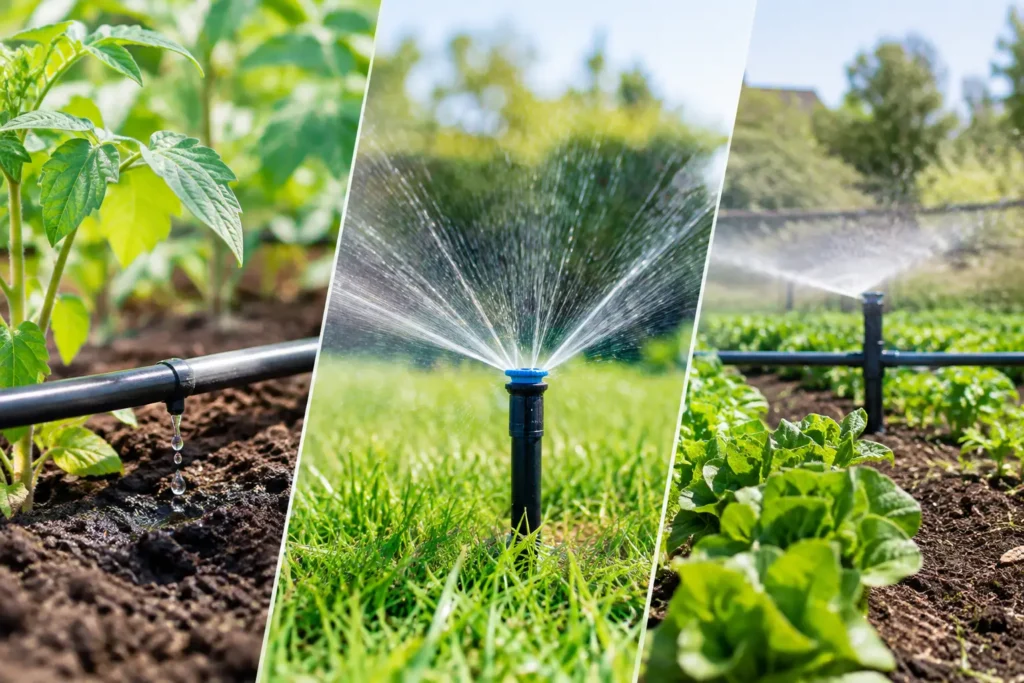
A lawn can look thirsty long before it actually needs water, while a garden bed may be losing litres every morning through spray drift and runoff. So, which irrigation system saves water? For most Melbourne properties, drip irrigation is the most water-efficient option for garden beds, hedges, vegetables and individual plants. It applies water slowly at the root zone, where plants can use it, rather than spraying leaves, paving and open air.
That said, there is no single system that suits every part of a landscape. Lawns, established trees, raised planters, narrow side gardens and commercial sites all need a different approach. The best result usually comes from designing irrigation in zones, using the right delivery method for each area, and adding controls that prevent unnecessary watering.
Which irrigation system saves water in most gardens?
Drip irrigation, also called trickle irrigation, generally saves the most water in planted areas. Small emitters or dripline release a measured amount of water directly into the soil near each plant. This reduces evaporation, wind drift and overspray, particularly during warm or windy Melbourne weather.
Because the water is delivered gradually, it has more time to soak into the ground. That means less water runs down slopes, pools on compacted soil or escapes onto paths and driveways. Deep, consistent watering also encourages plant roots to grow down rather than staying close to the surface.
Drip irrigation works especially well for garden beds with mulch, native planting, shrubs, hedging, veggie patches and feature trees. A layer of organic mulch over the dripline further improves efficiency by keeping the soil cooler and slowing moisture loss.
Its main limitation is that it is not the right tool for broad lawn coverage. It can also clog if poor-quality water, fine sediment or neglected filters are involved. A properly designed system needs suitable filtration, pressure regulation and occasional checks to make sure every section is working as intended.
Sprinklers can still be efficient for lawns
For natural turf, pop-up sprinklers are usually the practical choice. A well-designed sprinkler system will use matched nozzles, correct spacing and appropriate pressure so water reaches the lawn evenly. The goal is not simply to put out a lot of water. It is to apply the required amount without dry patches, misting or runoff.
Poorly planned sprinklers are among the biggest sources of water waste. Heads that spray onto fences, footpaths or buildings, mixed nozzle types in the same zone, and sprinklers running in the heat of the day all increase consumption without improving plant health.
Rotary nozzles and gear-driven rotors can be more efficient than traditional fixed sprays in suitable lawn areas because they apply water more slowly. This gives clay-heavy or compacted soils more time to absorb moisture. However, they need careful layout and are not automatically better for every lawn size or shape.
If your property has artificial grass, irrigation is generally unnecessary. A quick rinse may occasionally help remove dust or spills, but installing permanent lawn sprinklers beneath or across artificial turf is usually an avoidable expense and a waste of water.
Subsurface irrigation: efficient but not always simple
Subsurface drip irrigation places dripline below the soil or mulch surface. It can be highly water-efficient because very little water is exposed to sunlight or wind. It also keeps pathways and foliage dry, which can be useful in high-traffic commercial landscapes or neat, contemporary garden designs.
The trade-off is access. Leaks, blocked emitters or accidental damage are harder to spot and repair once the line is buried. Root intrusion can also become a concern around certain plants. This system is best installed as part of a well-planned landscape build, with quality components and clear knowledge of where the lines run.
Smart controls often make the biggest difference
The irrigation hardware matters, but the controller decides when water is used. A conventional timer can be useful, yet it will keep watering during rain unless somebody changes the program. Smart irrigation controllers use local weather information, seasonal adjustments and soil or rain sensors to reduce unnecessary cycles.
A rain sensor is a straightforward addition that pauses watering after enough rainfall. Soil moisture sensors can be even more precise when installed correctly, as they respond to the actual moisture level around plant roots rather than a fixed calendar schedule.
For a residential garden, a smart controller is particularly helpful when work, travel or changing seasons make manual adjustments easy to forget. For commercial and industrial sites, it helps property managers maintain a presentable landscape while keeping water use accountable across larger areas.
Smart technology is not a substitute for correct design. If sprinklers are aimed at concrete, a controller cannot solve the problem. If dripline is installed with no pressure regulator, water distribution may still be uneven. The system must be designed properly first, then programmed to suit the site.
Design irrigation around zones, not convenience
Water-saving irrigation begins with separating areas that have different needs. A sunny lawn, shaded courtyard bed, newly planted hedge and mature native garden should not run from the same valve simply because they sit near one another.
Hydrozoning groups plants with similar watering requirements together. It allows each area to receive the right schedule and avoids overwatering drought-tolerant plants to keep thirstier varieties alive. This is one of the most valuable decisions during landscape design, especially where a property combines turf, decking, retaining walls, garden beds and hardscape areas.
Sloping blocks need extra attention. Water can travel downhill quickly, leaving plants at the top dry and plants at the bottom saturated. Shorter cycle times with a pause between them, often called cycle-and-soak watering, allow more water to infiltrate rather than run off. Dripline is often a strong option for planted slopes when securely installed and correctly zoned.
Soil type also changes the answer. Sandy soil drains quickly and may need shorter, more frequent watering. Clay holds water longer but absorbs it slowly, so long sprinkler runs can cause pooling. A professional irrigation plan considers these conditions rather than relying on one generic timer setting for the whole property.
Choose water-wise irrigation for Melbourne conditions
Melbourne gardens deal with hot dry stretches, sudden cool changes and uneven rainfall. Systems need enough flexibility to support plants through summer without keeping soil constantly wet through cooler periods. Overwatering can be as damaging as underwatering, contributing to shallow roots, fungal problems and nutrient loss.
Water early in the morning where possible. This reduces evaporation compared with midday watering and lets foliage dry after sprinkler use. Avoid regularly watering in the evening, particularly in densely planted or shaded areas, as prolonged leaf moisture can encourage disease.
Regular maintenance protects the water-saving benefits of any irrigation system. Check for broken sprinkler heads, blocked drip emitters, leaks, sinking pipework and changes caused by plant growth or new landscaping. A hedge that was small when the system was installed may eventually block a spray pattern completely.
It is also worth reviewing the program as the garden matures. New plants need more frequent support while they establish. Once their root systems are developed, many established Australian natives and climate-suited plants can perform well with less frequent deep watering.
The best choice for your outdoor space
If your priority is minimising water use in garden beds, drip irrigation paired with mulch and a smart controller is usually the strongest option. For natural lawns, a correctly designed pop-up sprinkler system with efficient nozzles, separate zones and weather-based controls is more appropriate. Many well-performing landscapes use both systems, each where it makes practical sense.
The cheapest installation is not always the most economical over time. A system that wastes water, creates dry spots or needs constant repairs will cost more in maintenance and frustration. Investing in a tailored layout gives plants a better chance to thrive while protecting the appearance and value of your property.
Australian Landscape Hub can plan irrigation as part of a complete landscape solution, coordinating plant selection, turf, garden construction and water-efficient controls from the outset. A site-specific design will always outperform a one-size-fits-all setup – and it gives your landscape the water it needs, without paying to water everything around it.