
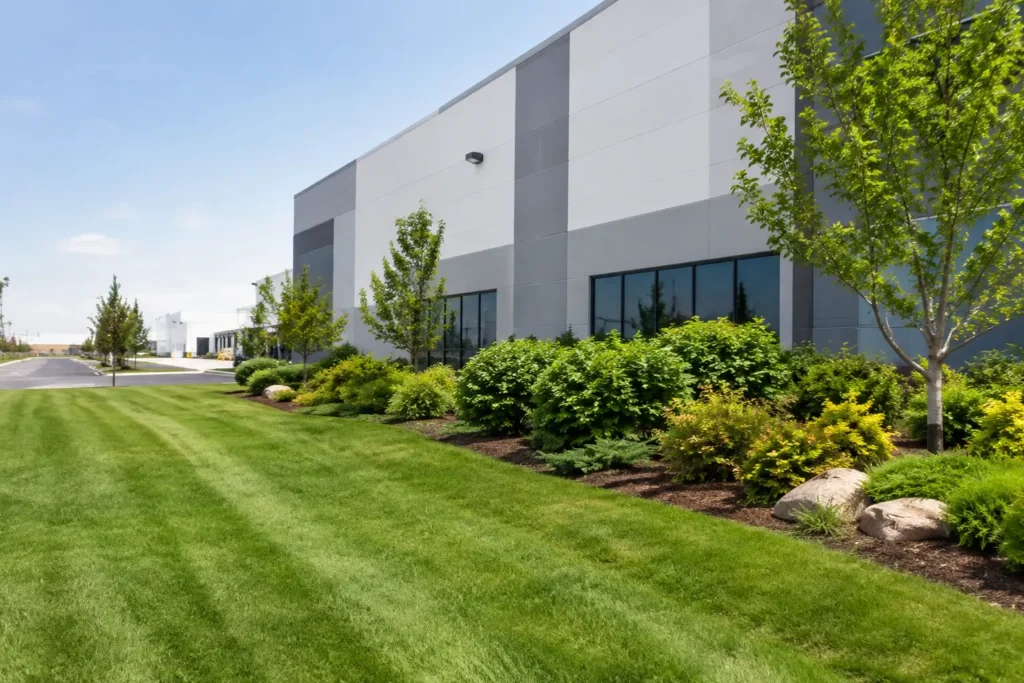
A poorly planned industrial landscape shows up quickly. Dust tracks into offices, weeds crowd fence lines, water pools beside hardstand areas and an untidy frontage gives visitors the wrong first impression before they reach reception. Well-planned industrial landscaping solutions do more than make a facility look cared for. They support safer movement, easier maintenance, drainage performance and a professional site presence.
For warehouses, factories, logistics sites, workshops and commercial yards across Melbourne, the right approach needs to be practical first. Planting, turf, paving and retaining elements must cope with vehicle activity, heat, limited access and the realities of an operating business. A landscape that looks excellent on handover day but needs constant repair is not a good investment.
What an Industrial Landscape Needs to Deliver
Industrial sites have different pressures from a residential garden. There may be delivery vehicles turning near garden beds, staff parking beside pedestrian paths, exposed boundaries, loading zones and large areas of compacted ground. Landscaping needs to work around these conditions without restricting access or creating another maintenance problem.
The best outcomes balance presentation with performance. A clean, well-defined entry can build confidence with customers, tenants and suppliers. Shade and green space can make staff areas more pleasant. Clear paths and visible edges can help separate pedestrian movement from vehicle areas. At the same time, durable surfaces and considered planting can reduce dust, erosion and ongoing upkeep.
This is why a site inspection matters. The landscape plan should respond to traffic patterns, site levels, drainage points, underground services, sunlight, existing structures and the amount of maintenance the business can realistically commit to. There is no single design that suits every industrial property.
Start With Access, Safety and Drainage
Before choosing plants or surface finishes, assess how the site functions each day. Entry and exit points, turning circles, loading areas, emergency access and staff walkways should remain clear. Garden beds need enough separation from vehicle routes to prevent damage from tyres, opening doors or accidental contact.
Drainage deserves the same early attention. Melbourne weather can shift from long dry periods to heavy rainfall, and industrial sites often have extensive sealed surfaces that move water quickly. Poor falls, blocked drains or garden beds built too high can leave water where it should not be – near buildings, pathways or work areas.
A practical landscape design uses grading, drainage-aware planting zones and suitable hardscaping to direct water appropriately. In some areas, retaining walls may be needed to manage changes in level and create stable, usable ground. The aim is not simply to hide a drainage issue with mulch or turf. It is to address the cause before it affects operations or causes costly repairs.
Choose Durable Surfaces for High-Use Areas
Hardscaping often does the heaviest work on an industrial site. Concrete paths, defined edging, gravel zones, retaining walls and paved entry areas can organise a property while reducing mud and wear. The right material depends on the location, the expected traffic and the finish required.
Concrete is a reliable option for pedestrian paths, entries, bin areas and transitions between buildings and car parks. It is durable, easy to clean and can be finished to improve slip resistance where required. For lower-traffic areas, compacted gravel may suit service zones or boundary strips, provided it is properly contained and does not migrate into drains or driving surfaces.
Artificial grass can work well in selected frontage areas where a consistently green appearance is wanted without regular mowing or watering. It is not the answer for every large open space, particularly where heavy vehicles or frequent access are involved. Natural turf can be a better fit for staff break areas, broader verges and spaces where cooling, drainage and a natural finish matter. The choice comes down to use, budget and maintenance expectations.
Planting That Suits Industrial Conditions
Plant selection is where many industrial landscapes either become easy to manage or expensive to maintain. Plants should be chosen for the actual conditions, not just for their appearance in a nursery. Heat reflected from concrete, dry soil, wind exposure, compacted ground and irregular access all influence what will thrive.
Low-maintenance, hardy planting palettes are generally the sensible choice. Drought-tolerant shrubs, groundcovers and grasses can provide texture, colour and screening while reducing water demand once established. Native and climate-suited species are often valuable options, but “native” alone is not a guarantee of low maintenance. Each plant still needs to suit the soil, aspect and available space.
Avoid dense planting beside driveways, intersections and pedestrian crossings where it can reduce sightlines. Keep vegetation away from roller doors, switchboards, drainage grates and building services. Near boundaries, layered planting can soften fencing and improve privacy, but it should allow access for inspections and repairs.
Mulch is another practical tool. Applied correctly, it helps hold moisture, suppress weeds and protect soil from temperature extremes. It should be selected and installed carefully near drains and high-wind areas so it does not wash or blow across the site.
Industrial Landscaping Solutions Should Be Easy to Maintain
A landscape maintenance plan should be considered during design, not after the build is complete. If a garden bed is difficult to reach, requires specialised equipment or contains plants that quickly outgrow the space, it will be neglected sooner or later. That affects both presentation and safety.
Good design makes routine work straightforward. It provides sensible access to garden beds, keeps irrigation controls accessible, uses edging to contain mulch and separates turf from hard surfaces cleanly. It also avoids unnecessary detail in areas where forklifts, utes, bins or maintenance crews need room to operate.
Irrigation can be worthwhile for new planting and areas where consistent appearance is essential. However, it needs to be designed for the site rather than installed as a one-size-fits-all system. Drip irrigation may be appropriate for garden beds, while turf may need a different approach. A system should be easy to adjust with seasonal conditions, and leaks or damaged heads need prompt attention to avoid wasted water and slippery surfaces.
A Smarter Project Process for Operating Sites
Industrial landscaping work must be planned around business continuity. A project may need staged construction so delivery access, staff parking and key work zones remain available. Clear communication about site access, material storage, safety requirements and expected timeframes helps prevent disruption.
A capable landscaping team can coordinate the design, site preparation, concreting, retaining walls, turf, planting and irrigation as one connected scope. That avoids the common problem of separate contractors working to different levels or leaving responsibility unclear when one part of the project affects another.
At Australian Landscape Hub, more than 20 years of hands-on experience informs practical landscape outcomes for Melbourne properties. The focus is on building outdoor areas that suit the way a site is used, from first consultation through to construction and ongoing upkeep.
Where Investment Makes the Biggest Difference
Not every industrial property needs a full redevelopment. Often, the highest-value improvements are concentrated around the street frontage, main entry, staff areas, boundary lines and drainage-prone zones. These are the places visitors notice, employees use and maintenance issues tend to begin.
If the budget is limited, address hazards and water management first. Then improve the entry experience with clean edges, durable paths, healthy planting and a clear relationship between buildings, parking and pedestrian access. A staged plan can deliver meaningful gains now while allowing future upgrades to follow a consistent design.
The right industrial landscape should look professional without demanding constant attention. When surfaces, drainage, planting and maintenance are planned together, the result is a site that supports daily operations and continues to present the business well long after the final plant goes in.