Melbourne gardens can look brilliant in spring and struggle badly by late summer if the planting plan ignores the local conditions. The best plants for Melbourne gardens are not simply the most colourful choices at the nursery. They are plants matched to your soil, sunlight, exposure, drainage and the level of maintenance you can realistically give them.
Melbourne is known for rapid weather changes, but its gardening conditions are more predictable than they first appear. Summers can be hot and dry, winters are cool and wet, and outer suburbs such as Sunbury can experience heavier frosts than bayside areas. Add compacted clay soils, wind-exposed blocks and shaded new-build courtyards, and a one-size-fits-all plant list quickly falls short.
A well-designed garden uses reliable plants as its foundation, then adds seasonal colour and individual character where it will perform. This approach creates a landscape that looks established, supports outdoor living and does not demand constant replacement.
Start with Melbourne’s conditions, not a plant catalogue
Before choosing plants, assess the site. A north-facing backyard may need species that can handle reflected heat from paving, while a south-facing side path could remain damp and shaded for much of winter. The same property can contain several distinct growing zones.
Soil is equally important. Much of Melbourne has heavy clay that holds water in winter, then becomes hard and dry in summer. Some plants tolerate this cycle well; others need the soil improved with compost, organic matter and, where required, raised garden beds. Good drainage is particularly important for plants that dislike wet feet, including many Mediterranean herbs and Australian natives.
Think about plant size at maturity as well. Small plants can look sparse on installation day, tempting people to overplant. Within a few years, overcrowding restricts airflow, increases pruning and causes plants to compete for water. Allowing room for each plant to reach its natural form is one of the simplest ways to achieve a lower-maintenance garden.
Best plants for Melbourne gardens: dependable foundations
The most successful planting schemes usually begin with tough, repeatable species that provide shape through every season. These plants are useful in residential gardens, commercial frontages and larger industrial sites because they cope well with Melbourne conditions once established.
Lomandra for clean lines and low upkeep
Lomandra is one of the most dependable choices for sunny or lightly shaded Melbourne gardens. Its strappy foliage creates a neat, architectural look beside paths, driveways, retaining walls and decking. It handles dry periods well and suits mass planting, where repeating one variety creates a more professional, unified finish.
Different cultivars offer compact or broader forms, so spacing should suit the selected variety rather than a standard rule. Lomandra does not need constant attention, but an occasional tidy-up of old foliage keeps it looking sharp.
Dianella for foliage colour and softer texture
Dianella is another hardworking plant for modern gardens. Blue-green or variegated foliage gives contrast against artificial grass, pale paving and timber features, while small flowers and berries add seasonal interest. It performs best in well-drained soil with sun or part shade.
It is a practical option around boundary planting and in front gardens, although it needs enough space to avoid sprawling over narrow paths. In damp, poorly drained areas, improve the soil before planting rather than expecting any drought-tolerant plant to solve a drainage problem.
Westringia for formal hedges and coastal-style planting
Westringia is a reliable evergreen shrub for full sun. Its grey-green foliage and small white to mauve flowers work well in clipped hedges, informal borders and exposed sites. It is especially useful when a garden needs definition without the high water demand of traditional hedging plants.
For a formal result, choose a compact variety and prune lightly several times a year. If you prefer a relaxed native garden, allow it to grow into its natural rounded habit and prune only to remove uneven growth.
Correa for sheltered colour through the cooler months
Correa is a strong choice for part shade and protected locations. Many varieties flower through autumn and winter, when gardens often need colour most, and their tubular flowers are attractive to small birds. They suit native planting schemes but also sit comfortably beside more traditional garden plants.
Correa generally dislikes harsh, exposed hot-western conditions. Place it where it receives morning sun or filtered light, and protect it from drying winds while it establishes.
Add flowers and habitat without creating a high-maintenance garden
A garden can be water-wise without looking plain. The key is to use flowering plants in the right quantities and conditions rather than filling every bed with short-lived colour.
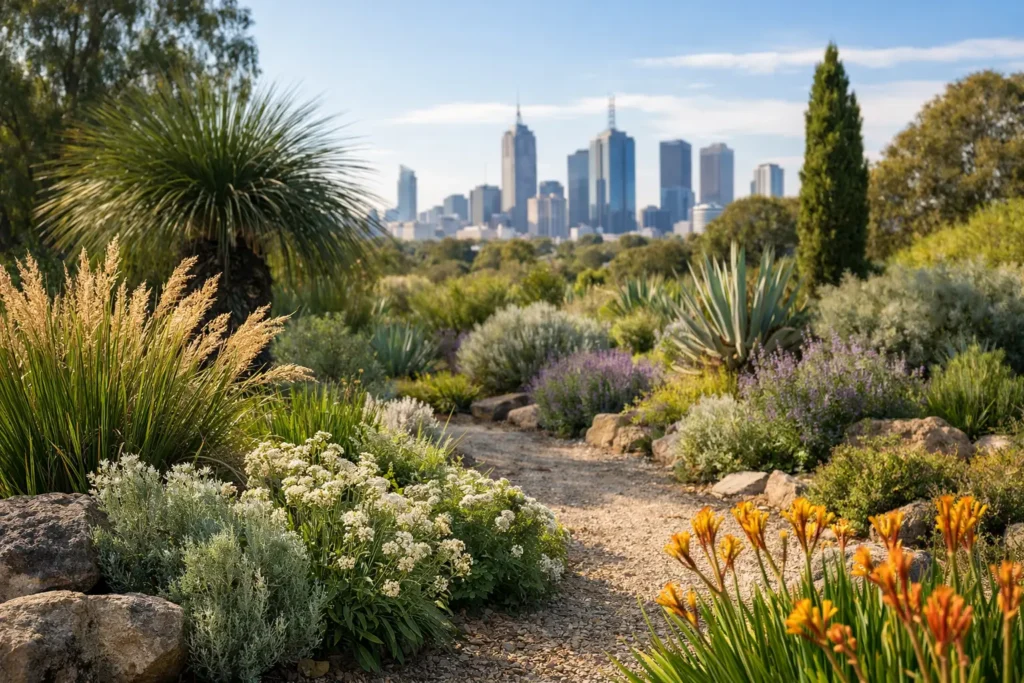
Grevilleas bring bird-attracting flowers and strong foliage texture to sunny areas. Select a variety that suits the space, as some stay low and spreading while others become substantial shrubs. Good drainage is essential, particularly in clay soil. Kangaroo paws also make a bold statement with their upright flower stems, but they need full sun, airflow and a willingness to remove spent flower stems. They are ideal as feature planting rather than a plant-and-forget option in every corner.
For softer, longer flowering colour, salvias are worth considering. Many varieties cope well with Melbourne summers once established and respond well to a trim after flowering. They are not Australian natives, but they can be an excellent fit for cottage-style, contemporary and pollinator-friendly gardens. The best choice depends on whether the priority is a fully native palette, a formal look or extended colour.
Planting for shade, screens and problem areas
Not every part of a garden receives full sun. Trying to force sun-loving plants into dark corners is a common reason gardens become thin and tired-looking.
For shaded courtyards and sheltered side gardens, clivia, aspidistra and native violet can provide reliable greenery. Clivia offers glossy foliage and striking flowers but benefits from protection from severe frost. Aspidistra is extremely tough in dry shade, while native violet works well as a gentle groundcover where there is consistent moisture and it has room to spread.
Privacy planting needs a different approach. Lilly pilly is a popular screen because it can form a dense green boundary, but it needs suitable spacing, irrigation during establishment and occasional pruning. Choose a cultivar bred for hedging and monitor it for psyllid damage. For windier or more exposed properties, a mixed screen of westringia, correas and larger native shrubs can look more natural and may be more resilient than a single-species hedge.
In difficult spots near paving or driveways, use plants that tolerate heat and limited root space. Lomandra, dianella, compact westringia and low-growing grevilleas are usually more dependable than thirsty shrubs with large root systems.
Trees that give a Melbourne garden structure
A tree is often the most valuable plant in a landscape because it provides shade, scale and a sense of permanence. It also requires the most careful decision-making. Check the mature height, canopy width, root behaviour and clearance from buildings, fences, pools and powerlines before planting.
For many suburban gardens, crepe myrtle offers summer flowers, attractive bark and deciduous shade, allowing more winter sun into the home. It suits a more formal or contemporary design but needs adequate sun to flower well. Tristaniopsis laurina, commonly called water gum, can be a useful evergreen feature tree where there is enough room and soil moisture is more reliable.
For a more distinctly Australian feel, banksias and smaller eucalyptus varieties can work beautifully, but species selection matters. Some become too large for standard blocks or drop significant leaf litter. A landscape plan should consider not only the tree’s appearance, but also how it will interact with gutters, paving, lawn and neighbouring properties over time.
Installation makes the difference
Even the right plant can fail if it is planted poorly. Prepare the soil before installation, set plants at the correct depth and water deeply after planting to settle the root zone. A quality organic mulch layer helps retain moisture, suppress weeds and moderate soil temperature, but keep mulch clear of stems to prevent rot.
New gardens need regular watering while roots establish, even when the selected plants are drought-tolerant. Drip irrigation is often the most efficient option for larger beds because it delivers water to the root zone with less waste. Once established, watering can be reduced and adjusted for rainfall, soil type and seasonal heat.
Autumn is often an excellent time to plant in Melbourne. The soil remains warm enough for root growth, while cooler temperatures reduce stress and lessen the watering demand of summer planting. That said, a professionally prepared irrigation plan can make planting successful at other times of year when a project schedule requires it.
Australian Landscape Hub helps property owners select plants as part of a complete landscape plan, ensuring the garden works with the site’s paving, drainage, turf, retaining walls and outdoor living areas rather than competing with them.
The strongest Melbourne gardens are built around plants that earn their place year after year. Choose a few proven performers, give them the right conditions and leave enough room for them to grow – the result will look better with every season, not harder to manage.