A patchy lawn can make an otherwise well-finished property look tired fast. When clients ask us about artificial grass vs natural lawn, they are usually not chasing theory – they want to know which option will look better, last longer and create less work in real Melbourne conditions.
The honest answer is that both can be excellent. The better choice depends on how the space is used, how much maintenance you want to take on, how much sun the area receives and what kind of finish matters most to you. A family backyard, a display front yard, a childcare play area and a commercial frontage all ask for something different.
Artificial grass vs natural lawn – what really changes?
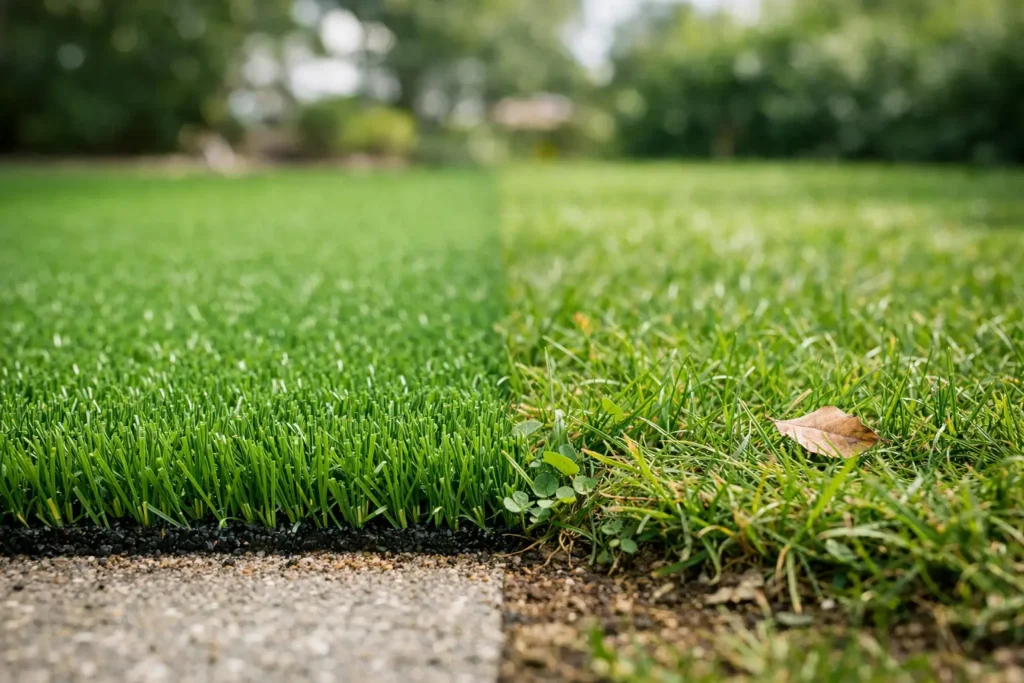
At a glance, both surfaces can give you a clean, green outdoor area. The difference shows up over time in maintenance, water use, wear and the way the space feels underfoot.
Artificial grass gives you a consistent finish all year. It does not need mowing, edging, fertilising or regular watering to stay green. That makes it attractive for busy homeowners, investment properties and commercial sites where presentation matters but ongoing maintenance time is limited.
Natural lawn offers the look, scent and feel of living grass. For many property owners, that matters. A real lawn can cool the area naturally, recover well in some conditions and bring a softer, more organic character to the landscape. If you enjoy gardening and do not mind regular upkeep, natural turf can still be the right fit.
Upfront cost versus long-term value
One of the biggest decision points is budget. Natural lawn usually costs less to install at the start, especially over larger areas. If you are working within a tight landscaping budget and are happy to maintain it properly, turf can be a cost-effective way to complete a project.
Artificial grass usually comes with a higher upfront installation cost because the groundwork is more involved. A quality result depends on excavation, base preparation, edging, drainage and careful laying. Done properly, it gives you a durable surface that stays neat for years.
Where artificial grass can make financial sense is over the longer term. You remove the ongoing costs of mowing, irrigation, fertilisers, weed control and lawn repair. For commercial properties and rental homes, that lower maintenance burden often has real value. The cheapest option to install is not always the cheapest option to own.
Maintenance is where the gap widens
If your main goal is reducing weekend work, artificial grass is hard to ignore. It needs occasional brushing, cleaning and leaf removal, but the maintenance load is far lighter than a living lawn. There is no mud after heavy use, no mowing roster and no brown patches from missed watering.
Natural turf asks more from you. To stay healthy, it needs mowing, seasonal feeding, weed control and the right amount of water. In Melbourne, where conditions can swing from dry heat to cold and damp, lawns can struggle if they are not matched carefully to the site. Shady areas, compacted soils and high foot traffic can all turn a good lawn into a recurring repair job.
That does not mean natural grass is a poor choice. It means you need to be realistic about the effort involved. A lawn only looks low-cost when someone else is doing the work or the maintenance has been ignored.
Water use and irrigation
For many property owners, water use is now a practical issue rather than just an environmental one. Natural turf needs regular watering, particularly through warmer months and during establishment. Even drought-tolerant varieties still need support to stay healthy and presentable.
Artificial grass cuts that demand dramatically. You may still hose it down occasionally to remove dust or pet mess, but it does not rely on irrigation to stay green. On sites where water efficiency matters, that can be a major advantage.
Appearance and feel underfoot
This is the point where personal preference matters most. High-quality artificial grass looks far better than many people expect, especially when installed properly and integrated with the rest of the landscape. It delivers a sharp, tidy appearance that suits modern homes, display areas, rooftop spaces and heavily used entertaining zones.
Even so, natural lawn has qualities synthetic turf cannot fully copy. Real grass changes with the season, feels cooler on a hot day and has a softness that many homeowners still prefer, especially in family yards. If you want a garden that feels alive and connected to surrounding planting, natural turf often fits more naturally.
Poor installation can also affect appearance either way. Artificial grass that is rushed or laid over a weak base can ripple, drain poorly or look obviously fake. Natural turf laid on poor soil or without proper irrigation planning can thin out quickly. The product matters, but preparation matters just as much.
Durability for kids, pets and high-traffic areas
For active households and commercial settings, durability is often the deciding factor. Artificial grass handles repeated foot traffic extremely well. It is commonly chosen for play areas, small backyards, childcare centres, display homes and business frontages because it holds its shape and presentation even with heavy use.
Pet owners often like it for the same reason. Mud is reduced, the surface stays cleaner and wear near paths or fence lines is less noticeable. With the right base and drainage, it can be a very practical pet-friendly option.
Natural lawn can also perform well, but only if the turf variety suits the traffic level and the lawn gets proper care. High-use areas tend to wear near gates, under play equipment and along common walking paths. If the area is constantly in use, recovery time becomes part of the equation. Some households simply do not want to fence off sections of lawn to let it repair itself.
Heat and drainage considerations
Artificial grass can get hotter than natural lawn in direct summer sun. That is one of the most important trade-offs to understand before choosing it, especially for exposed areas with no shade. There are ways to reduce heat build-up through product choice, layout and surrounding landscaping, but it is still a factor.
Drainage also needs to be done properly. A quality artificial turf installation should include a suitable compacted base and drainage planning so water moves through efficiently. Natural lawns can also suffer from drainage issues, particularly on clay-heavy sites. In both cases, the surface is only as good as what sits underneath it.
Which option suits different properties?
For smaller residential yards where owners want a neat finish and low upkeep, artificial grass is often the practical winner. It works especially well in compact spaces, awkward side yards, shaded spots where turf struggles, and entertaining areas where presentation needs to stay consistent.
For larger family blocks, natural lawn still has strong appeal if there is enough sunlight, decent soil and a willingness to maintain it. It can soften the landscape, support a more traditional garden feel and create a cooler outdoor environment.
For commercial and industrial properties, artificial grass often makes more sense in visible areas where durability and presentation matter more than the feel of real turf. It keeps entry zones, office frontages and display sections looking clean without adding ongoing labour.
Some of the best outcomes come from not treating it as an either-or decision. A property can use artificial grass in high-wear or hard-to-maintain zones and natural lawn in open areas where people want the feel of real turf. A tailored landscape plan usually delivers better long-term results than forcing one solution across the whole site.
How to choose with confidence
If you are weighing up artificial grass vs natural lawn, start with how you actually use the space rather than what looks good on day one. Ask yourself whether the area is for entertaining, pets, kids, visual appeal, tenant presentation or low-maintenance ownership. Then look at sun exposure, drainage, budget and how much ongoing care you are prepared to commit to.
That is where experienced site advice makes a real difference. Soil condition, levels, edging, irrigation and surrounding hardscaping all influence how well either option performs. A lawn is never just a lawn – it is part of a bigger outdoor system.
For Melbourne properties, the smartest choice is usually the one that fits the site, the lifestyle and the maintenance expectations from the start. If you get that part right, the result looks better, lasts longer and feels like money well spent.
A good landscape should make your life easier, not hand you another weekend job.