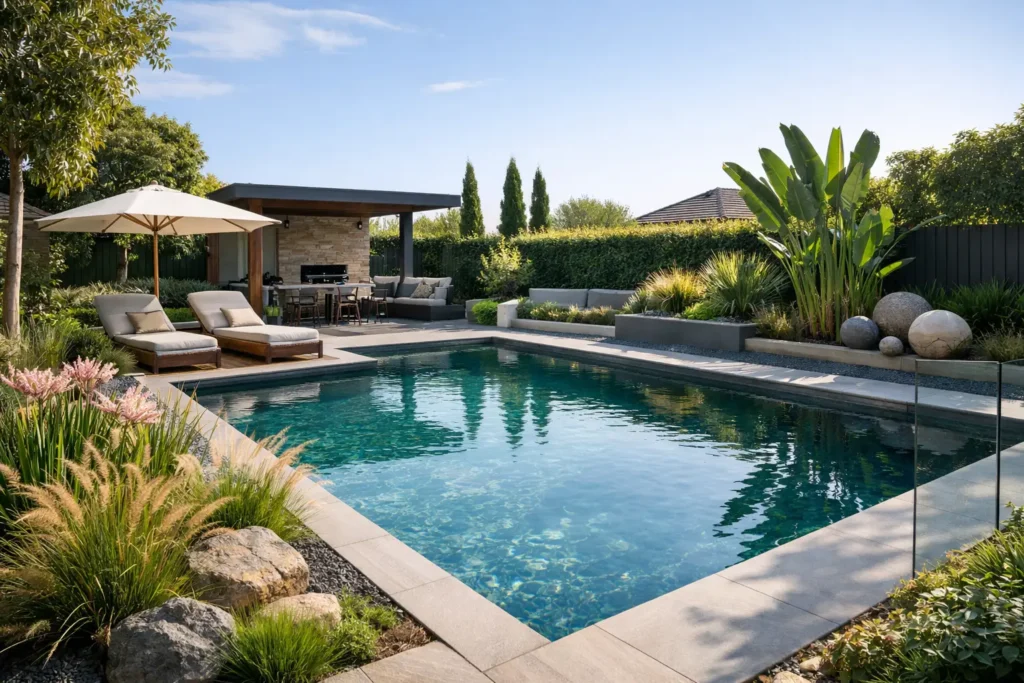
A pool should feel like the centrepiece of the backyard, not an isolated feature surrounded by hot paving and awkward leftover garden beds. The best poolside landscaping design ideas bring water, planting, shade and circulation together, creating a space that looks sharp from indoors and works just as well during a busy summer weekend.
For Melbourne properties, the detail matters. Our weather can shift quickly, soil conditions vary between suburbs, and materials around a pool need to handle wet feet, chlorine, sun and regular use. A considered landscape plan prevents common problems such as slippery surfaces, leaves clogging the pool, poor drainage and plants that outgrow the available space.
Start with how the pool area will be used
Before choosing a paver or a palm, decide what the pool zone needs to do. A family pool may need open sightlines from the house, a non-slip path, room for lounges and durable surfaces that can take splashing, toys and regular cleaning. An entertaining-focused pool area may prioritise a larger deck, built-in seating, an outdoor kitchen connection and evening lighting.
This early planning also determines how much garden is realistic. Dense planting can create a private, resort-style setting, but it needs access for pruning and must be kept clear of pool fencing and filtration equipment. A simpler layout with lawn, broad paving and a few structured planting zones is often easier to maintain.
A practical design starts with the routes people will actually take: from the house to the pool, from the pool to the bathroom, and around the perimeter for maintenance. These pathways should feel natural rather than forcing people across garden beds or wet grass.
Poolside landscaping design ideas that work in Melbourne
1. Create a cool, non-slip paved surround
The area immediately around the pool works hard. Choose a surface with grip under wet feet and a colour that will not become unbearable in direct summer sun. Light-to-mid-tone porcelain pavers, textured concrete, quality natural stone and selected exposed aggregate finishes can all suit a pool setting.
Each option has trade-offs. Porcelain is low-maintenance and consistent in appearance, while natural stone brings variation and character but may need sealing and more careful product selection. Concrete can create a clean, cost-effective continuous surface, particularly around contemporary pools, but expansion joints, drainage falls and finish quality are critical.
Avoid making material decisions from a small showroom sample alone. Look at how the surface will appear in full sun, when wet, and alongside the pool coping, house exterior and fence.
2. Add planting for privacy without blocking the light
Privacy planting is one of the most effective ways to make a pool feel more relaxed, especially on smaller blocks or near neighbouring two-storey homes. The goal is screening at the right height, not a solid green wall that darkens the whole yard or drops constant debris into the water.
Clumping bamboo, lilly pilly varieties, slender ornamental grasses and carefully selected evergreen shrubs can provide screening while keeping the garden refined. In narrow spaces, use plants with an upright habit rather than wide, sprawling species. For a softer result, layer a taller screen with lower foliage plants in front.
Plant selection should account for mature size, root behaviour and leaf drop. Large deciduous trees may provide welcome shade, but they can add significantly to pool cleaning. Plants with invasive roots or sharp foliage are also poor choices close to paving, pipes and barefoot traffic areas.
3. Use raised planters to define the pool zone
Raised garden beds bring structure to a pool landscape and can double as low seating edges when designed at the right height. They are useful for separating a dining area from the pool, framing a feature tree, or adding greenery where in-ground soil is poor.
Rendered masonry, concrete blockwork, stone cladding and timber-look finishes can each work, provided they suit the architecture of the home and surrounding hardscape. Include waterproofing, drainage and adequate soil depth from the start. A raised planter that looks impressive on completion but cannot support healthy roots will quickly become an expensive problem.
For a modern Melbourne backyard, a combination of clean-edged planters, grasses, low shrubs and feature foliage often delivers more impact than filling every space with mixed plants.
4. Build shade where it is needed most
Poolside shade is not only about comfort. It extends the hours you can use the area and gives the landscape stronger visual structure. A pergola over the lounging or dining zone can create a clear destination beside the pool, while a shade sail may suit a more open and budget-conscious design.
Deciduous trees can also be valuable where there is enough room. They offer summer shade and allow more winter sunlight through, although they need to be positioned thoughtfully to reduce leaf litter in the water. Fixed structures deliver reliable protection, while planting takes time to establish but creates a more natural finish. In many backyards, the strongest result is a combination of both.
5. Connect the pool to a deck or entertaining area
A well-proportioned deck makes the pool feel connected to the house rather than placed at the end of the yard. It can hold lounges, provide a dry transition from indoor living spaces and create a warm surface contrast beside stone or concrete paving.
Timber decking has a natural appeal but requires ongoing care, particularly around splashes and harsh UV exposure. Composite decking can reduce maintenance and offers consistent colour, though it can retain heat depending on the product and colour selected. Good subframe construction, drainage beneath the deck and correct clearances around pool fencing should never be treated as afterthoughts.
6. Keep a usable lawn area nearby
A patch of lawn gives children a place to play, softens hard surfaces and provides visual relief from paving. Natural turf feels great underfoot but needs watering, mowing and proper drainage. Artificial grass is a practical alternative for busy households or shaded sections where natural turf struggles, provided it is professionally prepared and installed on a stable base.
Keep lawn just outside the main splash zone where possible. This reduces grass clippings and soil being carried into the pool, while still allowing the green space to support the overall view.
7. Design drainage into the landscape, not around it
Water has to go somewhere. Pool surrounds need carefully planned falls so rainwater moves away from buildings and does not pond on paving. Strip drains can be discreetly integrated along doors, retaining edges and hardscape transitions, while permeable landscape areas help manage runoff elsewhere in the yard.
Drainage becomes particularly important on sloping blocks and in compact clay soils common across parts of Melbourne. Getting levels right before paving, decking or turf is installed protects the finished landscape and avoids costly rework later.
8. Add lighting for safe, usable evenings
Pool lighting creates atmosphere, but the landscape lighting should make the whole area safer to move through after dark. Low-glare path lights, step lights, uplighting on feature trees and soft illumination around seating zones all help define the space without turning the backyard into a floodlit stadium.
Keep fittings positioned to avoid glare reflecting off the water or shining into neighbouring properties. Warm lighting generally feels more inviting around planting and timber, while a controlled, layered layout looks far better than installing bright lights everywhere.
9. Use a feature wall or fence as a backdrop
Pool fencing is a safety requirement, but it can also become part of the design. Frameless or semi-frameless glass keeps views open, while aluminium fencing can offer a crisp, durable solution with more privacy. Beyond the fence, a rendered wall, timber screen, stone detail or vertical planting zone can give the pool a stronger visual backdrop.
The key is avoiding too many competing finishes. Select one hero material, then repeat complementary colours through paving, planters and furniture. This creates a more polished result, even in a compact backyard.
10. Make room for pool equipment and maintenance access
Every pool needs equipment, and hiding it completely is rarely practical. Plan a screened equipment area with ventilation, service access and enough clearance for repairs. A matching batten screen or purpose-built enclosure can keep pumps and filters out of sight without restricting access.
Leave access routes around the pool perimeter too. Landscapes that are designed only for the completion photo can become difficult to maintain, clean or repair. Practical access is part of quality workmanship.
11. Choose a restrained plant palette
A poolside garden usually looks best when the planting palette is deliberate. Repeating a few reliable species creates calm and makes ongoing maintenance more manageable. Use foliage texture, height and form to add interest: upright screening plants, flowing grasses, rounded shrubs and one or two feature specimens.
Water-wise planting and efficient irrigation are smart choices for Melbourne conditions. Drip irrigation can support garden beds while reducing water waste and keeping paving drier than overhead sprinklers.
12. Plan the whole backyard as one project
The strongest pool landscapes are not assembled in separate stages by unrelated trades. Levels, drainage, retaining walls, fencing, paving, decking, turf, irrigation and planting all affect one another. Coordinating these elements early produces cleaner lines, fewer compromises and a more durable outdoor area.
For homeowners wanting one team to manage the process, Australian Landscape Hub brings landscape design, construction and ongoing garden expertise together for projects across Melbourne’s north-west and surrounding areas. The result is a pool environment designed around how your property is used, not a collection of disconnected additions.
A pool landscape should look good beyond summer
The best poolside space still earns its place in autumn, winter and early spring. Evergreen structure, a comfortable deck or paved entertaining area, sensible lighting and planting that holds its shape ensure the backyard remains appealing when the pool cover is on.
Start with a design that respects the site, allows for maintenance and uses materials that can handle real family life. When those fundamentals are right, the finishing details feel effortless and the pool becomes the outdoor feature it was meant to be.