A deck can make an ordinary backyard feel like an outdoor room, but the material choice will affect how it looks, feels and performs for years. This composite decking review Australia looks beyond the glossy samples to assess what homeowners, property managers and commercial clients should expect from composite boards in real Australian conditions.
Composite decking is often promoted as the low-maintenance alternative to timber. That is broadly true, particularly for busy households and high-use outdoor areas. However, it is not a one-size-fits-all upgrade. Board quality, colour, subframe construction, drainage, site exposure and installation standards all play a major role in whether the finished deck is a smart long-term investment.
Composite Decking Review Australia: The Real Benefits
Composite decking is made from a blend of recycled timber fibres and plastic, usually finished with a protective outer cap. Unlike natural timber, it does not require regular staining, oiling or painting to maintain its colour and surface protection. For Melbourne property owners who would rather use their weekends than maintain a deck, that is a significant advantage.
The material is also highly resistant to moisture, rot and insect damage. This makes it particularly useful around pools, in shaded courtyards and in areas where timber may stay damp after rain. A properly installed composite deck is less likely to splinter, warp or develop the uneven boards that can make an ageing timber deck uncomfortable and unsafe underfoot.
Appearance has improved substantially as well. Higher-quality boards offer timber-inspired grain, varied tones and concealed fixing systems that create a clean finish without visible screw heads. For contemporary homes, commercial entries and entertaining spaces, composite can provide a consistent, polished look that natural timber does not always maintain over time.
There is also a sustainability benefit worth considering. Many composite products incorporate recycled content and can reduce the need for repeated coatings and timber replacement. That said, sustainability depends on the product manufacturer, how far materials travel and the expected life of the deck. A durable, responsibly sourced hardwood deck that is maintained well can still be a sound choice.
Where Composite Decking Has Trade-Offs
Composite decking is not maintenance-free. It is low maintenance, which is different. Dirt, leaf litter, food spills and mould should still be cleaned away with a soft brush, water and a suitable cleaner. In heavily shaded areas, regular washing is especially important to prevent surface grime and mildew from building up.
Heat is the most common concern in an Australian summer. Dark composite boards can become very hot in direct sun, sometimes hotter than many timber species. This matters around pools, on west-facing decks and in backyards used by children or pets. Choosing a lighter colour, allowing for shade and assessing the deck’s orientation before selecting boards can make a meaningful difference.
Composite boards can also have a more uniform appearance than genuine timber. Some people prefer that consistency; others value the natural grain movement, knots and gradual weathering of timber. If the goal is a heritage-style verandah or a highly organic garden setting, timber may better suit the character of the property.
Finally, composite has less flexibility once damaged. A deeply scratched or stained timber board can often be sanded and refinished. Composite boards generally cannot be sanded in the same way, so a badly damaged board may need replacement. Selecting a product with a strong residential or commercial warranty and retaining a few spare boards is a sensible precaution.
Cost: Higher Upfront, Lower Ongoing Work
Composite decking usually costs more than treated pine and can be comparable to, or more expensive than, premium hardwoods depending on the brand and profile. The total price is not just the board cost. It includes the subframe, footings, fixings, edge trims, stairs, balustrades, demolition of an old deck and access to the site.
For a straightforward project, homeowners should compare whole-of-life cost rather than focusing only on the initial quote. Timber may cost less at the start, but it will need ongoing cleaning, oiling or staining, and occasional board repairs. Composite typically asks for a larger upfront investment but has lower routine maintenance costs over its service life.
This does not automatically make composite the better value. A small deck in a shaded side yard may not justify a premium material, while a large entertaining deck exposed to weather may benefit greatly from reduced upkeep. The right decision depends on how often the space is used, the desired look, budget and willingness to maintain timber.
Installation Matters as Much as the Board
A quality board cannot compensate for a poorly built frame. Composite decking expands and contracts more than timber as temperatures change, so installers must use the manufacturer’s recommended joist spacing, fixing method and expansion gaps. Boards fitted too tightly can buckle, lift or create uneven gaps over time.
Drainage is equally important. Water should move away from the house and not sit beneath the deck. The subframe needs durable materials, sound footings and suitable ventilation, particularly where the deck is close to the ground. On low-level decks, inadequate airflow can shorten the life of the framing even when the composite boards themselves remain in good condition.
Concealed fasteners give composite decks their tidy appearance, but they need to be installed accurately. Edge boards, picture-frame borders and stairs also require careful planning because these details determine how professional the finished space looks. A measured site inspection before work begins will identify access constraints, changes in level, drainage needs and connections to existing paving or landscaping.
For Melbourne projects, it is also wise to consider seasonal movement, wet winters and summer heat when planning the deck’s layout. A contractor should be able to explain the subframe approach, board spacing and how the deck will integrate with surrounding garden beds, retaining walls, turf or hardscaping.
Choosing the Right Composite Board
Not all composite decking performs the same way. Entry-level uncapped boards may be more prone to staining and fading than capped products, while premium boards often offer better colour retention, surface protection and longer warranties. A sample is useful, but viewing a larger installed section is better because colour and texture look different across a full deck.
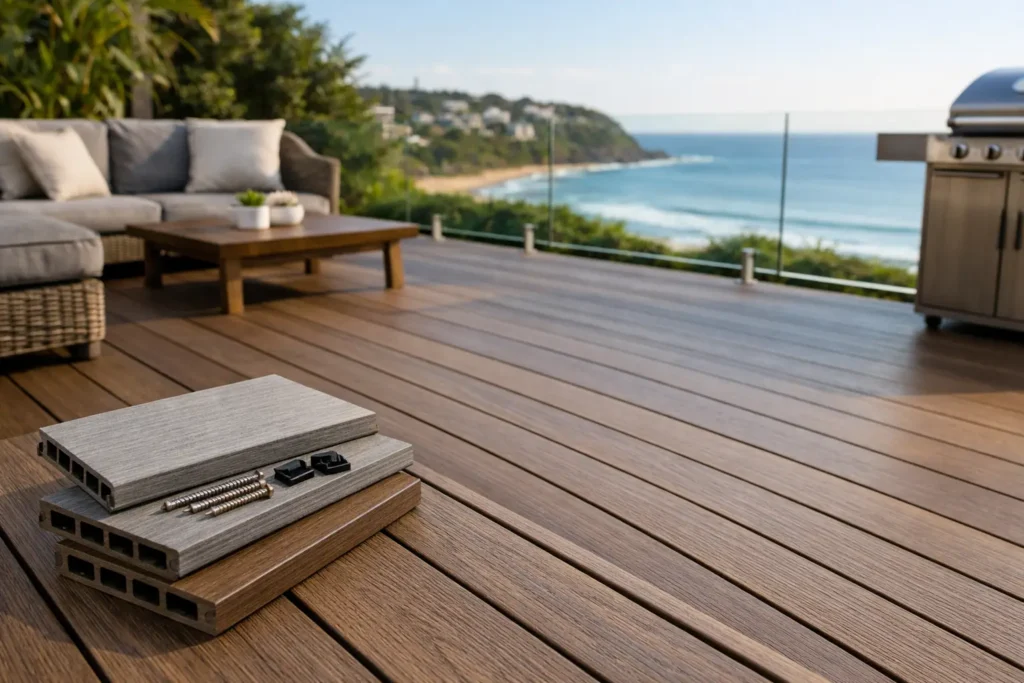
When comparing products, look at the board profile, warranty terms, slip resistance, fading performance and recommended cleaning process. Hollow boards can be lighter and may reduce material costs, but they need proper end caps and careful installation. Solid boards often feel more substantial and can be preferable for busy entertaining areas, though they may cost more.
Colour deserves more consideration than most people give it. Grey and charcoal boards work well with modern façades but may absorb more heat. Warm brown tones can complement brick homes and established gardens. Light shades can reduce heat underfoot, though they may show dirt more readily. The best choice should work with the home’s exterior, furniture, fencing and the amount of direct sunlight the space receives.
Is Composite Better Than Timber for Your Property?
Composite decking is a strong option for homeowners who want a refined outdoor area without committing to regular sanding, staining and oiling. It is particularly well suited to pool surrounds, family entertaining spaces, rental properties and commercial settings where consistency and reduced maintenance are priorities.
Timber remains a compelling choice where natural character, repairability and a lower starting cost matter most. It can also be the better option for clients who enjoy maintaining their outdoor space and want the ability to refresh the finish over time. Neither material is universally superior.
The most reliable approach is to assess the entire outdoor plan before selecting a board. Consider the deck’s purpose, sun exposure, traffic levels, drainage, budget and the materials around it. Australian Landscape Hub can help turn those practical decisions into a deck that suits the property rather than simply following a trend.
A well-designed deck should make outdoor living easier from the first barbecue to the years that follow. Choose the material that matches the way you actually use the space, then make sure the structure beneath it is built to last.