
A lawn that stays soggy for days, paving that puddles after every downpour, and garden beds that turn to sludge are more than a nuisance. They are signs you need the right garden drainage solutions before water starts damaging plants, surfaces, and even nearby structures. In Melbourne, where weather can swing from dry spells to heavy rain, drainage is not something to leave to chance.
Good drainage protects how your landscape looks, how it functions, and how long it lasts. It also is not a one-size-fits-all job. The best result depends on your soil, slope, hard surfaces, planting, and how water moves across the site.
Why drainage problems happen in the first place
Most drainage issues start with one of three things – poor grading, heavy soil, or too much hardscaping without enough planning for runoff. Many Melbourne properties sit on clay-heavy soil, which drains slowly and holds water longer than sandy soil. Even a beautifully finished yard can struggle if the water has nowhere to go.
Sometimes the problem is obvious. You might see pooling water near a patio, a retaining wall that stays damp, or turf that dies off in patches. In other cases, the warning signs build gradually. Mulch keeps washing away, pavers shift, fence posts rot early, or water tracks toward the house after rain.
This is where experience matters. A drainage system should solve the cause, not just hide the symptom. Adding gravel to a wet patch might look like a fix for a few weeks, but if the fall is wrong or runoff is being trapped, the problem returns.
Garden drainage solutions for different types of yards
The right drainage approach depends on what is causing the water to sit there. On one property, a simple regrade may solve the issue. On another, you may need a combination of surface drainage, subsurface drainage, and changes to the landscape layout.
Surface drainage for pooling water
Surface drainage is designed to capture and redirect water before it has time to sit on top of the ground. This is often the best option for paved areas, driveways, courtyards, and lawns where water collects after rain.
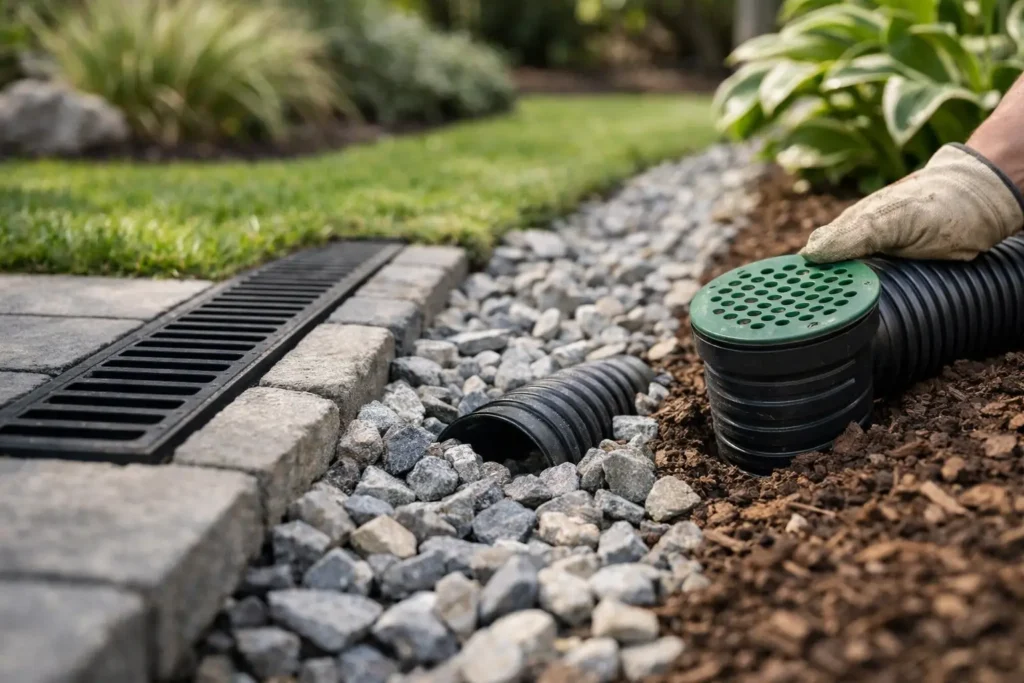
Channel drains are a common choice beside paving and entertainment areas. They collect surface runoff and move it toward a legal discharge point. Spoon drains and grated trench drains can also work well in high-flow areas, especially where water runs downhill across a path or concrete slab.
The key with surface drainage is getting the fall right. If the paving or lawn levels are incorrect, even a quality drain will underperform. That is why drainage should be considered early in a landscaping project, not after the hardscaping is finished.
Subsurface drainage for waterlogged soil
If your garden stays wet below the surface, subsurface drainage is often the better answer. This type of system deals with water held in the soil rather than water sitting on top.
Agricultural pipes, often called ag lines, are commonly installed in trenches below ground level. These pipes collect excess water and carry it away from the problem area. They are usually surrounded by drainage gravel and wrapped appropriately to help prevent sediment from clogging the system.
This method works well behind retaining walls, under lawns, and in low-lying garden areas. It can also help protect structural landscaping elements from long-term moisture pressure. That matters if you want retaining walls, edging, turf, and paving to last.
Drainage behind retaining walls
Retaining walls need proper drainage or they can fail prematurely. Water building up behind a wall creates hydrostatic pressure, which can push against the structure and weaken it over time.
A proper retaining wall drainage setup usually includes drainage aggregate, backfill material suited to the site, and a pipe system that directs water away. Weep holes may also be part of the design, depending on the type of wall and the overall site conditions.
This is one area where cutting corners gets expensive. A retaining wall may look solid on day one, but without drainage behind it, the lifespan can be drastically reduced.
When landscaping design is the real fix
Not every drainage issue needs more pipes. In many cases, the better solution is smarter landscape design. If a yard naturally channels water into one corner, you may be able to reshape the area, build in more permeable surfaces, or adjust the layout so water disperses more evenly.
Garden beds can help when they are designed properly, especially with plants that tolerate occasional wet conditions. Swales, which are shallow landscaped channels, can also direct water while blending into the overall design. In the right setting, they are a practical alternative to more visible drainage infrastructure.
Permeable paving is another strong option. Unlike traditional surfaces that force water to run off quickly, permeable materials allow water to move through or between the surface layers. That reduces pooling and can improve how the whole yard handles rainfall.
The trade-off is that some design-led solutions need more space and careful planning. On a compact block, especially in built-up suburban areas, there may not be room for broad swales or reshaped contours. In those cases, a more engineered drainage system is usually the better fit.
Signs you need professional drainage advice
Some drainage problems are straightforward. Others involve multiple factors, including neighbouring properties, existing stormwater points, or levels that were set long before the current landscape went in. If you are seeing water near foundations, under decking, beside a retaining wall, or across large paved areas, it is worth getting the site assessed properly.
A professional review should look at more than the wet spot itself. It should consider the fall of the land, the soil profile, how water enters and exits the site, and whether the current hardscape or planting design is contributing to the issue. That broader view is what leads to a lasting result.
For homeowners, this means fewer repeat repairs and less frustration every winter. For commercial and industrial sites, it also means safer access, better presentation, and less disruption from standing water around entry points, car parks, or landscaped zones.
Choosing the right system for long-term performance
The best garden drainage solutions are the ones designed around the property, not copied from the house next door. Two yards can have the same puddling problem and need completely different fixes.
If the issue is mainly runoff from paving, surface collection and grading may do the job. If the soil is staying saturated, subsurface drainage is more likely to be needed. If the yard design is trapping water, then reshaping the landscape may give you a cleaner and more cost-effective outcome.
Budget matters too, but so does value. A cheaper patch-up often becomes more expensive when you factor in repeated lawn replacement, damaged paving, or repairs to structures affected by moisture. Done properly, drainage supports every other part of the landscape.
That is why it makes sense to plan drainage alongside turf, concreting, retaining walls, decking, and irrigation rather than treating it as a separate afterthought. On larger residential blocks and commercial sites around Melbourne, a coordinated approach usually delivers a better finish and fewer issues later on.
What to expect from a proper drainage project
A well-executed drainage project starts with understanding the site. That means identifying where water collects, where it should go, and what constraints exist on the property. From there, the solution should be selected based on performance, appearance, and how it fits with the rest of the landscape.
Installation quality matters just as much as design. Pipes need correct fall, trenches need the right materials, and surface levels need to be set accurately. If those basics are rushed, even the right drainage product can fail.
For many property owners, the biggest benefit of professional drainage work is confidence. You are not guessing, trialling temporary fixes, or hoping the next storm is lighter than the last. You are putting in a system built to manage water properly and protect the investment you have made outdoors.
At Australian Landscape Hub, drainage is treated as part of the bigger picture – a landscape needs to look good, perform well, and hold up over time. If your yard, garden, or outdoor area keeps struggling with excess water, the right fix is usually more achievable than people expect. The important part is solving it properly, so the next rain tests your drainage system, not your patience.