A driveway is often the first part of a property people see, yet it is commonly treated as little more than a strip of concrete or pavers. Well-planned driveway landscaping changes that first impression. It frames the home, softens hard surfaces and makes arriving, parking and walking to the front door feel more considered – without compromising the access your household or business needs every day.
For Melbourne properties, the best result is rarely about adding the most plants. It is about balancing kerb appeal with drainage, visibility, vehicle clearance and materials that can handle heat, frost, wind and wet winters.
Start driveway landscaping with how the space works
Before selecting a single plant or paver, consider how the driveway is used. Is it a narrow residential drive with cars reversing daily? Does it need room for a trailer, ute or bins? Is it an entry point for customers, deliveries or machinery? These practical details set the boundaries for a design that will remain attractive after years of use.
A driveway should be wide enough for safe manoeuvring, with clear sightlines at the footpath and street. Landscaping must not obstruct opening car doors, entering the garage or reversing out. In particular, tall, dense planting beside the driveway entrance can create blind spots, while sprawling plants can quickly scratch vehicles or spill onto paving.
Water movement deserves the same attention. Hard paving sends rainwater somewhere, and if the falls are wrong, that somewhere may be your garage, garden bed or neighbouring property. Grated drains, spoon drains, permeable paving and correctly graded surfaces can all play a role. The right solution depends on the site levels, soil type and amount of runoff, so this is worth resolving before gardens are installed.
Use layers to soften hard surfaces
A good driveway landscape has structure. Rather than planting one continuous row along every edge, use a mix of low groundcovers, compact shrubs and selected feature plants. This creates depth without turning the driveway into a maintenance-heavy garden.
Low planting close to the pavement keeps visibility open and makes edging easier to maintain. Mid-height shrubs work well farther back, where they can conceal fences or provide privacy without crowding the drive. A feature tree, sculptural grass or carefully placed group of boulders can give the entry a focal point, especially on wider frontages.
The scale needs to suit the block. Small courtyard homes can look crowded by oversized palms, broad hedges or multiple specimen trees. Larger rural-residential and commercial sites, however, often need stronger planting masses and larger trees to avoid looking bare. A landscape plan should make the driveway feel connected to the building rather than visually separate from it.
Keep clearance around moving vehicles
Plants next to driveways need more room than plants beside a garden path. Allow for mature growth, not the pot size at installation. A compact shrub may look sparse at first but can fill out quickly after one or two growing seasons.
As a general approach, keep low plants nearest to vehicle edges and position larger shrubs back from the paving. Use clean edging to prevent mulch and soil from washing onto the driveway. Where cars regularly turn or reverse, choose tough plants that tolerate reflected heat and occasional dust rather than delicate foliage that marks easily.
Choose plants for Melbourne conditions
Melbourne weather can change quickly, and driveway gardens often face harsher conditions than the backyard. They receive heat reflected from concrete, less shade, compacted soil and irregular water. Plant selection should reflect those realities.
Australian natives are a practical choice for many sites, particularly varieties chosen for their mature size and local conditions. Lomandra, dianella, westringia, correas and compact native shrubs can provide texture, colour and resilience with relatively low water demand once established. Native grasses are useful for a softer, contemporary look, though they need occasional trimming to keep their shape tidy.
For a more formal finish, clipped hedging plants can define a front boundary or guide visitors towards the entry. They do require regular pruning, so they suit owners or property managers willing to maintain a precise appearance. If low maintenance is the priority, avoid plants that constantly shed large leaves, fruit or flowers onto the drive.
Trees should be selected with extra care. Their mature canopy, root system and leaf drop matter more than their appearance at the nursery. A tree planted too close to paving can lift surfaces over time or make access difficult. In smaller front gardens, compact ornamental trees or carefully positioned advanced specimens can provide shade and character without overwhelming the site.
Make materials work together
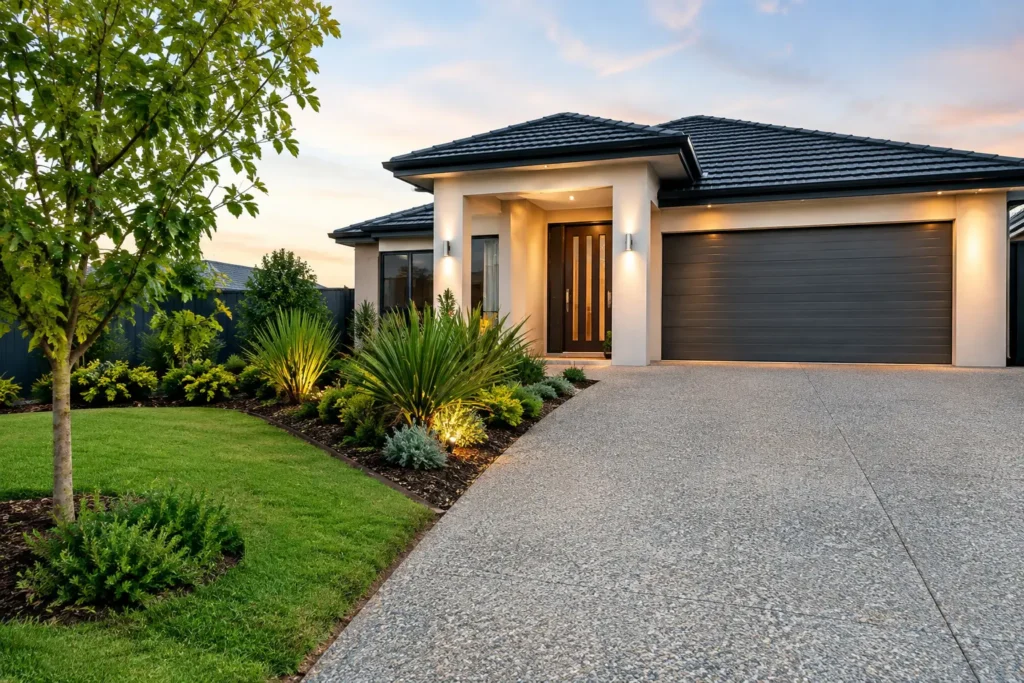
Driveway landscaping is strongest when the hardscape and softscape share a clear visual direction. For example, charcoal concrete can be balanced with pale gravel, silver-green foliage and timber details. Warm-toned brick paving may suit richer mulch, natural stone and deep green planting. The goal is not to match every element perfectly, but to avoid competing colours and finishes.
Concrete remains a reliable choice for busy driveways because it is durable and easy to maintain. Exposed aggregate adds texture and can reduce the plain appearance of a large surface. Pavers create a more detailed finish and can complement period homes, although they need a sound base to prevent movement. Permeable surfaces can be valuable where drainage is a concern, but they need correct installation and periodic maintenance to avoid clogging.
Retaining walls are often needed on sloping sites. A well-built wall can level a planting area, manage changes in height and stop soil washing onto the driveway. It should be designed with drainage behind it, not simply built as a decorative edge. Poor drainage is one of the main reasons retaining walls fail prematurely.
Add lighting where it has a purpose
Driveway lighting should improve safety and orientation, not flood the front garden with glare. Low bollard lights, discreet step lights and carefully aimed uplights can define a route from parking to the entry. Sensor lighting near a garage or gate is practical for households arriving after dark and commercial sites with early starts.
Keep fittings positioned where they will not be struck by car doors, garden equipment or tyres. Select quality outdoor-rated products, and plan cable routes before paving and garden beds are completed. Retrofitting is possible, but it is usually more disruptive and costly.
Design for maintenance from day one
A landscape can look excellent on handover day and become difficult within a year if maintenance was not built into the design. The most successful driveway gardens are simple enough to keep tidy. That means accessible garden beds, sensible plant spacing, durable edging and irrigation where regular watering is needed.
Mulch helps retain moisture, reduce weeds and give beds a finished appearance, but it needs topping up over time. Loose mulch should be contained so it does not blow or wash across paving. Drip irrigation is often a better option than overhead sprinklers beside a driveway because it directs water to roots without constantly wetting concrete, cars or footpaths.
For rental, commercial and industrial properties, low-maintenance planting is usually the smarter investment. Large groups of reliable plants, straightforward lawn edges and clear access for maintenance crews can look professional while keeping ongoing costs predictable. Artificial grass may also suit selected entry areas where natural turf struggles, though it should be used thoughtfully and paired with real planting to avoid an overly hard finish.
Bring the full entry together
The driveway should lead naturally towards the front door, gate or building entrance. This can be achieved with a change in paving, a planted island, lighting or a clearly defined pedestrian path. On properties where visitors may be unfamiliar with the layout, make the route obvious. Good landscape design removes small points of confusion before they become daily frustrations.
Australian Landscape Hub plans driveway upgrades as part of the wider outdoor space, bringing together paving, drainage, retaining walls, planting, turf, irrigation and ongoing maintenance considerations. A coordinated approach avoids the common problem of installing one element first, then having to remove or alter it when the next trade arrives.
The right driveway landscape does more than improve photos of the property. It makes the approach safer, the frontage more welcoming and the entire site easier to care for. Begin with the practical constraints, choose materials and plants that suit the conditions, and allow enough room for the design to mature well.