A deck has to do more than look good on handover day. It needs to handle Melbourne’s changeable weather, regular foot traffic, outdoor furniture, barbecues and the occasional muddy set of paws. When weighing up composite versus timber decking, the right answer depends on how you use the space, how much maintenance you are prepared to take on and the look you want around your home or commercial property.
Both materials can create a polished, practical outdoor area. The better choice is the one that suits your site, budget and expectations over the years ahead.
Composite versus timber decking: the key difference
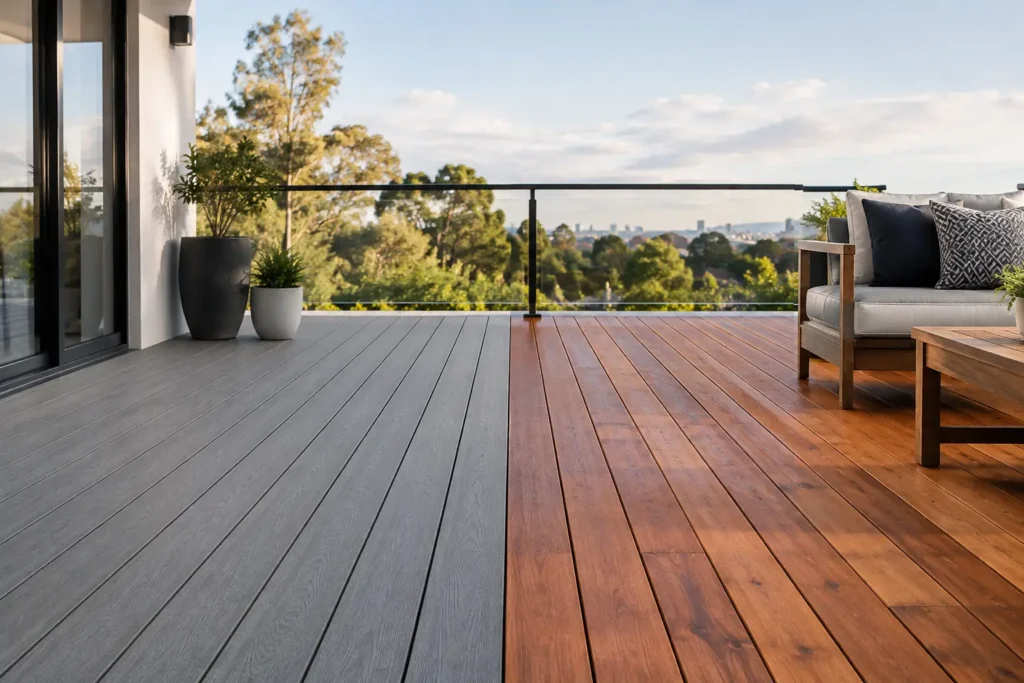
Timber decking is made from natural wood, commonly hardwoods or treated softwoods selected for outdoor use. Its grain, texture and colour variation give every deck an individual character. It can feel warm and inviting beside gardens, lawns and pools, and it suits everything from traditional weatherboard homes to contemporary builds.
Composite decking is manufactured from a blend of recycled timber fibres and plastic-based materials. Boards are made to resemble timber but have a more consistent finish and generally require less ongoing care. Many products are available in tones ranging from pale greys and warm browns to deeper, more dramatic colours.
The choice is not simply natural versus manufactured. Timber offers authenticity and flexibility, while composite offers predictable colour and lower routine maintenance. A well-designed deck can succeed with either material.
Appearance and design flexibility
If you value the natural variation of real timber, it is difficult to replicate. Knots, grain patterns and subtle changes in tone help timber sit comfortably among established trees, garden beds and natural stone. Timber can also be sanded and refinished when its appearance changes over time, giving owners more scope to refresh the surface rather than replace it.
Composite boards have come a long way in appearance. Higher-quality options can provide realistic grain embossing and attractive colour blends without the inconsistencies found in natural boards. They are particularly effective in modern landscape designs where clean lines and a uniform finish are the priority.
For a large entertaining area, board direction, picture framing, stair details and screening often influence the final result as much as the material itself. A narrow courtyard may benefit from boards running across the shorter dimension to make the area feel wider. Around a pool, the colour of coping, paving and fencing should also be considered before choosing a board tone.
Expect weathering with timber
Fresh timber usually changes colour after installation. Sun, rain and general exposure can turn the surface silver-grey if it is not regularly oiled or stained. Some owners like that weathered finish; others prefer to maintain the original richness. Neither approach is wrong, but it should be a deliberate choice.
Composite tends to retain a more consistent appearance, although it can still fade slightly over time. Samples should always be viewed outdoors, not just under showroom lighting, because direct sunlight can change how a colour reads against your house and garden.
Upfront cost versus long-term maintenance
Timber can have a lower initial material cost, especially when treated pine is selected. Premium hardwoods may cost more, but they provide a distinctive finish and can deliver excellent longevity when properly maintained. Installation costs vary according to deck height, access, subframe requirements, stairs, balustrades and site preparation.
Composite boards often cost more upfront than entry-level timber. However, they do not generally need regular oiling, staining or painting. For busy households, property managers and commercial sites, that reduction in routine surface maintenance can make the higher initial investment worthwhile.
Timber needs regular cleaning and, depending on the species, exposure and desired finish, periodic oiling or coating. Leaves, soil and moisture should not be allowed to build up between boards. Neglected timber can become weathered, splintered or more vulnerable to movement and surface deterioration.
Composite still needs care. It should be swept, washed and kept clear of debris, particularly in shaded areas where mould can develop. It is low-maintenance, not no-maintenance. Spills should be cleaned promptly, and the manufacturer’s care instructions should be followed to protect warranty coverage.
Comfort underfoot matters in Melbourne
Decking is a surface people touch with bare feet, not just a design feature viewed from indoors. Timber generally feels comfortable underfoot and does not become as hot as some composite products in full sun. This can matter on west-facing decks, pool surrounds and open entertaining spaces with limited shade.
Composite board temperatures vary considerably by product and colour. Darker boards in direct summer sun can feel hot, so it is worth discussing this early if children use the space or if the deck will surround a pool. Lighter colours, shade structures and thoughtful placement can improve comfort.
Surface grip also deserves attention. Both timber and composite can become slippery when wet, especially where leaves, algae or sunscreen residue accumulate. Good drainage, appropriate board spacing and regular cleaning are more effective than assuming one material will solve every slip-risk concern.
Durability, moisture and movement
Melbourne properties can experience soaking rain, dry heat and sharp temperature changes across the year. The deck needs an appropriate structural frame, adequate ventilation below the boards and a drainage plan that moves water away from the building.
Quality composite is highly resistant to rot and insect damage because it does not absorb moisture in the same way as natural timber. This makes it a practical option for damp or shaded locations, provided it is installed to the required joist spacing and expansion allowances. Composite boards expand and contract with temperature changes, so installation details are not optional.
Timber can perform exceptionally well outdoors, but the species and treatment level must suit the application. Hardwood is naturally durable, while treated pine requires careful sealing of cuts and ongoing protection. Timber also expands, contracts and may cup or check as it responds to the weather. Skilled installation and correct gaps between boards help manage those natural movements.
For either material, the subframe is critical. A beautiful deck board cannot compensate for poor footings, undersized joists, inadequate flashing or insufficient airflow. This is where experienced landscapers add real value: the visible finish and the structure beneath it need to work together.
Sustainability considerations
Timber can be a responsible choice when sourced from well-managed forests and selected for a long service life. It is renewable, repairable and can often be refinished rather than replaced. Ask your contractor about the timber species, its source and the maintenance it will need to stay in good condition.
Composite decking commonly contains recycled content, which appeals to owners looking to reduce demand for virgin materials. Its longer maintenance cycle may also reduce the need for oils, stains and replacement boards. On the other hand, composite is a manufactured product, and end-of-life recycling options vary by brand and location.
The most sustainable deck is often the one that is properly designed, built to last and maintained rather than prematurely replaced. Choosing a size that genuinely serves your needs can also avoid unnecessary material use.
Which decking material suits your property?
Timber is often the stronger choice when natural character, a softer underfoot feel and the option to sand or recoat are high priorities. It works beautifully for homeowners who enjoy maintaining their outdoor space and want a deck that develops its own patina over time.
Composite may be better suited to clients who want consistent colour and a lower-maintenance surface, particularly for rental properties, commercial sites or busy family homes. It can also be a sensible option where moisture resistance is a major concern.
Budget should be assessed over more than the installation quote. Factor in cleaning products, oiling or staining, future labour, expected lifespan and whether downtime for maintenance will be inconvenient. For commercial properties, reduced disruption can carry real value.
Start with the whole outdoor plan
Decking should not be chosen in isolation. The best material for your project depends on sun exposure, drainage, privacy, access, garden levels and how the space connects to doors, paving and lawn. A deck that is too hot, too exposed or poorly positioned will not become more enjoyable simply because the boards look impressive.
Australian Landscape Hub helps Melbourne property owners plan decking as part of a complete outdoor solution, from site preparation and hardscaping through to planting, turf and finishing details. A clear design and quality construction will help either composite or timber perform at its best.
Before committing to a board, view physical samples in your own outdoor light, stand on them barefoot and ask how the product will be installed and maintained. That small amount of planning can lead to an outdoor space you will be pleased to use for many years.