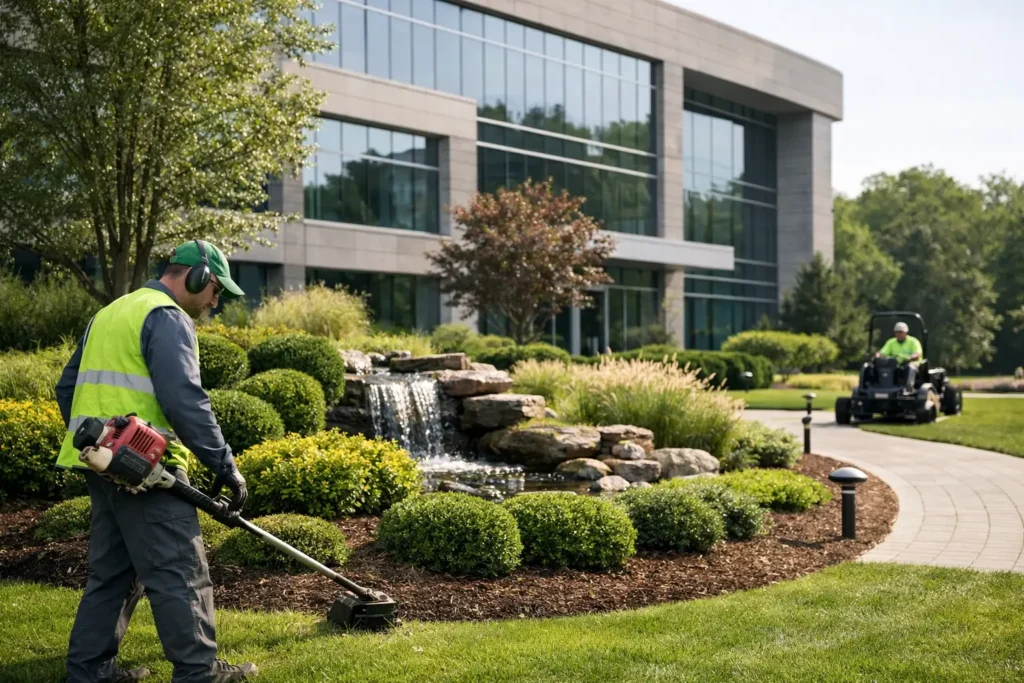
A tired frontage says more about a business than most owners realise. Patchy turf, cracked paths, poor drainage and overgrown garden beds can make a site feel neglected before a customer, tenant or staff member even walks through the door. That is why commercial landscaping services are not just about appearance. They shape first impressions, improve day-to-day usability and reduce the kind of maintenance issues that become expensive later.
For commercial property owners and managers, the real question is not whether landscaping matters. It is whether the work is being planned and delivered in a way that suits the site, the traffic, the budget and the long-term upkeep. Good commercial landscaping should look sharp, but it also needs to hold up under pressure.
What commercial landscaping services actually cover
Commercial landscaping is broader than mowing lawns or planting shrubs along a fence line. For many sites, it includes the full outdoor environment – from design and construction through to ongoing maintenance. That can mean hardscaping, retaining walls, concreting, decking, irrigation, turf installation, planting plans and practical upgrades that make outdoor areas safer and easier to manage.
The scope depends on the type of property. An office complex may need a polished entry, clean pathways and low-maintenance planting that keeps the site presentable year-round. An industrial property may need durable surfaces, effective drainage and landscaping that can handle heavy use without constant replacement. Retail spaces often need a balance between visual appeal and easy access, while strata and body corporate sites usually need consistency, tidy common areas and reliable maintenance schedules.
This is where experience matters. A commercial site has different demands from a residential backyard. There are compliance considerations, public safety concerns, higher foot traffic and stronger expectations around presentation. The best outcomes come from treating landscaping as part of the broader function of the property, not as an afterthought.
Why businesses invest in commercial landscaping services
A well-planned landscape improves more than street appeal. It can support how a business operates and how people feel about the space. For customer-facing businesses, the exterior often influences trust before any conversation happens. For workplaces, outdoor improvements can make staff areas more usable and create a cleaner, more professional environment.
There is also a practical side. Poor drainage can damage paving and create slip risks. Unmanaged plant growth can obstruct access and signage. Uneven surfaces can become a liability issue. Choosing the right landscaping solution early often prevents repeat repairs and reactive spending later.
That said, not every site needs a complete overhaul. In some cases, targeted improvements deliver the best return. Replacing worn turf, upgrading irrigation, rebuilding garden edges or installing more durable pathways may solve the main problems without the cost of a full redesign. It depends on the condition of the site and what the property needs to achieve.
Commercial landscaping services should be built around durability
One of the biggest mistakes in commercial landscaping is prioritising appearance without thinking about wear and tear. A site can look excellent on handover day and still become difficult to maintain within months if the materials, plant selection or layout are wrong.
Durability starts with understanding how the space is used. High-traffic entries need surfaces that can handle constant footfall. Garden beds near car parks need planting that will cope with reflected heat and inconsistent watering. Open areas exposed to Melbourne conditions need solutions that account for seasonal changes, drainage patterns and water use.
This is also where material choice makes a major difference. Natural turf can look impressive, but it requires a realistic maintenance plan and reliable irrigation. Artificial grass reduces upkeep and can suit some commercial settings, although it is not the right choice for every site. Concreting, retaining walls and hardscaping can improve structure and function, but they need to be designed properly to avoid future movement, water issues or costly repairs.
The strongest commercial landscapes combine visual presentation with practical performance. That means selecting finishes, plants and layouts that will continue to look good with manageable upkeep, not just immediately after installation.
Design and maintenance need to work together
Many commercial landscapes underperform because the design and maintenance plan were never properly aligned. A site might be fitted with plants that outgrow the space too quickly, irrigation that misses key zones, or edging and surfaces that make routine care more difficult than it should be.
A better approach is to plan with maintenance in mind from the start. Low-maintenance does not mean lifeless or cheap-looking. It means making thoughtful choices about plant varieties, spacing, mulching, access, water efficiency and surface finishes so the site can be maintained without excessive labour or disruption.
For property managers, this matters because outdoor areas are ongoing assets, not one-off projects. If the design ignores maintenance realities, the site usually declines fast. If the design supports efficient upkeep, the property stays cleaner, safer and more appealing over time.
That is one reason many clients prefer working with one team from concept to completion. When the same provider handles design, build and maintenance, there is usually better continuity in the finished result. Decisions are made with the whole lifecycle of the landscape in mind.
Choosing the right commercial landscaping services for your site
Not every contractor is equipped for commercial work, and not every quote covers the same level of service. A lower price can look attractive at first, but it may leave out design detail, site preparation, drainage considerations or aftercare that ends up costing more once the job is underway.
When comparing providers, it helps to look beyond the planting palette or surface finishes. Ask how they assess site conditions, how they deal with drainage, what materials they recommend for durability and how the finished landscape will be maintained. A commercial landscaping partner should be able to explain not just what will be built, but why it suits your property.
It also helps to choose a team that can handle multiple disciplines. Commercial projects often involve more than one trade. If your landscaping provider can manage turf, irrigation, concreting, retaining walls, planting and maintenance as one coordinated package, the project is usually simpler to deliver and easier to control.
For businesses across Melbourne, local knowledge adds real value. Conditions vary from site to site, and selecting materials and plants that suit the climate can make a noticeable difference to performance and upkeep. Australian Landscape Hub works with commercial clients who want practical, tailored landscapes built for long-term results rather than short-term presentation alone.
Where commercial landscaping services deliver the most value
The best commercial landscaping projects solve specific problems. Sometimes that problem is poor presentation. Sometimes it is drainage, dead lawn, ageing garden beds or outdoor areas that no one uses because they were never designed properly.
Entry zones are often the highest-value place to start. They shape first impressions and affect how polished a business looks from the street. Shared outdoor areas are another strong opportunity, especially in workplaces or multi-tenant sites where usability can improve the experience for staff and visitors.
Maintenance-heavy sites also benefit from strategic upgrades. Reworking planting layouts, improving irrigation efficiency or replacing unreliable surfaces can cut ongoing upkeep without making the site feel stripped back. The goal is not always to add more. Often, it is to build something smarter.
There is no one-size-fits-all formula here. A warehouse, childcare centre, medical facility and office building all have different priorities. The right landscaping response depends on how the site functions, who uses it and what standard of presentation the property needs to maintain.
A good landscape should keep working after handover
Commercial landscaping is easy to judge in photos, but the real test comes later. Does the drainage still perform after heavy rain? Do the plants suit the conditions? Are the surfaces holding up? Can the site be maintained without constant patchwork repairs?
Those are the details that separate a quick cosmetic upgrade from a landscape that genuinely adds value. When the planning is sound, the materials are chosen well and the installation is done properly, the outdoor space keeps doing its job long after the project is finished.
If you are considering commercial landscaping services, it is worth thinking beyond the initial look of the site. Focus on what the property needs to achieve in six months, two years and five years. The right solution should make your business look better now and be easier to manage well into the future.
A commercial landscape earns its keep when it stays practical, presents well and saves you from avoidable problems later.