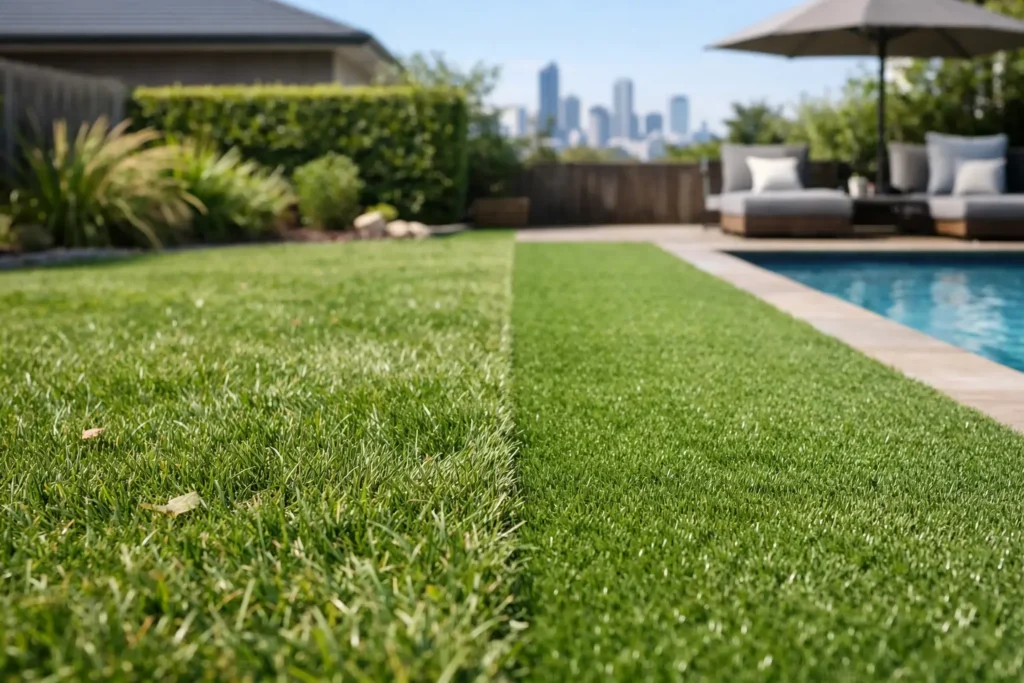
A green lawn can make a front yard feel finished, turn a bare backyard into a usable family space, or lift the presentation of a commercial site. But natural turf vs synthetic is not simply a choice between real grass and artificial grass. In Melbourne, the right answer depends on how the area will be used, the available sunlight, drainage, budget, maintenance expectations and the finish you want over the long term.
Both options can deliver a clean, appealing result when they are planned and installed correctly. The mistake is choosing based on the surface alone, then discovering that the lawn does not suit the property’s conditions or the demands placed on it.
Natural Turf vs Synthetic: The Practical Difference
Natural turf is living grass installed as rolls of turf or grown from seed. It provides the soft feel, natural scent and seasonal character many homeowners want, while helping cool the surrounding area on hot days. It also works well alongside garden beds, trees and established planting when the lawn receives enough sun, water and care.
Synthetic turf is a manufactured surface installed over a prepared base. Quality artificial grass gives an even green appearance throughout the year without mowing, fertilising or regular watering. It is particularly useful in small courtyards, shaded areas, rental properties, display spaces and high-traffic zones where a natural lawn may struggle to recover.
Neither product is automatically better. A lawn that looks excellent at handover is only the beginning. Its performance after a wet winter, a stretch of summer heat, energetic pets or regular foot traffic is what determines real value.
When Natural Turf Is the Better Choice
Natural turf is often the strongest option for households that enjoy gardening and have enough space for a lawn to establish properly. It is naturally cooler underfoot than synthetic turf, which matters in open backyards where children play during warmer months. A healthy lawn can also absorb rainfall, reduce glare and create a softer transition between paved areas and garden planting.
For many Melbourne homes, turf varieties such as kikuyu, buffalo or couch can be selected to suit the amount of sunlight and expected use. Buffalo is commonly chosen for its softer leaf and reasonable shade tolerance, while couch can provide a finer, more formal finish in sunny areas. The best variety is not always the one your neighbour has. Soil type, irrigation access, shade from buildings and trees, and how much wear the lawn will receive all matter.
Natural turf needs commitment. It must be watered while establishing, mown regularly through the growing season, fed when required and managed for weeds or bare patches. In compacted soil or poorly drained areas, it can quickly lose condition. Dogs can also create wear paths and urine spots, particularly where they repeatedly use the same corner of the yard.
That maintenance is worthwhile when you want a living landscape rather than a fixed green surface. Natural grass changes with the seasons, supports soil biology and gives a garden a more organic feel. It is especially suited to larger residential yards where there is room for a mower and the lawn can recover between periods of use.
Natural turf needs a sound foundation
Good turf installation is not just a matter of rolling grass over existing dirt. The site needs suitable soil preparation, levelling, drainage consideration and a consistent finish around paths, garden edging and paving. If the base is uneven or water pools after rain, the lawn will show the problem quickly.
An irrigation system can make natural turf far more reliable, especially on larger sites or where owners are away regularly. It also allows water to be applied more efficiently than relying on a hose and hoping the lawn receives an even soak.
When Synthetic Turf Makes More Sense
Synthetic turf earns its place where convenience and consistent presentation matter most. A narrow side yard, apartment courtyard, rooftop-style outdoor area or heavily shaded zone can be difficult for real grass. Artificial grass gives these spaces a finished look without the ongoing battle to grow lawn where conditions are against it.
It is also a practical choice for commercial properties, childcare play areas, display homes and rental investments where regular mowing and lawn repairs are not ideal. Once installed over a properly prepared base, it handles regular use without turning muddy and does not need to be watered to stay green.
For busy homeowners, the appeal is straightforward. There is no weekend mowing, no fertiliser schedule and no sudden growth after a run of rain. Light brushing, removing leaves and rinsing pet areas are generally enough to keep it tidy. That can free up more time for enjoying the outdoor area rather than maintaining it.
However, synthetic turf is not maintenance-free. Leaves, dust, pet hair and organic debris still need to be removed. Pet waste must be cleaned promptly, and occasional deodorising may be needed in frequently used dog areas. Quality products and correct drainage are particularly important, as low-grade turf or poor installation can lead to flattened fibres, visible joins, smells or water sitting beneath the surface.
Heat, drainage and installation quality matter
Artificial grass can become noticeably warmer than natural lawn in direct summer sun. This is worth considering beside pools, on north-facing entertaining areas and in play spaces used barefoot. Shade, surrounding planting and the choice of turf product can reduce the impact, but it should be discussed before installation rather than discovered in January.
The base beneath synthetic turf is also critical. It needs to be excavated, shaped and compacted to promote drainage and prevent movement. Edges need secure fixing, joins must be carefully finished, and the surface should sit at the right height against paving, decking and garden beds. A professional installation creates the natural-looking result people expect. Cutting corners on groundwork usually creates the opposite.
Comparing Upfront Cost and Long-Term Value
Synthetic turf usually has a higher upfront installation cost than natural turf because of excavation, base preparation, drainage materials, product selection and installation labour. Natural turf is generally less expensive to lay initially, particularly over a straightforward, accessible lawn area.
Over time, the comparison becomes more individual. Natural grass has recurring costs for water, mowing, fertiliser, weed control, equipment and occasional repairs. Synthetic turf avoids many of these expenses but may eventually need repair or replacement depending on product quality, sun exposure and use. It also requires a well-built base from day one, so it is not the place to choose solely on the lowest quote.
Think about value in terms of the space you gain. If artificial grass turns an unusable, muddy courtyard into an outdoor area you use every week, the higher initial spend may be justified. If a broad natural lawn is central to family games, gardening and a cooler backyard, turf may provide the better return despite the ongoing care.
Environmental Considerations Without the Sales Pitch
Natural turf can cool outdoor spaces, absorb water and contribute to a living garden ecosystem. Its environmental impact depends heavily on water use, fertiliser choices and maintenance practices. Selecting an appropriate grass variety, improving soil and using efficient irrigation can make a meaningful difference.
Synthetic turf eliminates routine lawn watering and does not require chemical fertilisers or mowing fuel. On the other hand, it is a manufactured product, can retain heat and will eventually reach the end of its service life. It does not replace the ecological role of living plants or soil.
A balanced landscape can often offer the best of both. For example, artificial grass may suit a small shaded play zone or courtyard, while real turf, native planting and garden beds bring cooling, habitat and natural texture to the rest of the property. The aim should be a landscape that performs well without creating unnecessary work or resource use.
Choosing the Right Surface for Your Property
Start by looking honestly at the site. Observe where sun falls in winter and summer, where water collects, how people move through the yard and whether pets use particular areas. A lawn near a busy entertaining zone has different demands from a front nature strip or a quiet commercial entry.
Natural turf is usually the right fit when you have adequate sun, room for maintenance and a preference for a cooler, living lawn. Synthetic turf is often the better fit when the area is compact, shaded, intensively used or difficult to maintain consistently. For properties with mixed conditions, using both surfaces in the right locations can produce the most practical result.
Australian Landscape Hub can assess these details as part of a wider landscape plan, including drainage, edging, irrigation, planting, decking and hardscape connections. That whole-of-site approach helps ensure the lawn works with the rest of the outdoor space rather than feeling like an afterthought.
The best lawn choice is the one that still suits your routine, your site and your budget well after the new-landscape excitement has passed. A considered inspection before work begins can save years of avoidable maintenance and give you an outdoor area that is genuinely enjoyable to use.