A Melbourne garden can look full, structured and inviting without relying on constant watering. The best low water garden ideas are not about covering every square metre with gravel or settling for a bare yard. They combine the right plants, sensible soil preparation and durable outdoor materials so your space stays attractive through hot, dry spells and remains easy to manage year-round.
A successful low-water landscape is especially valuable for busy households, rental properties and commercial sites. It reduces ongoing maintenance, helps manage water use and gives your outdoor area a more reliable finish when the weather is less predictable.
Start with a garden designed for its conditions
Low-water gardens work best when the design responds to the site rather than fighting it. Before selecting plants, consider where the sun sits in summer, how water moves through the block, and whether existing soil is heavy clay, sandy or compacted. Many Melbourne properties have clay soils that hold water in winter but become hard and dry in summer. Plants need to tolerate both conditions, or the planting areas need to be improved first.
Group plants according to their water needs. Keep thirstier plants, such as productive herbs or feature pots, close to a tap or irrigation line. Place drought-tolerant shrubs, grasses and groundcovers in the hotter, more exposed parts of the garden. This simple zoning avoids watering the entire garden to keep just a few plants happy.
1. Build around drought-tolerant native plants
Australian native plants are a natural starting point, but selecting them carefully matters. Not every native plant suits every Melbourne garden, particularly in shaded or poorly drained areas. Choose varieties that match your aspect and soil, then give them enough room to mature without overcrowding.
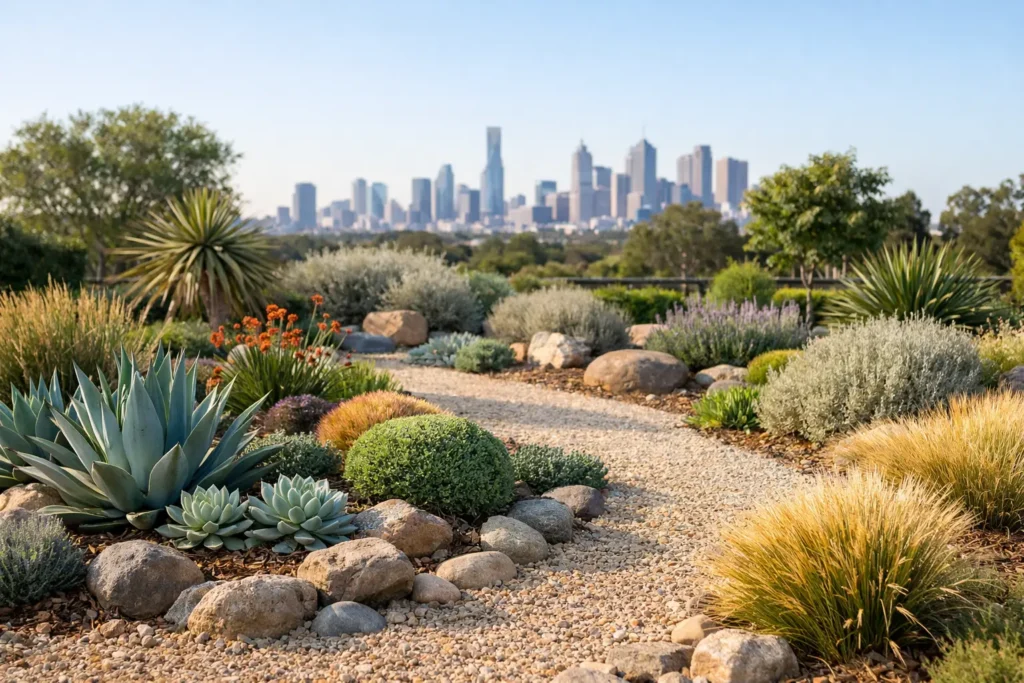
Kangaroo paw brings striking colour and architectural form to sunny beds. Westringia creates tidy, resilient hedges, while correas perform well in part shade and provide flowers through cooler months. Lomandra, dianella and native grasses offer texture without demanding frequent attention. Once established, these plants generally need far less supplementary water than traditional soft garden planting.
A native-only garden can look excellent, but it is not the only option. Mediterranean plants such as rosemary, lavender, olive trees and salvias can also perform well in sunny, free-draining Melbourne gardens. Mixing compatible plant types often creates a more layered, personal result.
2. Use mulch properly, not sparingly
Mulch is one of the most cost-effective ways to reduce water loss from garden beds. A 50 to 75 mm layer helps keep the root zone cooler, limits evaporation and suppresses weeds that compete for moisture. It also gives new planting a finished, well-maintained appearance.
Organic mulch, such as composted bark or woodchip, gradually improves soil as it breaks down. Decorative stone mulch is longer-lasting and can suit contemporary front gardens, but it holds heat and does not improve soil structure. Stone is often best used around hardy feature plants or in areas with excellent drainage, rather than across every bed.
Keep mulch clear of trunks and plant stems. Piling it against plants can trap moisture where it is not wanted and encourage rot.
3. Create shape with gravel paths and hardscaping
Not every part of a garden needs to be planted. Reducing unnecessary lawn and replacing high-traffic areas with gravel, paving, decking or steppers can significantly lower water demand while making the yard more functional.
A gravel path through planted beds gives the garden direction and makes maintenance easier. Paved entertaining zones create usable outdoor space without the weekly water and mowing requirements of lawn. Retaining walls can level a sloping block, form defined planting pockets and prevent soil from washing away in heavy rain.
The trade-off is heat. Large expanses of dark paving or stone can become uncomfortable in full summer sun. Balance hard materials with shade trees, pergolas, planted borders or lighter-coloured surfaces. Good landscape design makes these materials feel intentional rather than harsh.
4. Choose lawn only where it earns its place
A lawn is useful for children, pets and open recreation, but broad areas of natural turf are often the thirstiest part of a residential landscape. Instead of removing it automatically, reduce it to a practical size and give it a clear purpose.
For a small courtyard or a narrow side yard, artificial grass can provide year-round green without watering, mowing or muddy patches. It is particularly practical where natural turf struggles because of shade, heavy foot traffic or poor soil. Quality preparation is essential, including a stable base and effective drainage, or the surface will not perform as intended.
If natural turf is preferred, select a variety suited to the level of sun and expected use, then install it over properly prepared soil. A smaller, healthy lawn uses less water than a large lawn that is constantly under stress.
5. Add shade to lower the garden’s water demand
Shade is a water-saving tool that is often overlooked. Trees, screens and pergolas reduce direct heat on soil and planting, slowing moisture loss during hot periods. They also make outdoor living areas far more comfortable.
Choose trees with an appropriate mature size for the property. A feature tree can shade a western-facing patio, but roots, leaf drop and clearance from buildings need to be considered from the beginning. In compact spaces, a pergola with climbing plants or adjustable shade can achieve a similar effect without overwhelming the yard.
Avoid placing dense shade directly over plants that require full sun. The most successful layouts use shade strategically, protecting seating areas and vulnerable planting while leaving sun-loving beds open.
6. Install irrigation that waters roots, not paths
A low-water garden still needs water while plants establish, and occasional deep watering is valuable during extended dry conditions. The goal is targeted, efficient watering rather than relying on a hose across the entire landscape.
Drip irrigation and subsurface lines deliver water slowly near the root zone, reducing waste from evaporation and overspray. A programmable controller makes it easier to water early in the morning and adjust schedules as seasons change. For larger residential, commercial or industrial sites, zoned irrigation allows different areas to receive only what they need.
Check the system at the start of each season. Blocked drippers, broken fittings and poorly aimed sprinklers can waste a surprising amount of water before anyone notices.
7. Make feature pots work harder
Pots add colour and flexibility to entryways, decks and pool areas, but they dry out more quickly than garden beds. Use fewer, larger pots instead of many small ones. Larger containers hold more growing medium and provide a more stable root environment.
Choose drought-tolerant feature plants such as dwarf olives, succulents, grass trees where suitable, rosemary or hardy ornamental grasses. Position pots where they receive the right amount of sun, and consider self-watering containers for areas that are difficult to reach. A small number of well-planted pots looks more considered than a crowded collection that needs daily attention.
8. Use groundcovers to cover exposed soil
Bare soil loses moisture quickly and invites weeds. Low-growing groundcovers create a living mulch, softening the edges of paths and filling gaps between shrubs. Depending on the location, options can include native violet for shadier areas, creeping boobialla for sunny spaces, pigface for dry coastal-style beds, or prostrate rosemary for a fragrant formal edge.
Allow groundcovers enough room to spread. Overplanting can lead to poor airflow and more maintenance later. Their job is to knit the garden together, not compete with every plant around them.
9. Capture rain where it falls
Water-saving design is not only about using less town water. It is also about making better use of rainfall. Direct downpipes into rainwater tanks where practical, or use garden beds and permeable surfaces to slow runoff across the property.
Slightly lower planted areas can collect water from adjacent paving, provided drainage is planned carefully and plants can handle occasional wet conditions. This approach is useful on sloping blocks, but it needs professional grading to avoid sending water towards buildings or neighbouring properties.
10. Keep the planting palette simple
A garden with a limited, repeated plant palette usually looks stronger and is easier to maintain. Repeating a few reliable shrubs, grasses and groundcovers creates rhythm across the landscape while making irrigation, pruning and replacement more straightforward.
This does not mean every bed must look identical. Use repetition as the base, then add a few seasonal flowering plants, specimen trees or statement pots near entrances and entertaining areas. The result feels cohesive without becoming dull.
A low-water garden should still feel like your garden
The most effective low-water landscape reflects how you use the property. A family backyard may need lawn and shaded play space. A commercial frontage may need durable planting that looks neat from the street. A compact courtyard may benefit more from decking, built-in seating and feature pots than extensive garden beds.
For Melbourne properties, the right combination of planting, irrigation, turf alternatives and hardscaping can make water-wise landscaping look polished rather than restrictive. Australian Landscape Hub can help turn those choices into a practical landscape built for your block, budget and long-term upkeep.