A good outdoor space in Melbourne has to work harder than it looks. It needs to handle hot summers, cool winters, sudden downpours, dry spells, family traffic, entertaining, and the day-to-day reality of upkeep. That is exactly why a landscape design guide Melbourne homes can rely on should start with function first, then build in style, comfort and long-term value.
Too many landscape projects begin with a few saved photos and a rough idea of wanting something modern. The result can look sharp for a month, then fall short once drainage issues show up, plants struggle, or the layout does not match how the household actually lives. Strong landscape design avoids that. It brings together practical planning, durable materials and a clear purpose for every part of the yard.
What a landscape design guide for Melbourne homes should prioritise
The first priority is climate response. Melbourne conditions are rarely predictable for long, so your outdoor space needs flexibility. A garden that thrives in one suburb may need adjustment in another depending on wind exposure, soil type, slope and sun. That matters whether you are planning a compact front yard, a family backyard, or a full outdoor entertaining zone.
The second priority is how the space will be used. Some homeowners want room for kids and pets. Others want a low-maintenance finish that still lifts street appeal. Some need practical paths, retaining walls and drainage before they even think about lawn or planting. There is no single right layout. The right design depends on what the property needs to do every day.
Budget also shapes the design more than many people expect. A realistic plan does not mean cutting corners. It means deciding where to invest for lasting value. Hardscaping, drainage, retaining and structural elements usually deserve attention early because they affect everything else. Decorative features can often be staged later without compromising the core result.
Start with the site, not the style
Before selecting plants, pavers or decking colours, assess the block itself. This is where experienced planning makes a major difference. Site conditions influence drainage, excavation needs, edging, retaining and material choices.
A flat block gives you more freedom, but even then the soil and water flow matter. A sloped site may need retaining walls, steps or terracing to create safe, usable areas. If water already pools after rain, that issue should be solved before new turf or planting goes in. Ignoring it usually means paying twice.
Sun and shade patterns are just as important. A backyard that gets full western sun will need different planting and surface choices from a shaded courtyard. Artificial grass might suit one zone, while natural turf or gravel may be better elsewhere. The best outcome usually comes from treating the yard as a series of working spaces rather than forcing one finish across the whole site.
Plan zones that fit real life
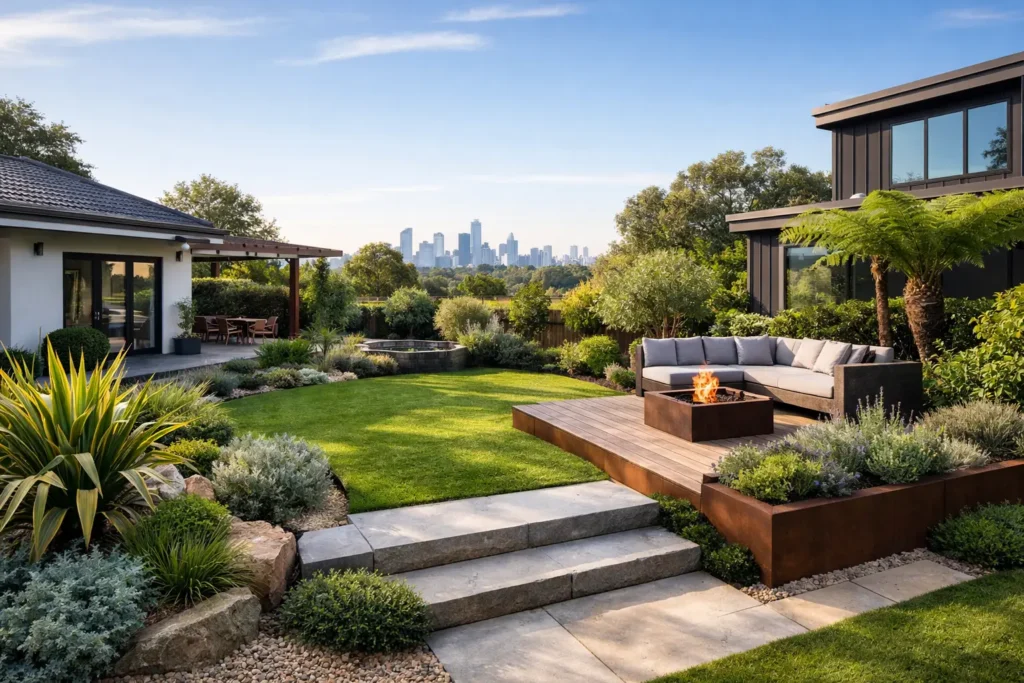
Well-designed landscapes feel easy to use because each area has a purpose. That could include an entertaining area near the house, open lawn for children, low-maintenance borders, practical side access, or a neat front garden that improves presentation without creating more weekend work.
For family homes, circulation is often overlooked. People need clear, durable movement paths from the driveway to the entry, from indoor living to the backyard, and around the home for maintenance access. If these routes are not planned properly, lawns get worn down, muddy tracks appear and the layout starts to feel inconvenient.
For smaller Melbourne blocks, zoning becomes even more important. A compact yard can still include seating, planting and usable open space, but only if each feature is placed carefully. Oversized garden beds, bulky retaining or poorly scaled paving can make a small area feel tighter than it already is.
Hardscaping often determines the success of the design
Many people think landscaping is mainly about plants, but the structure underneath carries the project. Paving, concreting, decking, edging, retaining walls and drainage all shape how the space performs and how long it lasts.
Concreting is a strong option for driveways, paths and outdoor areas that need durability and low maintenance. It suits modern homes and can be finished in ways that feel clean and refined rather than purely functional. Decking adds warmth and can work particularly well where you want to soften the look of a backyard or create an inviting entertaining area. The trade-off is that timber generally needs more upkeep than concrete or pavers, so it is best chosen with maintenance expectations in mind.
Retaining walls are another feature that needs both technical planning and visual balance. On sloped sites, they can turn awkward areas into level, useful zones. They also have a strong visual presence, so the material and height should support the style of the home rather than compete with it.
Choosing between natural turf and artificial grass
This is one of the most common design decisions for Melbourne homeowners, and there is no universal answer. Natural turf offers a softer, cooler feel underfoot and appeals to people who enjoy the look and smell of real lawn. It can work beautifully in homes with enough sunlight, proper irrigation and a willingness to keep up mowing, feeding and seasonal care.
Artificial grass suits households wanting a cleaner, lower-maintenance finish, especially in high-traffic areas or spots where natural lawn struggles. It can be a practical choice for rental properties, front yards, pet zones and busy family homes. The main consideration is heat and drainage. Quality installation matters because poor base preparation will show up quickly in performance and appearance.
In many projects, a mixed approach works best. Natural lawn may suit a main backyard, while artificial turf is used in narrow side areas or difficult corners. The right choice comes down to use, maintenance tolerance and site conditions.
Plant selection should suit Melbourne conditions
A beautiful garden is not built by choosing the most eye-catching plants at the nursery. It comes from selecting varieties that suit the block, the climate and the level of care the owner is realistically prepared to provide.
For Melbourne homes, water-wise and hardy planting often gives the best long-term result. Native grasses, structured shrubs and drought-tolerant feature plants can create texture and year-round interest without excessive water use. That does not mean every garden has to look dry or minimalist. Layered planting can still feel lush if it is planned properly.
The key is balance. Too many plant varieties can make a landscape feel busy and harder to maintain. Too few can leave it flat and lifeless. Repetition, scale and seasonal performance all matter. A well-planned garden should look good from the street, from inside the home and from the main outdoor living areas.
Irrigation and drainage are not optional extras
If you want a landscape to last, water has to be managed properly. Irrigation helps maintain plant health and lawn performance, especially through dry periods and watering restrictions. A simple, efficient system can save time and reduce waste, but it should be matched to the layout and planting rather than added as an afterthought.
Drainage is even more critical. Poor drainage can damage paving, stain surfaces, weaken retaining walls and leave garden beds waterlogged. On many sites, the smartest investment is not the most visible one. Fixing fall, runoff and stormwater issues early protects the rest of the project.
Why professional design and build matters
A landscape plan is only as strong as the execution behind it. Homeowners often lose time and money when they try to coordinate separate trades for excavation, concreting, decking, turf, irrigation and planting. Delays stack up, communication gaps appear and accountability becomes unclear.
Working with one experienced team streamlines the process from concept through to completion. It also means design decisions are grounded in what can actually be built on site, within budget, and to a standard that lasts. That practical experience is where strong landscaping stands apart from ideas that look good on paper but fail in real conditions.
For Melbourne properties, local knowledge also matters. Soil conditions, council considerations, weather patterns and suburb-specific site challenges can all influence the final result. A trusted contractor with broad landscaping capability can help homeowners avoid expensive missteps and make confident choices from the start.
Australian Landscape Hub approaches projects with that full-picture mindset, combining design, construction and practical advice so clients are not left juggling multiple providers or patching together decisions as they go.
A smarter way to approach your landscape design guide Melbourne homes can use
If you are planning a new landscape, start by being clear about what success looks like. Maybe it is a front yard that lifts resale appeal. Maybe it is a backyard built for entertaining. Maybe it is simply a lower-maintenance outdoor area that still feels finished and well considered.
Once that goal is clear, the right design choices become easier. Materials, planting, lawn type, drainage and layout stop being disconnected decisions and start working together as one plan. That is when a landscape really adds value – not just because it looks better, but because it performs better for years to come.
The best outdoor spaces are not the ones with the most features. They are the ones designed properly for the home, the people using it and the Melbourne conditions around them.