A new lawn can make a front yard feel cared for, turn a bare backyard into usable space, and give a commercial site a more professional presentation. But successful lawn installation is not simply a matter of rolling out turf. In Melbourne, variable weather, compacted soils, shade and poor drainage can all affect how a lawn establishes and how it looks six months later.
The best result starts below the surface. Selecting a suitable turf variety matters, but preparation, drainage and early care determine whether your new lawn develops deep roots or struggles through its first summer. A well-planned installation gives property owners a lawn that suits the way the space is used, rather than one that looks good only on day one.
Start Lawn Installation With the Site, Not the Turf
Every property has different conditions. Before choosing turf, assess how much direct sun the area receives, where water collects after rain, how the space will be used and whether tree roots, pets or frequent foot traffic will be factors. These details shape the right approach.
A sunny family backyard may need a hard-wearing turf that recovers well from children, pets and regular entertaining. A narrow side yard with limited sunlight may need a more shade-tolerant option, while a highly visible commercial frontage may prioritise a consistent, tidy appearance and straightforward maintenance.
Melbourne’s soils can vary considerably between suburbs and even within one site. Heavy clay holds water and compacts easily, while sandy ground may drain too quickly and struggle to retain nutrients. Existing soil should not be assumed to be ready for turf just because it is already green with weeds. A proper site assessment identifies whether the ground needs excavation, imported topsoil, levelling or drainage work before installation begins.
Drainage is a long-term decision
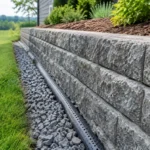
Standing water is one of the quickest ways to weaken a lawn. It limits oxygen around the roots, encourages disease and leaves soft patches that are easily damaged. Water should move away from buildings while still allowing the lawn to receive enough moisture to establish.
On flat blocks or clay-heavy sites, this may involve adjusting levels, improving the soil profile or installing drainage where required. The aim is not to make the lawn dry out rapidly. It is to avoid water sitting on the surface or beneath the root zone after rain and irrigation.
Choosing the Right Turf for Your Property
There is no single best turf for every Melbourne property. The right choice depends on sunlight, soil, maintenance expectations and how hard the lawn will be used. Choosing based on colour alone often leads to disappointment later.
Buffalo varieties are popular for many residential lawns because they generally cope well with partial shade and have a softer, broader leaf. They can be a practical choice around established gardens, patios and homes where full sun is not available across the entire area.
Couch turf offers a fine, dense finish and responds well to regular mowing. It suits open, sunny areas and can create a polished look, but it usually needs more sunlight than buffalo to perform at its best. Kikuyu is vigorous and hard-wearing, making it useful for larger active areas, although its fast growth means it requires consistent edging and mowing.
For some properties, artificial grass is the more practical option. It can be particularly useful in heavily shaded spots, small courtyards, pet areas or commercial spaces where a consistently neat look and low water use are priorities. The trade-off is that artificial turf can become warm in direct summer sun and does not provide the cooling, living qualities of natural grass. A site can also use both, with natural turf in open garden zones and artificial grass where conditions make living lawn difficult.
Ground Preparation Makes the Difference
Quality turf cannot compensate for poor base preparation. The ground must be cleared, shaped and prepared to give roots access to air, water and nutrients from the beginning.
Existing weeds and unwanted grass should be removed thoroughly. Leaving aggressive weeds beneath new turf creates avoidable problems once they grow through the lawn. Builders’ rubble, stones and buried debris should also be cleared, particularly on new homes or recently renovated sites where soil has often been disturbed.
The area is then brought to the correct level. Finished turf needs to sit below paths, garden edging and paving so it does not create a trip point or spill soil onto hard surfaces. Allowance must be made for the thickness of the turf itself, not just the prepared soil.
A suitable layer of quality topsoil gives the lawn a better foundation than compacted subsoil. On clay ground, soil improvement may be needed to create a more workable root zone. On sandy ground, organic matter can improve moisture and nutrient retention. The surface should be level but not overly compacted, with a gentle fall that supports drainage.
Irrigation should be considered before turf goes down
Installing irrigation after a lawn is established means lifting turf or disturbing roots. Where a property needs regular watering, it is more efficient to plan the system during ground preparation. Pop-up sprinklers and drip irrigation for nearby garden beds can be coordinated so the whole landscape works together.
Not every lawn needs an automated system. Smaller areas may be easily managed with a hose and sprinkler, provided watering is consistent during establishment. Larger lawns, rental properties and commercial sites often benefit from programmed irrigation that delivers reliable coverage and reduces the risk of missed watering during warm weather.
Installing Turf for Strong Root Contact
Turf should be laid as soon as possible after delivery. Fresh rolls are living material, and leaving them stacked for too long creates heat and stress that can affect establishment. If a delay cannot be avoided, they should be kept shaded and unrolled as soon as practical.
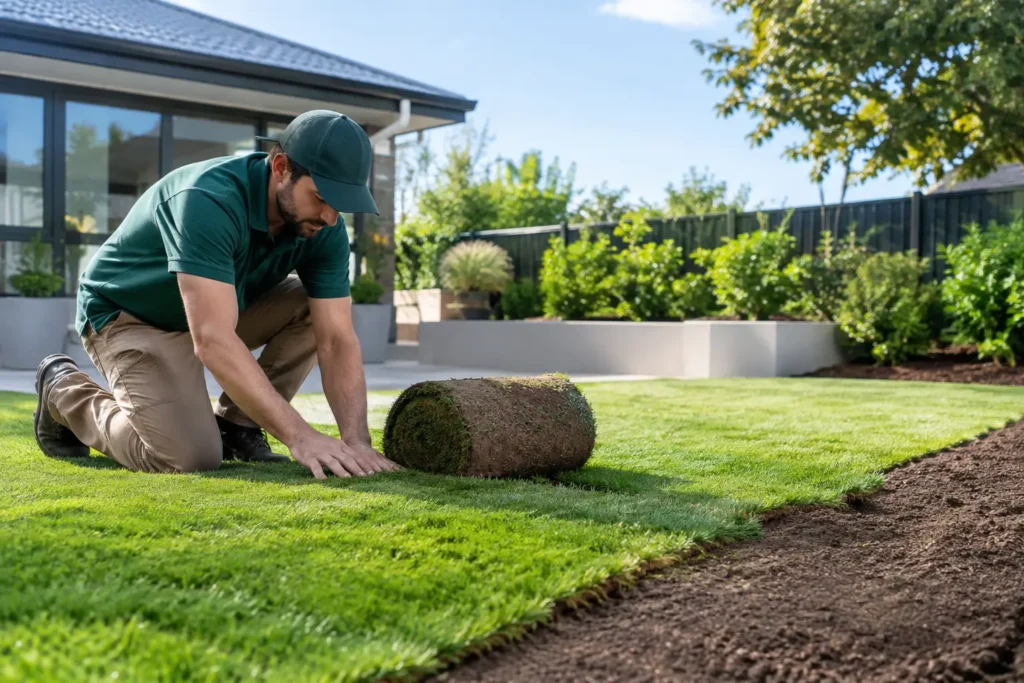
Start along a straight edge, such as a driveway, fence line or paved area, and lay each roll tightly against the next. Staggering joins in a brick-like pattern helps prevent long weak seams. Avoid stretching turf to make it fit, as it can shrink back and leave gaps as it settles.
Once laid, the lawn should be rolled lightly to improve contact between turf roots and the prepared soil. Watering follows immediately. The first watering needs to soak through the turf and into the soil beneath it, rather than just dampening the leaf surface.
For curved edges, garden beds and paths, clean cuts create a more finished appearance and make ongoing maintenance easier. This is also the time to check that irrigation heads are sitting correctly and coverage reaches all parts of the lawn.
The First Six Weeks Set the Lawn Up for Success
A newly laid lawn needs attentive care while its roots knit into the soil. For the first one to two weeks, keep the turf and the soil beneath consistently moist. In warmer or windy conditions, this may mean watering more than once a day. In cool or wet weather, reduce watering to avoid saturation.
After the initial period, begin watering less often but more deeply. This encourages roots to grow down into the soil rather than remaining close to the surface. The exact schedule depends on the season, turf type and soil condition, so it is better to check moisture beneath the turf than follow a fixed timetable.
Avoid heavy traffic until the turf has rooted in properly. A gentle tug on a corner can indicate whether roots are taking hold. Once the lawn resists lifting, it is ready for its first mow. Use sharp mower blades and remove only the top third of the leaf, never scalping a young lawn.
Fertiliser can support early growth, but more is not always better. A suitable slow-release product applied at the right time is safer than overfeeding, which can stress tender roots or encourage excessive top growth. Mowing, watering and seasonal feeding should then be adjusted to the turf variety and the conditions on site.
Avoid the Shortcuts That Cost More Later
The most common lawn failures are predictable: turf installed over compacted soil, inadequate drainage, rushed levelling, poor turf selection and inconsistent watering in the first few weeks. These shortcuts may lower the initial cost, but they often lead to patchy growth, waterlogged areas and expensive repair work.
A professional landscaping team can manage the broader picture, including excavation, retaining edges, paving interfaces, irrigation, garden beds and turf installation. This is especially valuable where a lawn is part of a larger backyard renovation or where access, levels and drainage need careful coordination. Australian Landscape Hub approaches these projects as complete outdoor spaces, not isolated patches of grass.
A lawn should fit the property, the local conditions and the effort you are willing to put into maintaining it. When the preparation is right, the turf is chosen with purpose and early care is consistent, the result is a lawn that feels established, practical and ready to be enjoyed.