A small yard can look generous, private and well-established – or crowded within a few growing seasons. The difference usually comes down to plant selection for small yards. A plant that looks ideal in a nursery pot can become too tall, too wide or too thirsty for the space once it settles in.
For Melbourne properties, the strongest results come from choosing plants around the site rather than choosing them purely for colour or first impressions. Light, drainage, mature size, privacy needs and the time available for upkeep should guide every decision. With the right planting plan, even a narrow side garden, compact courtyard or townhouse backyard can feel purposeful and inviting.
Start With the Space You Actually Have
Before selecting plants, assess the yard at its most challenging. Notice where the sun falls in summer and winter, where water sits after rain, and where heat reflects from paving, Colourbond fencing or brick walls. A west-facing courtyard may be bright but punishingly hot in late afternoon, while a narrow southern boundary can remain cool and shaded for much of the year.
Measure garden beds and allow for the plant’s mature width, not its size on the day it is installed. This is where many small-yard gardens go wrong. Plants are placed close together for an instant full look, then compete for light, nutrients and air circulation. Pruning becomes constant, paths disappear and the garden loses its clean structure.
It also pays to look below ground. Large trees and vigorous shrubs can affect paving, drainage and nearby services if they are planted without enough room. In a compact landscape, every plant needs to earn its place without creating a future maintenance problem.
Plant Selection for Small Yards Starts With a Job
A good garden plan gives each plant a clear role. Some plants soften hardscaping, some provide screening, and others create a focal point near a deck, entry or outdoor seating area. When every plant is chosen because it does a job, the result feels calm rather than cluttered.
For example, a boundary may need narrow evergreen screening, while a sunny corner may suit a small feature tree that creates shade without overwhelming the yard. Low-growing plants can define the edge of a path or make a garden bed feel fuller without blocking views. Groundcovers may be more practical than lawn in tight, awkward areas where mowing is inconvenient.
Avoid trying to fit every favourite plant into one small space. A restrained palette of complementary foliage colours and forms often has greater impact than a collection of unrelated specimens. Repeating two or three dependable plant varieties also creates visual flow, particularly in long, narrow yards.
Choose Plants by Mature Size, Not Nursery Appeal
Mature height and spread are non-negotiable considerations in small gardens. Always check how large a plant is likely to become in local conditions, then leave enough room for it to grow naturally. A shrub labelled as compact may still reach 1.5 metres wide, which can be too much for a 700-millimetre garden bed beside a path.
For tight planting zones, naturally compact plants are usually a better investment than fast-growing species that require repeated hard pruning. Frequent pruning may keep a plant within bounds, but it can also reduce flowering, create bare interiors and add unnecessary labour to garden maintenance.
Small trees deserve particular care. Ornamental pears, crepe myrtles, Japanese maples and selected advanced native forms can work beautifully, but suitability depends on available root space, overhead clearance and sun exposure. In a courtyard, a well-chosen feature tree can bring welcome scale. In a narrow front yard, the wrong tree can dominate windows, gutters and footpaths.
Match the Plant to Melbourne Conditions
Melbourne gardens experience changing conditions quickly. Hot, dry spells, cool winters, wind and heavy rain can all affect plant performance, sometimes in the same season. Selecting plants that suit the local climate and the property’s microclimate is the most reliable way to create a garden that remains attractive over time.
Native plants are often a sensible choice for low-maintenance landscapes, particularly where drainage is good and the site receives strong sun. Options such as compact grevilleas, westringia, correas, lomandra and dwarf callistemons can provide texture, flowers and habitat value while coping well with Australian conditions. However, native does not automatically mean maintenance-free. Some varieties still need space, occasional pruning and correct drainage to perform well.
For shaded yards, plants such as clivia, liriope, dwarf mondo grass, hellebores and certain ferns can add structure and colour without demanding full sun. In sheltered courtyards, exotic plants may also suit the design, provided the irrigation and soil conditions are right. The best approach is rarely native-only or exotic-only. It is a considered mix that suits the site and the look you want to achieve.
Use Layers Without Losing Valuable Space
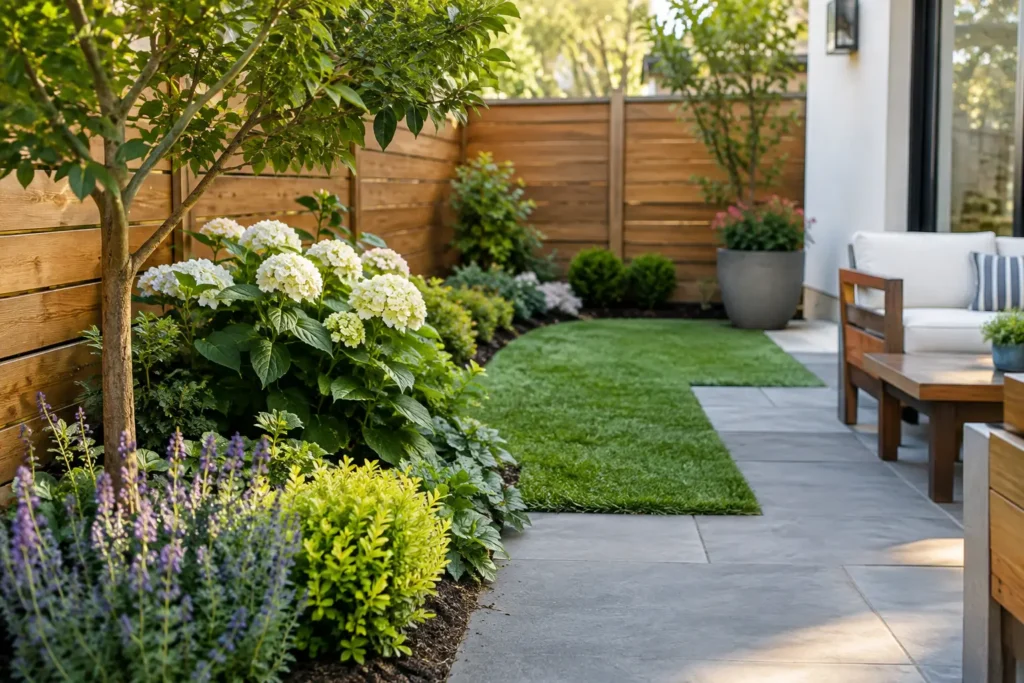
Layering gives a compact garden depth, but it needs to be controlled. A simple arrangement of low plants at the front, medium shrubs through the centre and taller screening or a feature plant at the back creates a sense of space while keeping sightlines open.
Keep the tallest planting where it serves a purpose, such as screening a neighbour’s window or softening a rear fence. Avoid placing tall, dense plants directly in front of the main view from inside the house unless privacy is the priority. In many small yards, a glimpse of open sky or a feature wall makes the space feel larger.
Foliage is especially valuable in smaller gardens because it works all year. Combining fine leaves, broad leaves and grassy forms creates interest even when flowers are not present. Variegated plants can brighten shaded areas, although too much variegation can make a small space feel busy. Use it as an accent rather than the main event.
Plan for Privacy Without Building a Green Wall
Privacy is one of the most common reasons property owners add plants to a compact yard. Dense screening can be effective, but planting a row of large shrubs against every fence can make the entire garden feel enclosed. The better option may be targeted screening where it is needed most.
Narrow upright plants, espaliered climbers, screening trees with a manageable canopy or a combination of planting and slatted fencing can protect privacy while preserving room for usable outdoor areas. Climbers can be highly effective on a trellis, but choose carefully. Vigorous varieties may need regular control and can be difficult to remove once established.
When screening near a pool, entertaining area or access path, consider leaf drop and maintenance as well as height. A beautiful screen that constantly fills the area with leaves may not be the right choice for a busy household or commercial site.
Build Low-Maintenance Into the Design
Low-maintenance gardens are not plant-free gardens. They are gardens designed with realistic upkeep in mind. Plants with similar water and light requirements should be grouped together, so irrigation can be used efficiently and struggling plants are less likely to be hidden among healthier ones.
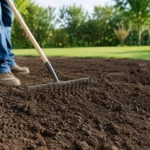
Mulch helps retain moisture, regulate soil temperature and reduce weeds, while properly prepared soil gives plants a far better start. Drip irrigation is often a practical choice for small beds because it delivers water near the root zone instead of wetting paths and foliage. It should still be checked and adjusted as plants mature.
Leave enough access for pruning, weeding and cleaning. If a bed is too deep to reach or a shrub blocks a gate, maintenance will become harder than it needs to be. This is particularly relevant for rental properties, commercial sites and homes where the garden must look presentable with limited time available.
Combine Greenery With Functional Landscaping
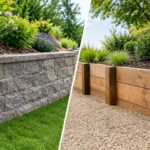
Plants work best when they are planned alongside decking, paving, retaining walls, turf, drainage and lighting. A garden bed should not be treated as the leftover strip after construction is complete. Its depth, soil volume and access can influence whether plants thrive or merely survive.
For a small backyard, a compact lawn area may be worth keeping if children or pets need room to play. In other cases, artificial grass, paving and layered planting can provide a neater, lower-maintenance outcome. There is no single right layout. The best result depends on how the yard will be used every week, not only how it will look in photos.
A professional landscape plan can prevent costly changes later by resolving these decisions before installation starts. Australian Landscape Hub can coordinate plant selection with hardscaping, irrigation and construction, helping Melbourne property owners create a finished outdoor area rather than a collection of separate upgrades.
The most successful small-yard garden is not the one with the most plants. It is the one where every plant has enough room, suits the conditions and makes daily life outdoors more enjoyable.