
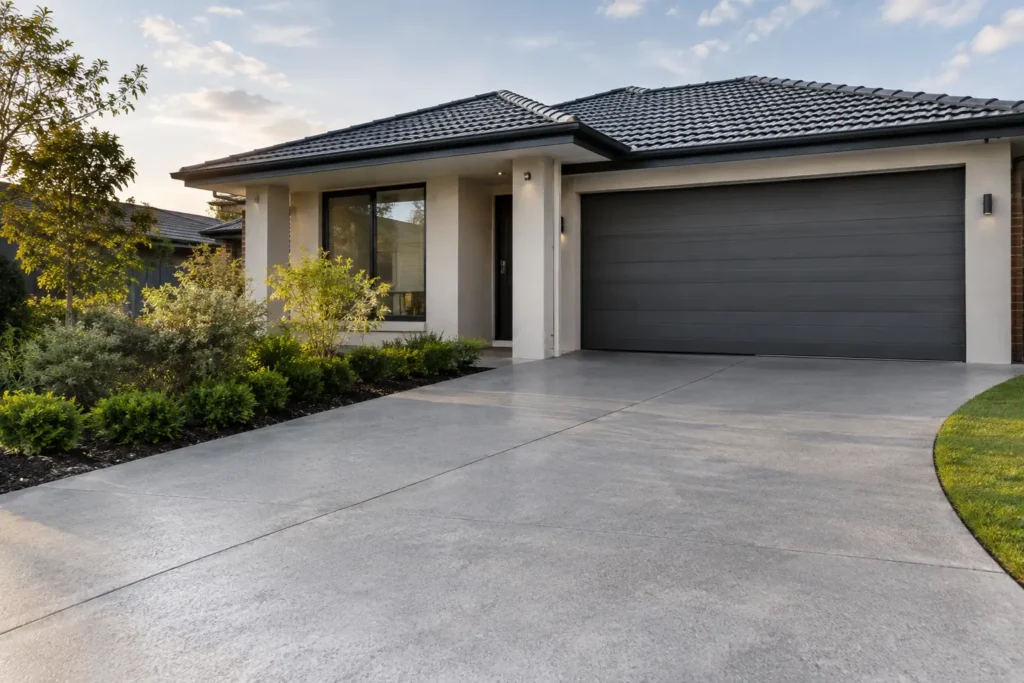
A driveway has to do more than get a car from the street to the garage. It needs to handle daily traffic, wet winters, summer heat, foot traffic, bins, deliveries and the visual pressure of being the first hard surface people see. Well-planned concrete driveways give Melbourne properties a clean, durable entrance that works with the home, garden and practical demands of the site.
The difference between a driveway that stays looking sharp and one that cracks, ponds water or stains early usually comes down to preparation. The right finish matters, but sound excavation, a stable base, effective drainage and appropriate slab design matter first.
Start with the way the driveway will be used
Before choosing colours or aggregate, consider the vehicles and movements the driveway needs to accommodate. A simple suburban driveway used by passenger cars has different requirements from an access area used by a ute, caravan, boat trailer, rubbish truck or regular trade deliveries. Turning areas, steep approaches and narrow side access can also place greater stress on the slab.
The driveway should feel easy to use, not merely fit within the available space. That means allowing sensible clearance beside parked vehicles, room to open doors without stepping into garden beds, and a layout that lets cars enter and leave safely. On smaller blocks, the driveway may need to perform double duty as a path to the front door or a turning space. These details are best resolved during the design stage, before excavation begins.
For commercial and industrial sites, traffic load and access patterns deserve even more attention. Frequent vehicle movements, heavier axle loads and larger paved areas may require thicker concrete, more substantial reinforcement and carefully designed joints. A contractor should assess the intended use rather than applying the same specification to every site.
What sits beneath concrete driveways matters most
Concrete is strong in compression, but it relies on a properly prepared foundation to perform over time. If the ground underneath moves, softens or is poorly compacted, the slab can settle unevenly and develop cracking. This is especially relevant on reactive clay soils, which are common across parts of Melbourne and can expand or contract with changing moisture levels.
A quality installation starts with excavating to the required depth, shaping the subgrade and removing unsuitable material where needed. A compacted crushed-rock base is then installed to create a firm, even platform for the concrete. The exact depth will depend on soil conditions, drainage, slab thickness and vehicle loads, so it should be tailored to the property rather than guessed.
Reinforcement also has a role. Mesh or reinforcing bar helps manage cracking and holds the slab together if minor movement occurs. It is not a substitute for base preparation, however. Reinforcement placed on poor ground will not correct a weak foundation.
A standard residential slab may suit ordinary cars, while areas used by heavier vehicles need a stronger design. Edges are particularly vulnerable where vehicles cross them, so thickened edges or additional support can be appropriate in high-load locations. Getting this structure right is a more valuable investment than choosing an expensive decorative finish over an underprepared base.
Drainage should be designed, not added later
Water is one of the main reasons hard surfaces fail or become frustrating to use. A driveway should fall away from buildings and direct water to a suitable drainage point. Even a beautifully finished slab becomes a problem if rain runs towards the garage, collects at the gate or creates a slippery puddle near the front entry.
The correct fall depends on the site, but it must be enough to move water without making the driveway uncomfortable to walk or difficult to park on. On sloping blocks, drainage channels, pits or spoon drains may be needed to intercept runoff before it reaches the house or footpath. Existing stormwater lines, garden levels and neighbouring properties all need consideration.
The crossover between the property boundary and the road is another area where planning matters. Council requirements can apply to vehicle crossings, drainage and verge works. A professional installer can identify potential approval requirements early, helping avoid costly changes once construction has started.
Choosing a finish that suits your home and maintenance needs
The finish gives concrete its character. It should complement the façade, fencing, garden style and other hardscaping rather than compete with them. For many homes, the best choice is practical, understated and easy to maintain.
Plain concrete with a broom finish is a reliable option for a clean, lightly textured surface with good slip resistance. It suits modern and traditional properties, can be coloured to work with the exterior palette, and generally provides strong value for larger areas.
Exposed aggregate is popular where homeowners want a more decorative, premium look. Once the surface layer is washed back, the natural stone aggregate becomes visible, creating variation in colour and texture. It can pair particularly well with stone garden edging, rendered walls and contemporary landscaping. Keep in mind that aggregate selection should be viewed in person where possible, as samples can look different in changing light.
Other options include decorative saw cuts, border bands and custom colour combinations. These can define parking zones, soften the scale of a wide driveway or tie the surface into pathways and patios. More detail can lift the result, but overcomplicated patterns may date quickly. A design that suits the architecture of the home will usually have stronger long-term appeal.
Joints, curing and timing are part of the craftsmanship
Concrete naturally shrinks as it cures. Control joints are deliberately placed lines that encourage any minor shrinkage cracking to occur in planned locations rather than randomly across the surface. Their position should suit the slab dimensions and driveway layout, while still looking neat from the street.
Curing is equally critical. Fresh concrete needs time and moisture control to develop strength properly. Hot, windy weather can cause the surface to dry too quickly, while rain can mark or weaken fresh work if it arrives at the wrong time. An experienced concreting team plans pours around conditions where possible and uses appropriate curing methods to protect the finish.
Avoid driving on a new driveway before the contractor’s recommended timeframe. Concrete may look hard within a day or two, but early loading can leave marks or compromise edges. The same patience applies to sealing decorative finishes, which should only occur when the concrete has cured sufficiently.
Keeping your driveway looking its best
Concrete driveways are low maintenance, not no maintenance. Regular sweeping removes grit and leaf matter that can hold moisture and create staining. Wash spills such as oil, paint, fertiliser or tyre marks promptly, as some substances become harder to remove once they penetrate the surface.
A suitable sealer can help protect exposed aggregate and coloured concrete from staining, weathering and loss of colour. How often it needs renewal depends on the product, traffic levels, sun exposure and cleaning routine. High-pressure cleaning can be useful when handled carefully, but excessive pressure or poor technique may damage some decorative surfaces or force water into joints.
If small cracks appear over time, do not assume the whole driveway has failed. Fine shrinkage cracks can occur even in well-installed concrete. What matters is their width, movement, location and whether surrounding slabs are sinking or lifting. A professional assessment can separate cosmetic issues from signs of drainage, soil or structural problems.
A driveway should connect the whole landscape
The most successful driveway projects consider the front yard as one complete space. The driveway needs to work alongside paths, retaining walls, lawns, garden beds, lighting and entry points. A narrow planting strip can soften a broad expanse of concrete, while a well-positioned path stops visitors from walking across the parking area.
This integrated approach is where a full-service landscaping provider adds value. Australian Landscape Hub can coordinate concreting with retaining walls, turf, planting and other landscape elements, so levels, materials and drainage work together rather than being treated as separate jobs.
For properties within Melbourne’s changing weather conditions, the goal is simple: build a driveway with the right structure for the ground, the right fall for water and a finish you will still enjoy seeing every day. A considered site assessment before work begins is the best starting point for a result that looks finished from the kerb and performs reliably for years.