
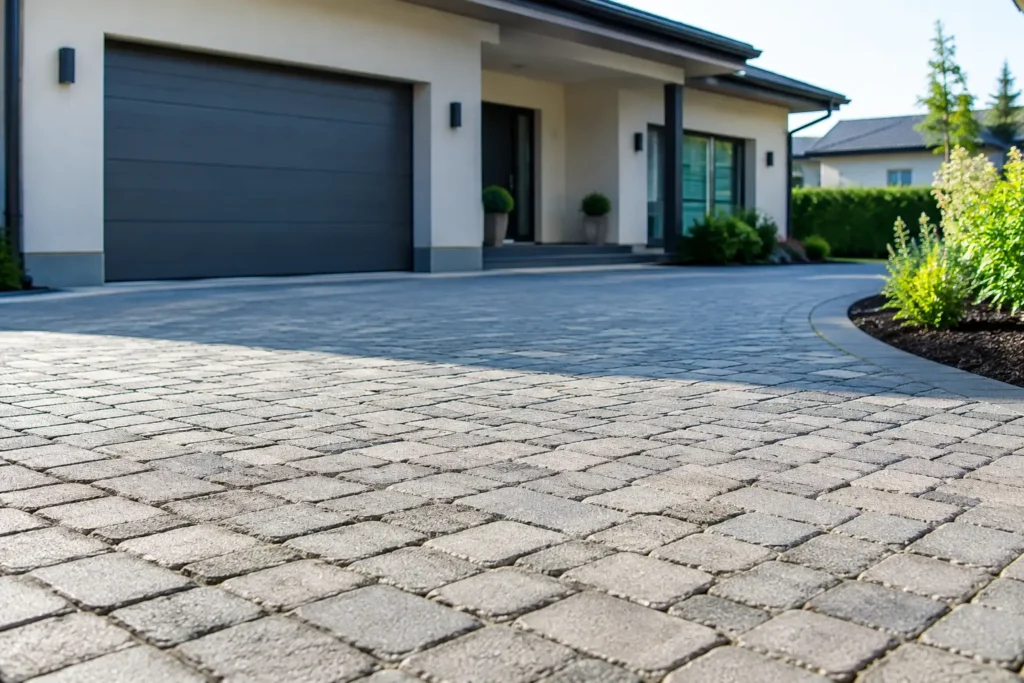
A driveway has to do more than look tidy beside the front garden. It needs to handle daily vehicle loads, cope with heavy rain, and avoid sending every drop of stormwater towards the street or garage. Permeable paving for driveways is designed to meet those practical demands by allowing water to pass through the surface and into a purpose-built base below.
For Melbourne property owners, this can be a smart option where drainage is poor, runoff is a concern, or a standard concrete driveway would make the front yard feel hard and enclosed. The result, however, depends far more on the preparation underneath than on the pavers you see from the street.
What is permeable paving?
Permeable paving is a hard surface system that lets rainwater move through joints, openings or a porous material rather than sheeting straight across the driveway. Water filters through the surface, enters layers of clean crushed stone beneath it, and then either soaks gradually into the surrounding soil or drains to a controlled outlet.
The most common driveway option is permeable interlocking pavers. These look similar to conventional concrete pavers but have wider joint spaces filled with small drainage aggregate. Other options include porous concrete and permeable asphalt, although pavers are often preferred for residential driveways because they are easier to repair in sections and offer more flexibility in colour, pattern and edging.
A permeable driveway is not simply pavers laid with gaps between them. The base needs to store and move water while staying stable under the weight of cars, SUVs, utes and occasional delivery vehicles. Without the correct aggregate, depth, compaction and edge restraint, a driveway can shift, rut or clog prematurely.
Why choose permeable paving for driveways?
The main benefit is better stormwater management. Instead of concentrating runoff at the bottom of the driveway, water is captured across the entire paved area. This can reduce puddling, minimise water flowing over a footpath, and ease pressure on nearby drains during a downpour.
It can also improve the appearance of a front landscape. Pavers provide more design choice than a plain concrete slab, allowing the driveway to sit comfortably alongside garden beds, retaining walls, turf and a defined entry path. A well-selected paver colour can complement brickwork, cladding or fencing without making the front of the home feel overly busy.
Permeable systems can be particularly useful on sites where surface water tends to pool. They may also suit homeowners looking for a more sustainability-conscious landscape, as the system can help water filter through the ground rather than becoming immediate runoff.
There are practical limits. If the underlying soil drains very slowly, the site has a high water table, or the driveway slopes sharply towards the house, water may need to be directed through an underdrain rather than left to infiltrate naturally. This is why a site assessment matters before selecting materials.
The layers beneath the pavers matter most
A durable permeable driveway is built from the ground up. After excavation, the subgrade is assessed and shaped to manage water movement. A geotextile fabric may be used where needed to separate soil from the stone layers and help prevent fine material migrating into the base.
Above this sits an open-graded aggregate sub-base. Unlike the dense road base commonly used below conventional paving, this stone layer contains interconnected voids that hold water temporarily while maintaining structural support. Its depth is determined by vehicle loads, soil conditions, drainage requirements and the intended water-storage capacity.
A smaller bedding aggregate is placed above the sub-base before the pavers are installed. The joints are then filled with the appropriate clean aggregate, and strong edge restraints are installed to keep the pavement locked together. Every layer needs accurate levels and proper compaction using methods suited to permeable materials.
This construction is one reason permeable paving should not be treated as a quick DIY paving job. The surface may look straightforward, but drainage performance and long-term stability rely on technical decisions that are not visible once the work is complete.
Will it cope with cars and Melbourne weather?
Yes, when it is designed for the actual use of the site. Permeable pavers can support regular residential traffic, but the base must reflect the load. A narrow driveway used by one small car has different requirements from a shared accessway, a steep drive, or a property where heavier vehicles regularly enter.
Melbourne’s weather also makes detail important. Long dry periods can leave dust and leaf litter on the surface, while intense rain can test drainage systems quickly. Quality installation includes careful attention to falls, transitions near garages and gates, edge restraints, and where overflow water will go during an exceptional storm.
For commercial or industrial sites, permeable paving may be suitable for parking bays, pedestrian areas and lower-speed vehicle zones. Heavy loading areas, turning zones and frequent truck traffic need specific engineering consideration. In some cases, conventional concrete or another hardscape solution may be more appropriate for the highest-stress sections.
Maintenance is simple, but it is not zero
Permeable paving is lower-maintenance than many people expect, but the joints and surface need to remain open for water to enter. Fine sediment, soil from garden beds, decomposing leaves and building dust can gradually reduce permeability if left unchecked.
Regular sweeping or blowing away leaves and debris is a good first step. Where sediment has built up, vacuum sweeping can remove fine material from the joints. The joint aggregate may need topping up over time, particularly after the first year of use or following major weather events.
Avoid washing soil, mulch or lawn clippings over the driveway. If a vehicle leaks oil, deal with it promptly using a suitable cleaner rather than allowing contaminants to sit on the surface. Keep nearby garden edging secure as well, so soil does not spill onto the paving during rain or routine gardening.
Weeds can occasionally appear in joints, usually from windblown seed rather than growth from below. Treating these early and maintaining clean joints will keep the driveway looking sharp without aggressive methods that could disturb the aggregate.
Cost and planning considerations
Permeable paving usually costs more upfront than a basic concrete driveway because it requires specialised excavation, drainage aggregate, detailed preparation and quality pavers. The final price depends on access, excavation conditions, driveway size, slope, chosen material, drainage connections and whether surrounding landscaping is being upgraded at the same time.
That additional investment can make sense when it solves a drainage problem, improves kerb appeal and avoids the visual heaviness of a large concrete slab. It may be less suitable when the site needs major drainage infrastructure, has highly reactive or poorly draining soil, or will receive frequent heavy vehicle traffic. There is no one-size-fits-all answer.
Before work begins, check local requirements for crossover work, stormwater management and any planning constraints affecting your property. A professional landscaper can assess the site, coordinate paving with garden levels and drainage, and ensure the driveway integrates properly with paths, turf, retaining walls and planting.
Getting the design right from day one
The best permeable driveway designs look intentional rather than technical. A clean paver layout, well-defined borders and planting that softens the edges can turn a necessary vehicle area into a strong part of the home’s street presentation. At the same time, practical details such as turning space, garage thresholds, bin access and pedestrian safety should be resolved before construction starts.
Australian Landscape Hub approaches driveway upgrades as part of the wider outdoor space, not as an isolated strip of paving. That allows drainage, hardscaping and garden design to work together from the outset.
A permeable driveway is most successful when it is selected for the right site and built on the right base. Take the time to assess how water moves across your property, how the driveway will be used, and how it should sit alongside the rest of your landscape. Those decisions will do more for its performance than the paver colour alone.