A backyard can look inviting at midday, yet feel very different under bare feet. So, can artificial grass get hot? Yes. Like decking, paving and other outdoor surfaces, synthetic turf absorbs sunshine and can become uncomfortably hot during a Melbourne heatwave – particularly in open, north- or west-facing areas.
That does not mean artificial grass is the wrong choice. It means the product, site preparation and intended use need to be considered together. A well-planned installation can provide a clean, low-maintenance surface for many years while reducing the heat concerns that matter most for families, pets, tenants and customers.
Why can artificial grass get hot?
Artificial grass is made from synthetic fibres, usually polyethylene or polypropylene, with a backing, base and often an infill material beneath the blades. These materials do not cool themselves through evaporation in the way living grass does. Natural turf draws water through its roots and releases moisture into the air, which can make its surface noticeably cooler when it is healthy and watered.
Synthetic turf has no root system or moisture cycle. When direct sun hits the fibres and dark backing, the surface absorbs and retains heat. On a still, clear afternoon, it may feel far hotter than the surrounding air temperature.
The difference is most obvious where children run barefoot, dogs lie down, or people step from a pool onto the lawn. It is less of an issue in a shaded courtyard used mainly for appearance, or in a commercial landscape where the turf is viewed more often than it is walked on.
What makes artificial turf hotter or cooler?
Surface temperature is not determined by one factor alone. The same style of turf can perform quite differently from one property to the next.
Direct sun and yard orientation
A lawn that receives full afternoon sun will heat up faster than one shaded by a pergola, mature trees or the building itself. In Melbourne, western exposure deserves special attention because the hottest part of the day often aligns with strong afternoon sun.
Before choosing turf, look at how the space is used across the seasons. A small strip beside a driveway may cope well with full sun because it is rarely used barefoot. A large play area outside the back door needs a more considered approach.
Turf colour, density and fibre type
Darker greens can absorb more heat than lighter shades. Dense, realistic-looking turf can also hold warmth within its fibres, although quality and construction matter as much as colour alone. Some premium products are designed with heat-reflective technology or fibre shapes intended to reduce heat absorption.
These options can help, but they are not a promise that turf will stay cool in extreme conditions. It is better to view them as one part of a heat-management plan rather than a standalone fix.
Infill and the base below
Infill is the material brushed between turf fibres to support the pile, improve resilience and help the grass stand upright. Depending on the system, it may be sand, rubber, organic material or another specialised product. Some infills can store heat, while lighter-coloured sand-based options may be a better choice for sun-exposed residential areas.
The compacted base underneath also affects drainage, stability and heat behaviour. A professional installation focuses first on a firm, level and free-draining foundation. Choosing an unsuitable base or infill simply because it is cheaper can create problems that are far more frustrating than a warm surface.
Surrounding materials
Artificial turf beside dark concrete, black fencing, metal edging or a rendered wall can feel hotter because those surfaces radiate heat back into the area. By contrast, planting beds, shade trees and lighter-coloured hardscaping can make the whole outdoor zone more comfortable.
This is where landscape design makes a real difference. Turf should be planned as part of the backyard, not installed as a green rectangle after every other decision has been made.
How to keep artificial grass cooler
The most effective solution depends on the site and how people use it. For a family lawn, comfort underfoot is usually the priority. For an entry area or low-traffic commercial space, durability and presentation may carry more weight.
Add shade where it is needed most
A pergola, shade sail or well-positioned tree can reduce direct exposure during the times you are most likely to use the yard. The goal is not necessarily to cover every square metre. Even shading the seating area, play zone or path from the house to the pool can improve everyday comfort.
When selecting trees, consider their mature size, leaf drop, root habits and position around services. Deciduous varieties can provide summer shade while allowing winter sunlight through, though they do require seasonal clean-up.
Use water for quick relief
A light spray from the hose can cool artificial grass quickly before children, guests or pets head outside. There is no need to soak the area. A brief rinse lowers the immediate surface temperature and washes away dust at the same time.
This is a practical short-term measure, not a replacement for good planning. On very hot days, the turf will warm again once the water evaporates, particularly in full sun.
Choose the right turf for the job
Ask to see samples outside, not only in a showroom or under indoor lighting. Place them in the intended area and check the texture, colour and temperature at different times of day. This gives a more useful impression than choosing from a photo.
For exposed areas, discuss lighter or heat-reducing options, pile height, infill and drainage with your installer. For pet areas, it is also worth considering odour management, ease of cleaning and whether the surface will be comfortable for paws.
Design with real use in mind
Artificial turf does not need to cover the entire backyard. Combining it with garden beds, paving, decking and shaded entertaining areas can create a more functional result. A smaller lawn in the right location is often more useful than a large exposed expanse that is difficult to enjoy in January.
For pool surrounds, consider a mix of turf and cooler materials rather than relying on one surface throughout. For commercial properties, use turf where it improves presentation and directs foot traffic, while keeping high-contact waiting or recreation areas shaded.
Is hot artificial grass dangerous for children and pets?
It can be. On hot, sunny days, synthetic turf may become hot enough to cause discomfort or burns on bare skin and paw pads. Young children and pets are particularly vulnerable because they may not immediately move away from a hot surface.
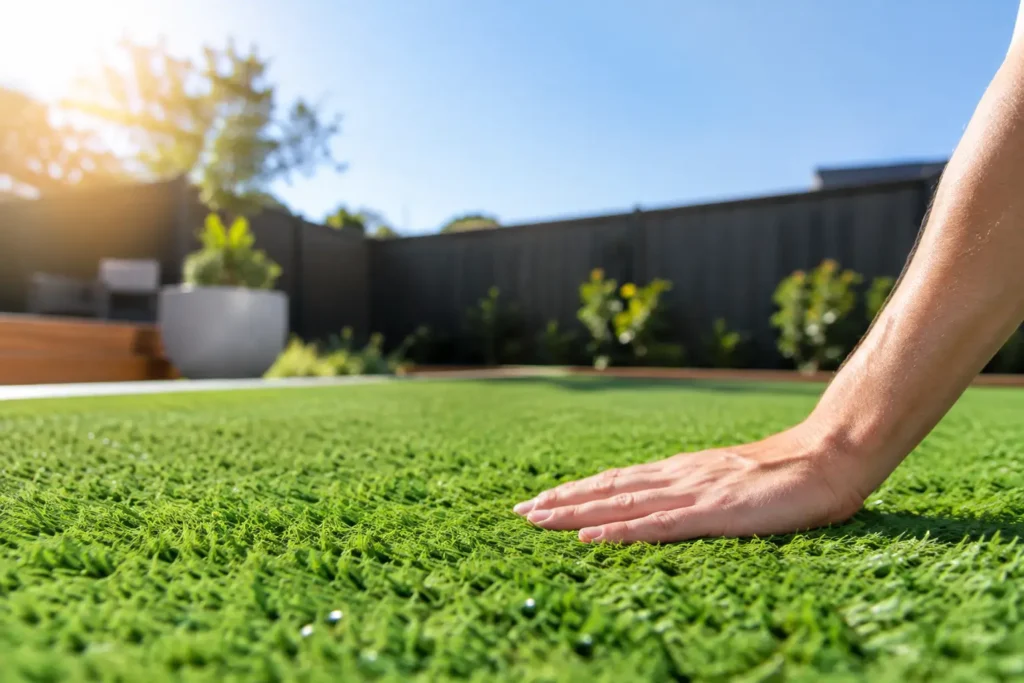
A simple hand test is a sensible habit: place the back of your hand on the turf for several seconds. If it is too hot to hold comfortably, it is too hot for bare feet or paws. Keep pets indoors or in shade during peak heat, provide fresh water, and avoid encouraging active play on exposed turf in the middle of the day.
This is not unique to artificial grass. Pavers, concrete, timber decking and asphalt can all become dangerously hot in an Australian summer. The difference is that artificial grass often looks soft and inviting, so people may not expect the surface temperature to be high.
When natural turf may be the better choice
Natural lawn remains a strong option for some properties. If you have space, access to water, suitable soil and a household that uses the lawn heavily in summer, real turf can offer a cooler surface underfoot. It also contributes to a softer garden feel and supports the natural cooling effect of planted landscapes.
The trade-off is maintenance. Natural grass needs mowing, watering, feeding, weed control and occasional repair, especially in high-traffic or shaded locations. Artificial turf offers consistency and lower routine upkeep, but it still needs occasional brushing, cleaning and attention to drainage.
For many Melbourne homes, the best answer is not artificial versus natural. It is choosing the right balance for each part of the property. A shaded natural lawn may suit a children’s play area, while artificial turf can be ideal for a narrow side yard, low-light zone, courtyard or commercial frontage where maintenance access is limited.
Get the installation details right
Heat is one reason to avoid treating artificial grass as a simple DIY roll-out job. Poor joins, uneven levels, inadequate drainage and the wrong infill can compromise how the surface looks and performs over time.
An experienced landscaping team can assess sun exposure, drainage, access, intended use and surrounding materials before recommending a turf solution. Australian Landscape Hub designs and installs outdoor spaces with these practical details in mind, whether the goal is a family-friendly backyard, a polished rental property or a durable commercial landscape.
The best artificial lawn is not simply the greenest one. It is the one positioned, installed and shaded to suit the way your outdoor space is genuinely used.