A garden can look healthy on Saturday morning and stressed by Tuesday afternoon when a run of dry Melbourne weather arrives. The difference is rarely just how much water it receives. It is whether that water reaches the right plants, at the right rate, at the right time. Knowing how to plan garden irrigation before turf, garden beds and paving are installed prevents patchy lawns, thirsty plants and wasted water later.
A well-planned system should suit the property rather than force the garden to suit the system. It needs to account for soil, sunlight, plant selection, slope, water pressure and how you actually use the outdoor area. This approach delivers a landscape that looks cared for without turning watering into another daily job.
Start with a practical site assessment
Walk the garden at different times of day if possible. Note where the sun is strongest, which areas stay shaded, where water pools after rain and where the ground dries first. A north- or west-facing bed beside a rendered wall may need very different watering from a shaded side garden, even if they sit only metres apart.
Soil matters just as much. Many Melbourne properties have clay-heavy soil that holds moisture but can shed water when it becomes compacted or dry. Sandy soil drains quickly and often needs shorter, more frequent watering. Loamy soil is more forgiving, but it still benefits from measured watering rather than a set-and-forget schedule.
Also identify existing services before planning pipe routes. Locate water, gas, electrical and drainage lines, then consider future works such as decking, retaining walls, garden lighting, paving or a shed. Installing irrigation before hard landscaping is completed is usually cleaner and more cost-effective, but the layout must allow for access points and avoid areas likely to be excavated later.
Divide the garden into watering zones
The most effective irrigation systems do not treat every part of the yard equally. They divide the landscape into zones based on plants and water needs. Each zone is controlled separately, allowing you to water deeply where it is needed without overwatering plants that prefer drier conditions.
A typical residential garden may include lawn, established trees, ornamental beds, vegetable gardens, screening plants and pots. Lawn often needs pop-up sprinklers, while garden beds and hedges are usually better served by dripline. Pots may need their own micro-irrigation line because their soil volume is small and dries quickly in warm or windy weather.
Avoid combining lawn sprinklers and drip irrigation on the same zone. They operate at different pressures and watering rates. Sprinklers apply water across a broad surface quickly, while drippers release it slowly at the root zone. Running both together usually means one area receives too much and the other not enough.
Match the method to the planting
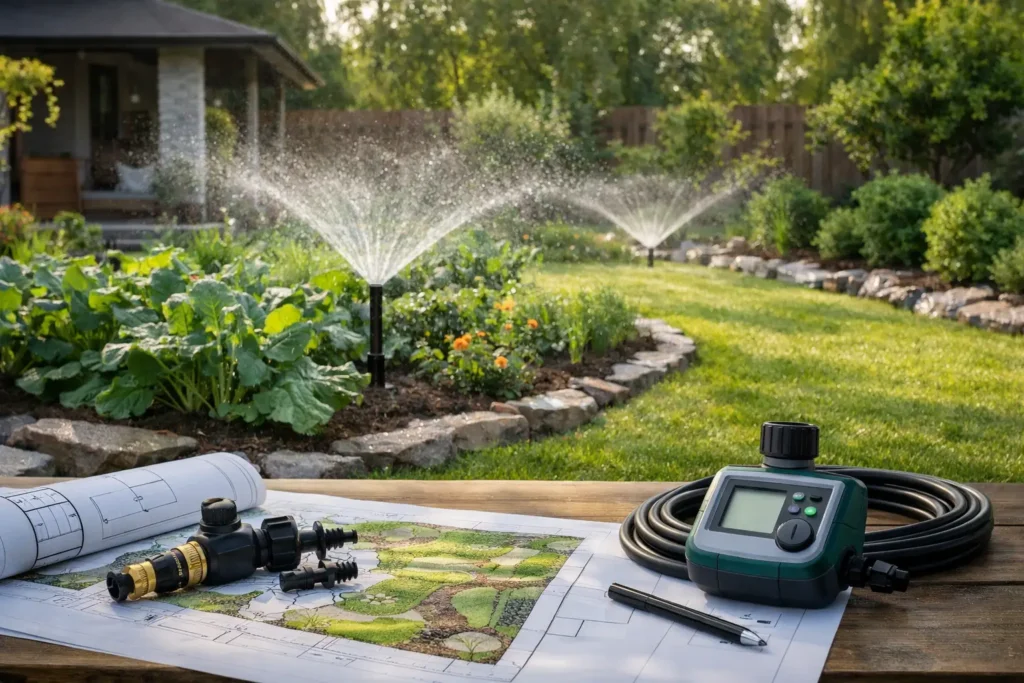
Pop-up sprinklers work well for natural turf and larger open lawn areas. Select heads with matched precipitation rates so the whole zone applies water evenly. A poorly arranged sprinkler layout can leave dry strips between heads and waste water on paths, fencing and walls.
Dripline is a practical option for most garden beds, hedges and feature planting. It keeps foliage drier, directs water into the soil and reduces evaporation. It can be concealed under mulch, although it should remain accessible enough for occasional checks and repairs. For newly planted gardens, extra emitters may be needed around larger shrubs and trees until their root systems establish.
Micro-sprays can be useful in particular situations, such as densely planted beds or areas where dripline is difficult to place. However, they are more exposed to wind and evaporation, so they are not always the most water-efficient choice for an open site.
Plan water pressure, flow and pipework properly
A good design on paper can still underperform if the water supply cannot support it. Before selecting sprinklers or deciding how many heads belong in a zone, check the available water pressure and flow rate. These figures determine the size of each zone and help prevent weak spray patterns at the far end of the line.
Pressure that is too high can cause misting, which blows away before reaching the lawn. Pressure that is too low can leave sprinklers failing to pop up or distribute water evenly. Pressure-regulating components can help, particularly on drip irrigation lines, where consistent low pressure protects fittings and improves delivery.
Pipe sizing is another detail worth getting right. Undersized pipe may restrict flow, especially on larger blocks or long runs to the backyard. Mainlines, lateral lines and fittings should be selected for the system’s demand and buried at an appropriate depth. Include isolation valves where practical so a section can be repaired without shutting down every zone.
For commercial or larger residential properties, planning for separate water meters, rainwater tanks, pumps or bore supply may also be worthwhile. These options can reduce reliance on mains water, but they need to be designed around water quality, storage capacity, pump performance and local requirements.
Choose controls that respond to real conditions
A manual tap timer can suit a small, straightforward garden, but a programmable controller provides more flexibility as the landscape grows. It allows different run times for each zone and makes seasonal adjustments easier. For most properties, this is where convenience and water efficiency meet.
Smart controllers can adjust watering in response to local weather data, while rain sensors pause programmed irrigation during rainfall. A soil-moisture sensor can be useful in selected beds, though it needs correct placement and should not replace regular observation of the garden.
Do not rely on one watering programme all year. Melbourne’s weather can shift sharply between seasons and even within a week. Established garden beds may need very little supplementary water in winter, while newly planted lawns, hedges and trees need closer attention through their first summer. Program watering for early morning where possible. This reduces evaporation and gives foliage time to dry, helping limit fungal problems.
Design for water-wise performance, not just convenience
Irrigation works best alongside sensible landscape choices. Group plants with similar water needs, improve soil with organic matter where appropriate and apply a quality mulch layer to garden beds. Mulch reduces surface evaporation, moderates soil temperature and helps water soak in rather than run off.
Consider the long-term maintenance of every component. Dripline can be damaged by digging, roots or enthusiastic dogs. Sprinkler heads can be knocked by mowers or covered by turf. Filters need cleaning, and seasonal inspections are essential. A system that is easy to access, clearly zoned and installed with quality components is far easier to maintain than one hidden beneath finished landscaping with no clear plan.
Water efficiency does not mean allowing plants to struggle. Deep, less frequent watering encourages roots to grow down through the soil, making established plants more resilient. The ideal frequency depends on plant type, soil and weather, so inspect the moisture below the surface before increasing run times. If water is pooling or running onto paving, reduce the application rate or break the cycle into shorter intervals.
Build irrigation into the wider landscape plan
The best time to plan irrigation is at the same time as the garden design. Planting locations, lawn shape, retaining walls, decking, drainage and outdoor living areas all affect where pipes and valves should sit. Coordinating these elements avoids retrofitting pipes through new paving or placing sprinkler heads where future furniture, play equipment or vehicles will block them.
For a complete landscape project, Australian Landscape Hub can coordinate irrigation with turf installation, planting, hardscaping and drainage considerations, creating a system that supports the finished space rather than competing with it. This is particularly valuable where a property has varied levels, new retaining walls or a mix of lawn and low-maintenance planting.
Before installation, review the final plan from the perspective of day-to-day use. Make sure valve boxes are not placed in the middle of a path, sprinkler coverage does not hit windows or entertaining areas, and controllers are located where they can be reached easily. Photograph pipework before it is covered and keep a simple zone plan for future maintenance.
A thoughtfully irrigated garden should feel effortless, but that result starts with careful decisions beneath the surface. Plan around your site, give each plant group the water it actually needs and allow room for the landscape to mature. Your garden will be better prepared for dry periods, easier to maintain and far more likely to stay healthy through every Melbourne season.