
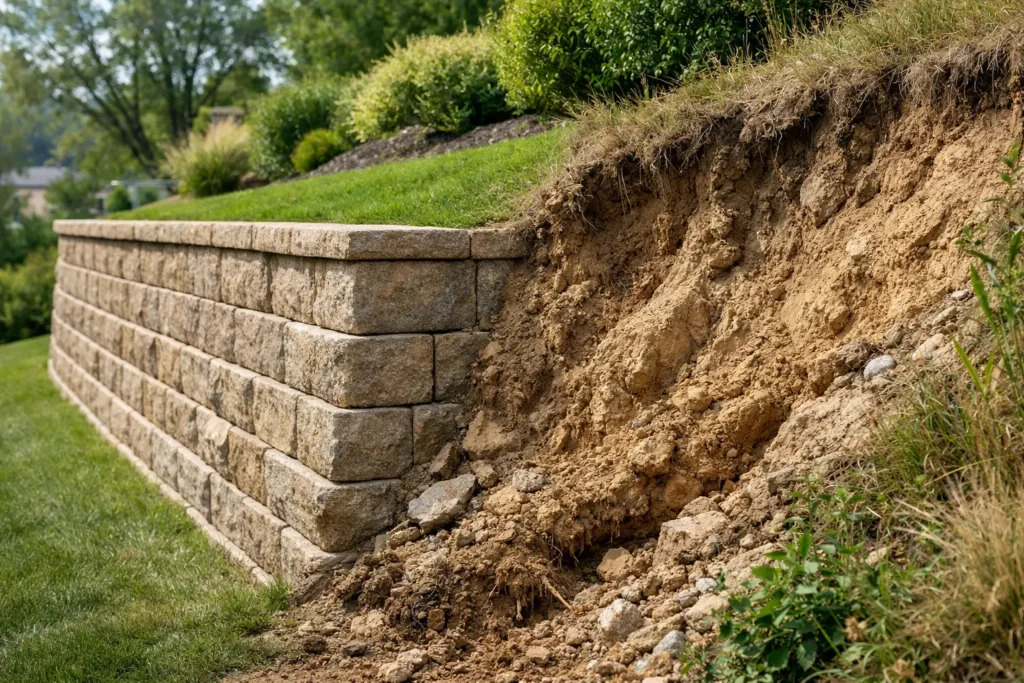
A bare patch below a garden bed, soil collecting along a fence line or water cutting tracks through a sloping lawn are more than cosmetic problems. They are signs that the ground is moving. So, can retaining walls prevent erosion? In many Melbourne properties, yes – provided the wall is properly designed with drainage, stable footings and the right approach to the surrounding landscape.
A retaining wall holds soil at different levels, reducing the distance that loose earth, mulch and surface water can travel downhill. It can turn an unstable or difficult slope into a usable terrace for planting, paving, turf or an outdoor living area. But a wall is not a standalone fix for every erosion issue. Its success depends on understanding why water and soil are moving in the first place.
Can retaining walls prevent erosion effectively?
Retaining walls are highly effective at controlling erosion caused by sloping land. They restrain soil pressure, create level sections and stop small washouts becoming larger failures after heavy rain. This is particularly useful on properties where the natural fall of the block directs water towards a patio, driveway, neighbouring boundary or building.
Without a wall, rainfall gathers speed as it runs down a slope. It carries fine soil particles, exposes plant roots and can leave garden edges collapsing over time. By breaking one long slope into shorter, supported levels, a retaining wall slows this process and keeps soil where it belongs.
The key word is “properly”. A wall that is too shallow, poorly drained or built from unsuitable materials may hold for a while, then lean, crack or fail under pressure. A good result comes from treating the retaining wall, drainage and planting as one system rather than separate jobs.
Why water is usually the real problem
Soil can erode due to wind, foot traffic, poor groundcover and loose fill, but water is the most common driver. Melbourne’s weather can shift from long dry periods to intense downpours. Dry, compacted soil often sheds water rather than absorbing it, while newly disturbed soil has little protection against runoff.
As water builds behind a retaining wall, it creates hydrostatic pressure. This pressure can be significant, especially in clay-heavy ground or where downpipes discharge near the wall. If there is nowhere for that water to go, it pushes against the structure and may force soil through gaps, bow the face outward or undermine the base.
That is why drainage is not an optional extra. A professionally built wall generally includes free-draining material behind it, agricultural drainage pipe where required, filter fabric to stop fine soil clogging the drainage zone, and a clear outlet for water. Surface levels should also guide runoff away from buildings and avoid sending concentrated water onto a neighbour’s property.
How a retaining wall controls soil movement
A retaining wall works through a combination of physical support and better site management. The wall creates a firm barrier that resists the sideways pressure of soil. Its footing transfers load safely into the ground, while its height and construction method are selected to suit the slope, soil condition and use of the area above it.
Terracing is often the practical answer on steeper blocks. Instead of building one tall wall, two or more lower walls can divide the slope into manageable zones. This reduces pressure on each structure and creates attractive areas for gardens, steps, pathways or lawn. It also makes maintenance safer and easier than trying to manage one sharp, exposed incline.
Planting strengthens the outcome. Deep-rooted and spreading plants help bind the upper soil layer, while mulch softens the impact of rainfall. The right plants need to suit the light, irrigation and soil conditions, however. Dense planting will not compensate for poor drainage, and thirsty plants can struggle in dry, exposed positions without a suitable watering plan.
Choosing the right retaining wall material
Material selection affects appearance, lifespan, cost and structural performance. There is no single best option for every property.
Concrete sleeper retaining walls are a popular choice for residential and commercial landscapes because they are strong, clean-lined and resistant to rot and termites. They suit contemporary gardens and can manage substantial changes in level when paired with correctly engineered steel posts and drainage.
Timber retaining walls can offer a warmer, more natural look and may suit lower garden edges or informal landscaping. Their service life depends on timber quality, ground contact, moisture exposure and installation. They are not always the best choice where a wall must retain a large volume of soil for many years.
Natural stone and masonry walls can create a premium finish that works well with established gardens and feature landscapes. They require careful construction, particularly where they are load-bearing, and may be more labour-intensive than sleeper systems. Segmental block walls can also be effective, but they need accurate base preparation and reinforcement where the design calls for it.
The best material is the one that meets the engineering requirements, complements the property and fits the expected maintenance level. A cheaper wall that needs early repairs rarely represents good value.
Design details that make the difference
A retaining wall should be planned around the whole site, not just the visible face. Before construction begins, a landscaper needs to assess the slope, likely water paths, soil type, access for equipment and what sits above and below the proposed wall. A driveway, pool, shed, mature tree or neighbouring structure can change the design considerably.
Wall height matters. Higher walls carry more load and usually require a more substantial footing, stronger posts or reinforcement, and in some cases engineering documentation or permits. Local requirements can vary according to height, location, boundary conditions and whether the wall supports a structure or vehicle load. Checking the relevant requirements before work starts helps avoid costly changes later.
Setbacks and drainage responsibilities also deserve attention. A retaining wall built close to a boundary should not redirect water, destabilise adjoining land or create an avoidable dispute. Clear levels, properly located outlets and a design tailored to the property provide far better protection than a quick fix after erosion has already occurred.
When a retaining wall is not enough
Retaining walls prevent erosion related to unstable slopes, but they will not solve every drainage issue. If water is coming from a broken stormwater line, overflowing gutters, a failed pit, groundwater seepage or a neighbouring site, the source must be addressed as well.
Likewise, erosion around a driveway may require reshaping the surface, installing drainage channels or repairing the edge restraint. A low-lying lawn that stays wet may need improved drainage and soil preparation rather than a wall. On very steep land or sites with signs of broad ground movement, engineering advice is essential before landscaping begins.
Watch for warning signs such as a wall leaning forward, widening cracks, soil washing from behind the wall, puddling at its base, or timber posts that are soft and deteriorating. Acting early is safer and more affordable than waiting for a partial collapse.
A better approach for Melbourne properties
The most reliable erosion control projects combine sound construction with practical landscaping. This may mean retaining walls to establish levels, drainage to manage runoff, paving or decking to create stable access, and selected plants or turf to protect exposed soil. Each element supports the next.
For homeowners, this can turn a hard-to-use backyard into a functional outdoor area without the ongoing mess of washed-out garden beds. For commercial and industrial sites, it can protect access areas, improve presentation and reduce maintenance caused by loose soil and runoff.
Australian Landscape Hub brings more than 20 years of hands-on landscaping experience to retaining wall and drainage-focused projects across Melbourne’s outer north-west and surrounding areas. A tailored site assessment is the right place to start, because the most effective wall is one designed for your land, your water flow and the way you want to use the space.
If erosion is starting to affect your garden, boundary or outdoor area, do not wait for the next heavy rainfall to reveal a bigger problem. A well-planned retaining wall can provide the stable foundation your landscape needs to stay attractive, usable and protected for years to come.