A deck can turn an unused patch of backyard into the place where breakfast, barbecues and family time naturally happen. But knowing how to choose decking materials means looking beyond the colour sample. Melbourne’s changing weather, the orientation of your yard, expected foot traffic and the time you can realistically spend on maintenance all shape the right decision.
The best material is not always the cheapest upfront or the one that looks best in a showroom. It is the option that suits your home, performs safely through the seasons and delivers the outdoor lifestyle you have planned for years to come.
Start with the way you will use the deck
Before comparing timber boards with composite samples, consider the job the deck needs to do. A small front entry, a covered alfresco area and a large poolside entertaining zone have very different demands.
If the space will host regular gatherings, choose a material and board profile that can handle chairs being moved, children playing and frequent foot traffic. For a deck around a pool or spa, slip resistance, bare-foot comfort and water exposure become more important. A raised deck may also need careful structural planning, quality framing and compliant balustrades, regardless of the surface material you select.
Think about where the deck sits as well. A west-facing backyard can receive intense afternoon sun, while a sheltered southern courtyard may stay damp longer after rain. Nearby trees can add shade and character, but they also drop leaves, sap and debris that affect cleaning requirements.
How to choose decking materials for Melbourne conditions
Melbourne is well known for quick weather changes. Decking can face strong summer heat, winter rain, moisture from morning dew and temperature shifts that cause materials to expand, contract or weather over time. This is why material performance matters as much as appearance.
Natural hardwood decking
Hardwoods such as spotted gum, blackbutt and merbau remain popular for their genuine timber grain, strength and warm natural character. Each board has variation, which gives a finished deck a more individual look than manufactured alternatives.
A quality hardwood deck can last for many years when it is correctly installed and maintained. It is especially well suited to homeowners who value the feel of real timber and are prepared to clean, oil or recoat it periodically. Some hardwoods perform better than others in bushfire-prone areas, but ratings and compliance should always be checked for the specific product and site.
The trade-off is maintenance. Timber needs care to retain its colour and protect it from drying, staining and weathering. Without regular attention, it will naturally fade to a silvery-grey tone. That can look attractive in the right landscape, but it should be an intentional choice rather than an unwelcome surprise.
Treated pine decking
Treated pine is often the most budget-friendly timber option. It can be painted, stained or oiled to suit a range of outdoor styles, from a simple family backyard to a more formal entertaining area.
It is a practical choice where budget is a major factor, particularly for larger decks. However, treated pine is generally softer than hardwood, so it may mark or wear more easily in high-traffic areas. It also requires ongoing sealing or coating to maintain its appearance and durability. Good installation, proper drainage and suitable fasteners are essential to prevent premature issues.
Composite decking
Composite decking is made from a blend of recycled timber fibres and plastic materials. It has become a popular option for property owners who want a consistent finish and lower routine maintenance. Most composite boards do not require sanding, staining or oiling, and they are designed to resist rot, splintering and insect damage.
This makes composite a strong option for busy households, rental properties and commercial spaces where maintenance time needs to stay manageable. It is available in a broad range of colours and grain patterns, helping you create anything from a contemporary charcoal deck to a softer timber-look finish.
Its upfront cost is usually higher than treated pine and can exceed some timber options. Quality varies between products, so compare warranty terms, slip ratings, fade resistance and installation requirements rather than choosing solely by colour. Darker composite boards can also become hot underfoot in direct sun, which matters for uncovered north- and west-facing decks.
Modified timber and alternative products
Modified timber products are treated to improve stability and resistance to moisture, while bamboo composite and other engineered boards offer further design choices. These materials can be useful when you are targeting a particular look, sustainability preference or performance standard.
They should be assessed case by case. Ask how the product handles UV exposure, wet conditions, scratches and local installation requirements. A material that performs well in a brochure may not be the best match for a heavily shaded courtyard, a pool surround or a deck exposed to full afternoon sun.
Compare cost over the life of the deck
The quote price is only one part of the budget. A lower-cost timber deck may be excellent value, but it will need cleaning and periodic oiling or staining. Composite typically costs more at installation, then reduces the time and money spent on surface maintenance over its life.
Factor in the full scope of work: demolition of an existing structure, ground preparation, footings, framing, stairs, screening, balustrades, lighting and access constraints. A good deck is built from the ground up, and the framing system should be suited to the board material and the load it will carry.
For commercial properties, maintenance disruption can carry its own cost. A durable, easy-clean surface may justify a larger initial investment if it keeps an entry, courtyard or staff area looking professional with less downtime.
Do not overlook heat, slips and splinters
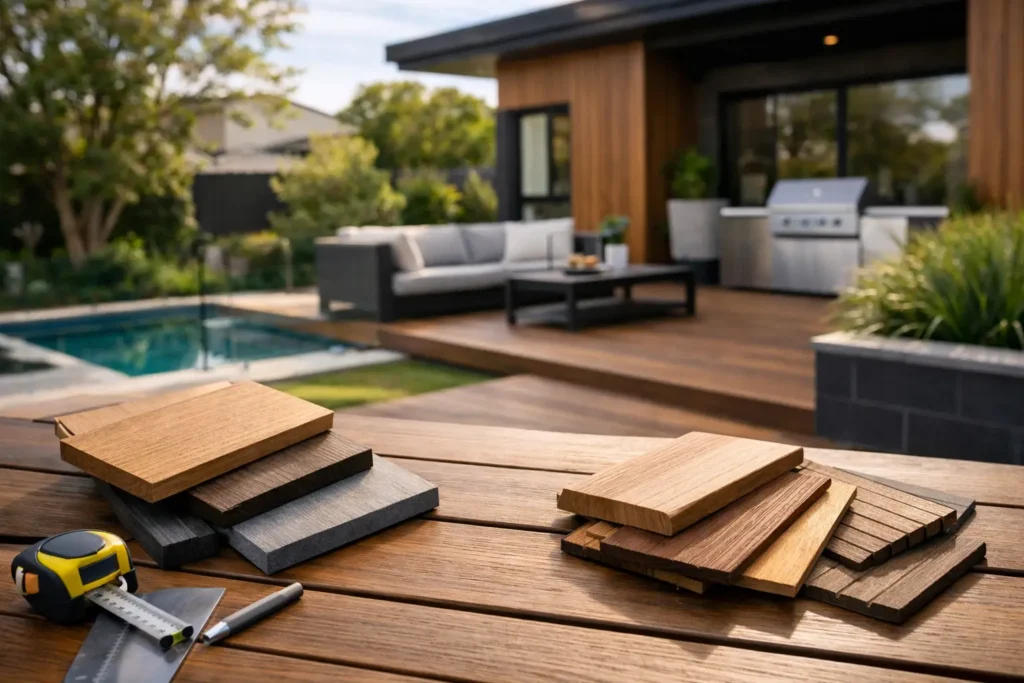
A deck should be pleasant to use, not just attractive from inside the house. Request samples and place them in the proposed area if possible. Check how the colour looks in full sun, against your exterior walls and beside existing paving or garden beds.
Light-to-mid tones generally feel less harsh in bright sun than very dark boards, although the material itself also affects surface temperature. If your family spends summer barefoot outdoors, this deserves serious consideration.
For wet areas, select a board with appropriate slip resistance and design the deck so water can drain away efficiently. The direction of boards, gaps between them and the fall of the surface all influence drainage. Timber can splinter if neglected, while composite avoids many of those concerns but may still scratch or stain depending on the product. There is no maintenance-free deck, only materials with different care requirements.
Match the board to the design, not the other way around
Decking works best when it is part of a complete outdoor plan. Board width, fixing method, picture framing, step details and the transition to lawns, paving, retaining walls and garden beds all affect the finished result.
Hidden fixings can create a clean, contemporary surface, while face-fixed timber suits many traditional designs and can be easier to repair board by board. Wider boards can look modern and expansive, but narrower boards may better suit detailed spaces or curved edges. Your installer should also allow the correct expansion gaps for the material, especially with composite boards.
A thoughtfully designed deck can solve practical problems too. It can level a sloping yard, create zones for dining and lounging, improve access from the house or make a compact courtyard feel more usable. This is where an experienced landscaping team can help align the material choice with drainage, planting, shade and the rest of the site.
Ask practical questions before approving a quote
A clear quote should identify the decking product, board dimensions, framing material, fixing system and finish. It should also explain what preparation is included and whether permits, engineering or compliance requirements apply to the proposed structure.
Ask how the material should be cleaned, how often it needs recoating or oiling, what voids the warranty, and how repairs are handled if a board is damaged. For timber, ask whether the quoted price includes oiling or staining after installation. For composite, confirm whether the selected colour and range are suitable for your level of sun exposure.
Australian Landscape Hub helps Melbourne property owners bring these decisions together, from the initial design through to decking, hardscaping and surrounding landscape works. The aim is a finished space that looks right on day one and remains practical long after the tools are packed away.
Choose the decking material that fits your real routine: the sun your yard receives, the maintenance you will keep up with and the people who will use the space. A considered choice at the planning stage is what gives a deck the best chance of becoming a lasting part of your home or property.