A modern home can lose much of its impact when the outdoor space feels like an afterthought. Clean architectural lines, large windows and contemporary finishes need a landscape that is equally considered – one that frames the home, handles Melbourne’s changing weather and gives people a genuine reason to spend time outside.
The strongest landscaping trends for modern homes are not about copying a picture-perfect display garden. They combine low-maintenance materials, climate-aware planting and defined outdoor living zones into a space that works for the people using it. Whether you are updating a compact courtyard, a new-build backyard or a commercial frontage, the right design should look sharp on day one and remain practical years later.
Landscaping Trends for Modern Homes: Function First
Modern landscaping is moving away from gardens that look good only from the kitchen window. Property owners want outdoor areas that have a clear purpose: a place to entertain, a safe lawn for children, an inviting entry, a quiet corner for morning coffee or an easy-care setting that lifts property value.
This is why zoning is central to contemporary design. Rather than placing a lawn, garden bed and barbecue area wherever there is room, a well-planned layout creates a natural sequence from the house to the garden. A deck may become the dining area, paving can establish a fire-pit or lounge zone, and planting can soften boundaries without closing the space in.
For smaller blocks, this approach is especially valuable. One flexible space with integrated seating, planting and durable paving often delivers more than a large lawn that receives little use. For larger properties, zoning prevents the garden from feeling empty and makes maintenance easier to manage.
Outdoor Rooms That Extend the Home
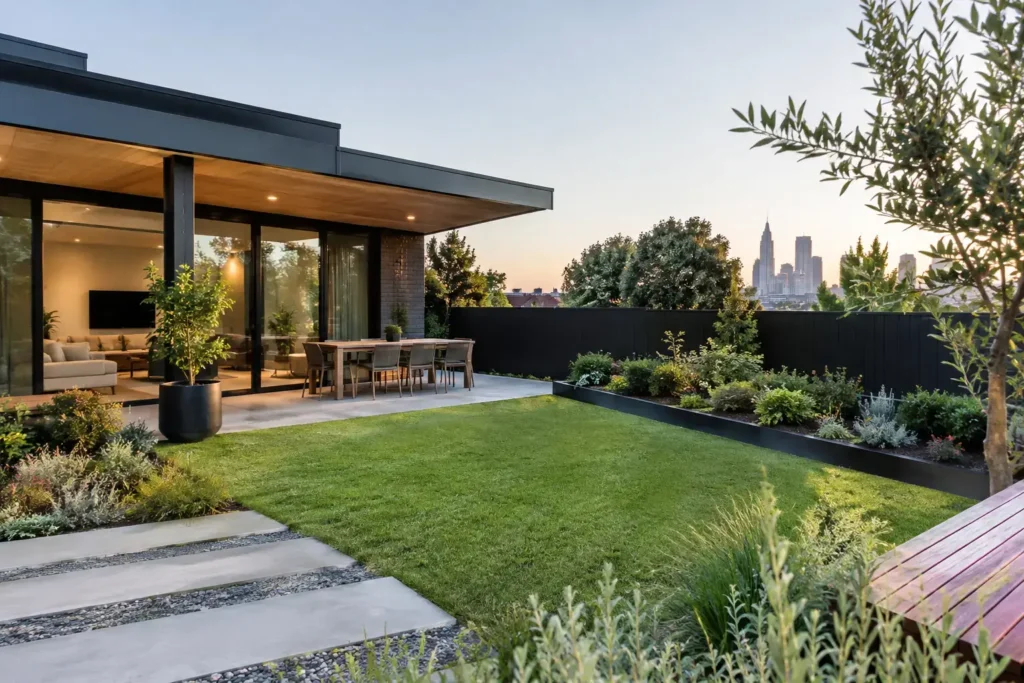
The line between indoors and outdoors is continuing to blur. Modern homes often feature sliding or stacking doors, and landscaping is increasingly designed to make that connection feel deliberate. The aim is not simply to put furniture outside. It is to create an outdoor room with a solid, comfortable foundation.
Decking remains a popular choice for its warmth and versatility, particularly where a level entertaining surface is needed close to the home. Concrete and large-format pavers suit a more architectural look and can be a practical option for high-traffic areas. The right choice depends on the home’s style, site levels, drainage needs and how much ongoing care you want to take on.
Built-in benches, retaining walls that double as seating, screened service areas and integrated garden edges can make a space feel finished without filling it with clutter. Shade also matters. Pergolas, shade structures and carefully located trees can reduce summer heat while allowing winter sunlight into key areas. In Melbourne, where a warm afternoon can turn cool quickly, planning for comfort across seasons makes an outdoor area far more usable.
Softer Planting Against Clean Lines
Minimalist homes do not need minimalist gardens. One of the most effective modern landscaping trends is the contrast between crisp hardscaping and layered, natural-looking planting. A straight concrete path or dark fence can feel harsh on its own. Grasses, flowering perennials, groundcovers and small trees add movement, texture and seasonal interest.
The best plant palette is usually restrained rather than crowded. Repeating a small number of reliable species creates a calm, cohesive look, while different foliage shapes prevent the garden from becoming flat. Native plants can work beautifully in contemporary settings, but a modern Australian garden does not have to be exclusively native. The priority is selecting plants that suit the soil, sunlight, wind exposure and maintenance level of the site.
Drought-tolerant species and mulch-based garden beds are practical choices for water-conscious households. They can reduce the need for frequent watering, but low-water does not mean no-water. New plants still need consistent care while establishing, and even tough gardens perform better with sensible irrigation during prolonged dry periods.
Feature Trees Create Scale and Privacy
A carefully chosen feature tree is becoming a key design element in new landscapes and renovations. It can provide shade, soften a two-storey facade, draw attention to an entry or create privacy from neighbouring properties. The right tree adds character that paving and fences alone cannot provide.
Selection needs care. Consider mature size, root behaviour, leaf drop, canopy density and proximity to structures, pools and services. A tree that looks modest at planting can become difficult to manage if it is in the wrong position. Professional garden planning helps avoid expensive changes later.
Low-Maintenance Lawns and Smarter Surfaces
Homeowners are still asking for green space, but they are more selective about where it goes. Natural turf remains an excellent option for families, pets and anyone who enjoys the feel of real lawn. It cools the garden, handles active use when properly selected and provides visual relief among hard surfaces.
Artificial grass is also a strong fit for areas where natural turf struggles, such as narrow side yards, shaded courtyards and small spaces that need to look tidy with minimal upkeep. Quality installation is essential. The base preparation, drainage and edging determine whether artificial turf stays smooth and performs as intended.
Neither option is automatically right for every property. Natural lawn needs mowing, feeding and watering. Artificial grass avoids regular mowing but can retain heat in full sun and still needs occasional cleaning. A balanced design may use natural turf in the main backyard and artificial grass in a difficult-to-maintain utility area.
Permeable paving, gravel zones and well-designed drainage are equally important. Heavy rain should move away from buildings and not pool on paths, lawns or patios. Good drainage is rarely the most visible part of a landscape, but it protects the investment behind the scenes.
Strong Boundaries, Better Street Appeal
Front gardens are becoming more intentional. A modern front landscape should make access clear, improve street appeal and complement the architecture without creating unnecessary maintenance. Defined paths, neat planting bands, feature lighting and a purposeful letterbox or entry treatment can significantly change how a property presents.
Privacy is another priority, particularly on new estates and compact suburban blocks. Timber screens, rendered walls, slatted fencing and dense planting can create separation without making the yard feel boxed in. Retaining walls may also be required to manage sloping sites, and they should be designed as part of the overall landscape rather than treated as a purely structural addition.
Material consistency matters here. Repeating colours or finishes from the home – such as charcoal, warm timber tones or light concrete – helps the landscape look connected to the building. Too many competing materials can make even a large space feel busy.
Lighting That Works After Sunset
Outdoor lighting has shifted from a single bright floodlight to layered, practical illumination. Path lights improve safety, uplights can highlight a feature tree or textured wall, and soft lighting around decks or steps makes entertaining areas more inviting after dark.
The goal is enough light to navigate comfortably, not a backyard that feels like a car park. Warm-toned lighting generally creates a more relaxed result, while careful placement avoids glare through bedroom windows or into neighbouring homes. Any electrical work should be completed by a qualified professional.
Design for Maintenance, Not Just the Reveal
The best contemporary gardens are designed with the reality of upkeep in mind. This includes leaving access for mowing and pruning, choosing surfaces that can be cleaned easily, installing irrigation where it will genuinely save time and avoiding garden beds too narrow to maintain properly.
Australian Landscape Hub approaches these decisions as part of the complete build, from initial layout and plant selection through to decking, turf, retaining walls, concreting and ongoing maintenance. Working with one experienced team can reduce handovers between trades and ensure each element supports the finished design.
Trends are useful when they solve a real problem, not when they date a garden. Choose materials that suit your home, plants that suit the conditions and spaces that suit the way you live. A landscape with that foundation will continue to feel modern long after the latest look has moved on.