
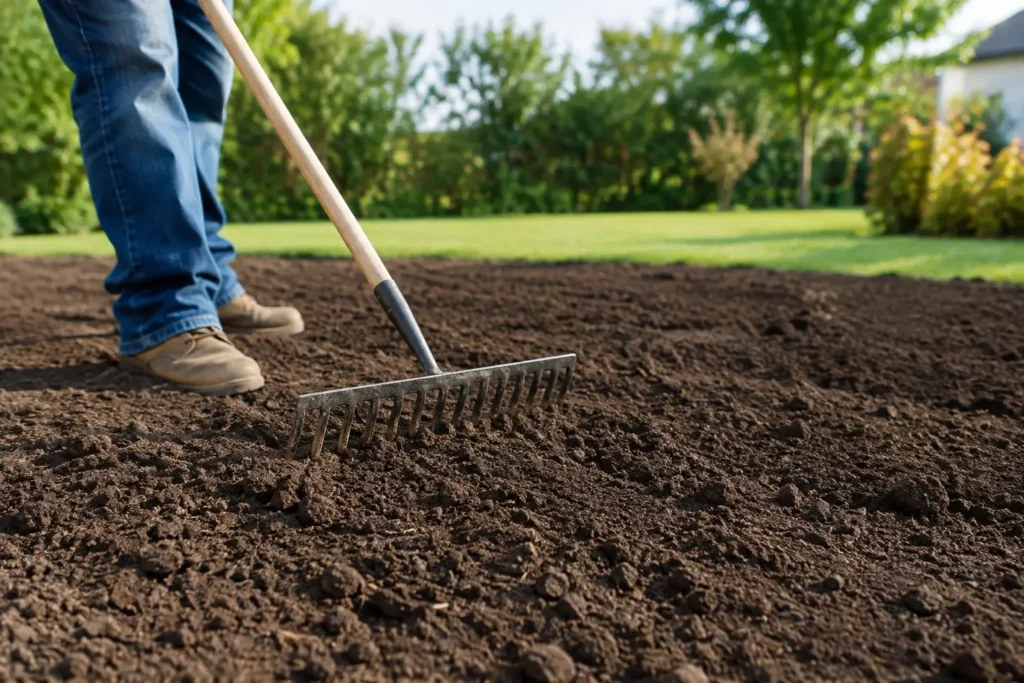
A new lawn can look excellent on installation day and still struggle within a few months if the ground underneath has been rushed. To prepare soil for turf properly, the focus needs to be below the surface: remove the causes of poor growth, create the right soil depth and grade, and make sure water can move where it should. Good preparation is what gives natural turf the conditions to establish evenly and stay usable through Melbourne’s changing seasons.
Whether you are upgrading a compacted backyard, finishing a new build, or improving the presentation of a commercial property, the work should begin with an honest assessment of the site. Soil conditions, drainage, sun exposure and intended use all affect the final result.
Start with the site, not the turf roll
It is tempting to choose a turf variety first, but site conditions should guide that decision. A lawn that receives full afternoon sun, regular foot traffic and limited irrigation has different requirements from a shaded front garden or a lightly used courtyard.
Walk the area after rain if possible. Look for puddles, water flowing towards the house, bare patches, low spots and existing weeds. Check whether nearby trees will compete for moisture and nutrients, and identify underground services before any excavation begins. On sloping blocks, the way water travels across the lawn is particularly important.
In Melbourne and surrounding suburbs, clay-heavy soil is common. Clay can hold valuable nutrients, but it also compacts easily and drains slowly. Sandy soils sit at the other end of the scale: they drain quickly but may not retain enough moisture or organic matter for a healthy lawn. The right soil preparation improves the limitations of the existing ground rather than simply covering them up.
Clear the area thoroughly
A reliable turf base starts with a clean site. Remove old grass, weeds, roots, rubble, building waste and large stones. Leaving fragments of old lawn or perennial weeds beneath new turf often creates problems later, especially when vigorous weeds push through the surface.
The amount of excavation depends on the existing level and the desired finished height. As a general approach, allow enough room for a quality turf underlay and the thickness of the turf itself. The finished lawn should sit slightly below paving, garden edging and drainage grates. This helps prevent soil washing onto hard surfaces and avoids water sitting against structures.
Do not bury waste material to save time. Timber offcuts, concrete scraps and compacted fill create uneven settlement and restrict root growth. A lawn is only as level as the base it is installed on.
Deal with weeds before levelling
Persistent weeds need to be controlled before new soil is spread. Hand removal can work for small areas, provided the full root system is removed. Larger or heavily infested sites may need a more considered treatment plan before excavation and turfing.
Timing matters. If weeds are actively growing, they are easier to identify and address. Installing fresh turf straight over an established weed problem may provide a short-term visual improvement, but it rarely solves the issue.
Fix drainage before you prepare soil for turf
Drainage is one of the biggest reasons lawns fail. Turf roots need moisture, but they also need air in the soil. When water sits around the root zone for extended periods, roots weaken, disease risk increases and the surface becomes muddy or thin.
The lawn should generally fall away from buildings and direct surface water towards an appropriate drainage point. A subtle, consistent grade is more effective than an uneven surface with random high and low patches. The exact fall depends on the site, surrounding levels and drainage infrastructure, so it is worth getting professional advice where a property has recurring water issues.
For poorly draining clay areas, improving the soil profile may be enough for minor issues. More severe problems can require agricultural drains, drainage cells, spoon drains or adjustments to hardscape levels. These solutions need to be planned as part of the wider landscape, particularly around retaining walls, driveways and paving.
Avoid trying to solve drainage with a thin layer of sand over dense clay. Without proper blending and depth, water can still become trapped between different soil layers. The goal is a gradual, free-draining root zone, not a quick cover-up.
Build a suitable soil profile
Once the area is clear and shaped, cultivate the existing soil to loosen compaction. For most residential lawns, working the ground to a useful root depth gives turf the best chance to establish. Break up hard clods and remove any remaining stones or debris as you go.
A premium turf underlay or lawn soil can then be incorporated or spread across the area. The ideal blend will vary by site, but it should be free-draining, reasonably fine-textured and capable of holding moisture and nutrients. Quality organic matter improves structure, especially in tired or sandy ground, while soil conditioners can assist with dense clay soils.
There is a trade-off here. Excessively rich soil may encourage soft, fast top growth that requires more mowing and can be less resilient under traffic. Soil that is too sandy or low in organic content dries out quickly and makes the lawn harder to maintain. Aim for a balanced, stable base suited to the selected turf type and the level of maintenance you want to commit to.
A soil test is worthwhile on larger lawns, problem sites or properties where previous lawns have repeatedly failed. It can reveal pH, nutrient deficiencies and salinity concerns that are difficult to judge by appearance alone. Correcting these before laying turf is far easier than treating a struggling lawn later.
Level, firm and finish the base
After spreading the soil, rake it carefully to create an even surface. Use a straight board, screed or long rake to identify hollows and high points. Check levels from more than one direction, particularly beside paths, decking, drains and garden beds.
The soil should be firm enough that it will not settle dramatically after installation, but not so compacted that turf roots cannot penetrate it. Light rolling can help consolidate loose soil. If the ground becomes hard and shiny after rolling, loosen the top layer again with a rake.
This stage deserves patience. Minor dips become obvious once turf is laid, especially when the lawn is mown. They also collect water, make mowing uneven and can create soft areas underfoot. A smooth, gently graded finish is one of the clearest signs of professional turf preparation.
Check irrigation before turf goes down
If the lawn will have irrigation, install and test the system before laying turf. Confirm that heads provide even coverage and that water is not spraying onto windows, fences or footpaths. Adjusting irrigation after turf installation can disturb the new root zone and leave visible repair patches.
For smaller lawns, a planned hand-watering routine may be enough. Larger areas, rental properties and commercial sites often benefit from irrigation because consistency is critical during establishment. The best approach depends on lawn size, exposure, water use expectations and who will be responsible for ongoing maintenance.
Lay turf quickly and water it in well
Once soil preparation is complete, turf should be laid as soon as practical. Fresh turf is a living product, and rolls left stacked for too long can heat up and deteriorate. Start along a straight edge, stagger the joins like brickwork and press each piece snugly against the next without stretching it.
Water immediately after installation so moisture reaches through the turf and into the prepared soil below. During the establishment period, keep the root zone consistently moist without allowing the area to become waterlogged. As roots take hold, watering can gradually become less frequent and deeper.
Keep traffic off the lawn until it has rooted in. The first mow should wait until the turf is firmly anchored and has reached an appropriate height. Use sharp mower blades and avoid removing too much leaf in one cut, as new turf is still directing energy towards root establishment.
When professional preparation makes sense
A small, flat lawn with good existing soil can be prepared by a capable homeowner. But uneven blocks, drainage problems, heavy clay, new-build fill, access restrictions and large turf areas can quickly turn into a more technical project. Errors at the base layer can be costly to rectify once the lawn is established.
Australian Landscape Hub brings more than 20 years of hands-on landscaping experience to turf preparation and installation across Melbourne’s outer north-west and surrounding areas. A coordinated approach to excavation, drainage, irrigation, edging and turf installation helps avoid the gaps that can occur when several trades are working separately.
A great lawn is not created by turf alone. Give the soil the attention it deserves, and the green space you install will be more comfortable to use, easier to maintain and far more likely to look good long after the first watering.