A new deck, lawn or garden bed can look straightforward on a plan. The lasting result, however, depends on what sits beneath it. Quality landscape construction brings design, drainage, ground preparation, materials and skilled installation together so an outdoor area looks good on day one and continues to perform through Melbourne’s changing seasons.
For homeowners, that might mean a backyard that is easier to use and maintain. For commercial and industrial properties, it can mean safer access, cleaner presentation and grounds that stand up to regular foot traffic. The best outcome is not simply a finished garden. It is an outdoor space built around how the property is actually used.
What Landscape Construction Includes
Landscape construction is the practical building phase that turns an approved outdoor plan into a finished space. It often combines hard landscaping – such as paving, concreting, retaining walls, decking, edging and pathways – with soft landscaping, including turf, planting, garden beds and irrigation.
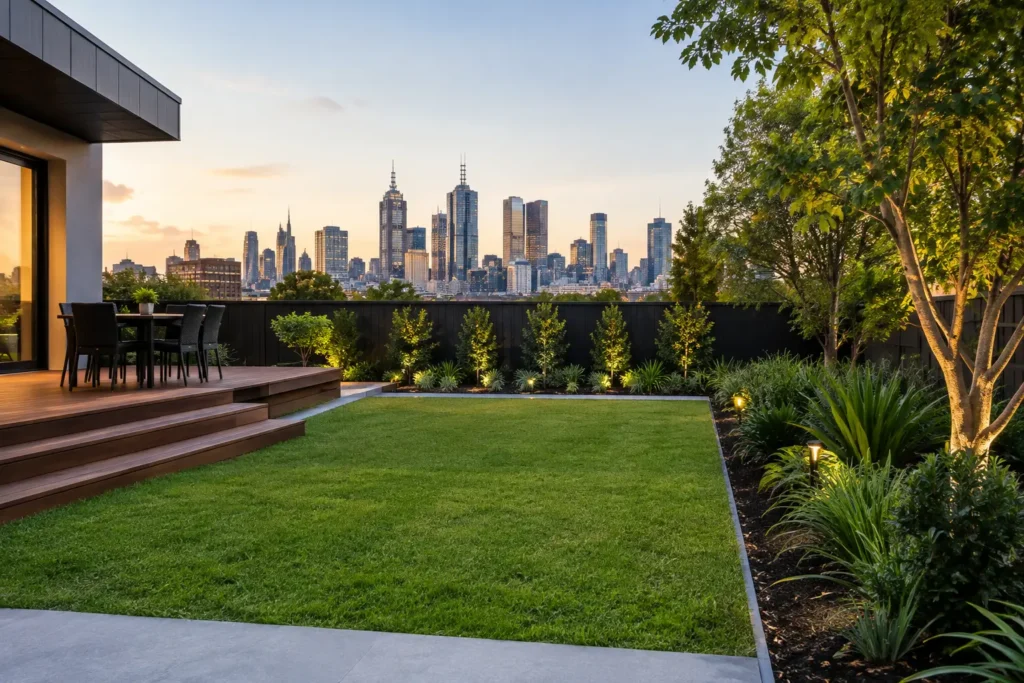
The scope varies from project to project. A compact front yard may need new paths, low-maintenance plants and artificial grass. A family backyard might include excavation, drainage, a retaining wall, natural turf, a deck and planting. On a commercial site, priorities may centre on durable surfaces, defined pedestrian areas, irrigation and a professional streetscape.
This is why it pays to look beyond individual items. A retaining wall affects drainage and levels. Turf needs correct soil preparation and water access. A deck needs suitable footings and clear connections to adjoining paths or garden areas. When these elements are planned and built as one project, there is less rework, fewer handovers and a more consistent finish.
Start With How the Space Needs to Work
A successful project begins with practical questions, not a catalogue of features. How many people use the space? Is there a need for entertaining, play, parking, deliveries or easy access? Which areas receive harsh afternoon sun, hold water after rain or become muddy underfoot? The answers shape the layout and material choices.
For residential properties, it is worth considering maintenance honestly. Natural lawn has a softer feel and can cool an outdoor area, but it needs regular mowing, feeding and watering. Artificial grass can reduce routine upkeep and remain tidy in high-use zones, although installation quality and drainage are critical to avoiding a poor result.
The same thinking applies to planting. Dense garden beds can provide privacy, colour and habitat, but they need room to mature and ongoing care. A simpler palette of hardy, climate-suited plants may be the better choice for rental properties, busy households or commercial grounds. There is no single right solution – the right solution fits the site, budget and level of maintenance available.
Levels, drainage and access come first
Many landscape problems begin below the visible surface. Poor falls can direct water towards a building. Inadequate drainage can leave paving wet, lawns waterlogged and garden beds washed out. Incorrectly prepared soil can make healthy turf and plants difficult to establish.
Before surfaces are installed, a professional team assesses site levels, existing drainage, access for equipment and the condition of the ground. Excavation, compaction and base preparation may not be the most visible parts of the job, but they have a major effect on durability. This is especially important on sloping blocks, properties with reactive soils or areas that receive concentrated runoff.
Access also influences the build. A narrow side passage, established home or occupied business site may require careful staging, smaller equipment and a clear plan for protecting existing structures. Good landscape construction accounts for these realities before work starts, rather than treating them as unexpected extras midway through the project.
Choosing Materials for Melbourne Conditions
Materials need to suit the look of the property, but appearance is only one part of the decision. Durability, heat, drainage, slip resistance and maintenance all matter.
Concrete is a strong choice for driveways, paths, entertaining areas and high-traffic commercial spaces. It can be finished in different ways to suit a contemporary or more textured look, and it provides a stable, low-maintenance surface when properly prepared. Paving offers more pattern and design flexibility, though it needs a sound base and well-managed edges to prevent movement over time.
Timber decking creates warmth and can make a difficult slope more usable. It does, however, need ongoing care to preserve its appearance and performance. Composite decking may reduce maintenance requirements, but its cost, heat retention and visual finish should be considered before selecting it. The best option depends on the location, expected use and the owner’s appetite for maintenance.
Retaining walls deserve particular attention. They do more than hold soil in place. A properly built wall manages load, water and ground movement while creating usable levels for lawns, gardens or seating areas. The wall type, engineering requirements and drainage details should match its height, location and purpose. Cutting corners here can lead to movement, cracking and costly repairs later.
A Clear Construction Process Reduces Surprises
A well-managed project should feel organised from the first site consultation through to the final clean-up. The process normally starts with a discussion of goals, priorities, budget and timing, followed by a site assessment. From there, the scope can be shaped around the work required, material selections and any design considerations.
Once the plan is confirmed, the construction sequence matters. Demolition and site preparation generally come first, followed by drainage, structural elements and hardscape foundations. Decking, paving, concrete work or retaining walls are then completed before turf, planting, irrigation and finishing details are installed. This order protects completed work and gives each element the right base to perform.
Clear communication is just as valuable as technical skill. Property owners should know what is included, what preparation is required, how access will be managed and whether weather or material availability could affect timing. A detailed quote helps compare proposals properly. The cheapest figure may exclude soil removal, drainage, base materials, edging, waste disposal or finishing work that is necessary for a complete result.
Where Value Is Won or Lost
The lowest upfront price is not always the lowest long-term cost. A poorly compacted base under paving, insufficient drainage behind a retaining wall or rushed turf preparation can create repairs that far outweigh an initial saving. Investing in the right groundwork often delivers better value than spending heavily on surface finishes alone.
That does not mean every project needs premium materials everywhere. A smart approach allocates the budget where it matters most: structural work, drainage, high-use surfaces and visible focal points. Lower-maintenance planting, practical lawn areas and staged upgrades can keep the project achievable without compromising the overall plan.
For commercial and industrial properties, value also includes reliability. Landscapes should support the day-to-day operation of the site, not create hazards or frequent maintenance demands. Defined paths, durable edges, efficient irrigation and sensible plant selection can help keep outdoor areas presentable with less disruption.
Why One Experienced Team Makes a Difference
Landscape projects often involve several trades. Coordinating separate contractors for earthworks, concreting, decking, retaining walls, turf and planting can be time-consuming, and gaps between scopes can become the owner’s problem. Working with one capable provider gives the project a single point of responsibility from planning through to the finishing touches.
Australian Landscape Hub brings more than 20 years of hands-on experience to residential, commercial and industrial projects across Melbourne’s north-west and surrounding areas. The focus is on tailored spaces that are practical, durable and finished with care – whether the brief is a complete backyard transformation or a targeted upgrade to improve a property’s presentation.
A well-built landscape should make life easier the moment you step outside. Begin with a clear idea of how you want the space to work, then choose construction solutions that will keep working long after the first inspection.