A lawn that dries out along the fence line, thirsty garden beds beneath the eaves and water pooling on the path are not problems solved by simply running the tap longer. The choice between drip versus sprinklers affects plant health, water use, maintenance and how reliably your landscape performs through Melbourne’s changeable conditions. The right system delivers water where it is needed, at the right rate, without creating a bigger job for the property owner.
What Changes When You Choose the Right Irrigation
Irrigation is often treated as an add-on after turf, planting and hardscaping are complete. In practice, it should be planned around the landscape itself. A sunny natural lawn needs broad, even coverage. A mulched garden bed needs slower watering close to the root zone. Established trees, hedges, pots and newly planted areas all have different needs again.
Melbourne properties can also contain several distinct microclimates in one backyard. A north-facing courtyard may dry quickly, while a shaded side garden stays damp for days after rain. Separating these areas into irrigation zones gives you control. It prevents lawn watering schedules from overwatering plants and stops water being wasted on paths, decking or retaining walls.
The best choice is rarely about one system being universally better. It comes down to what you are watering, the soil, sun exposure, access to water, the layout of the property and how much maintenance you are prepared to take on.
Drip Irrigation for Garden Beds and Planting Areas
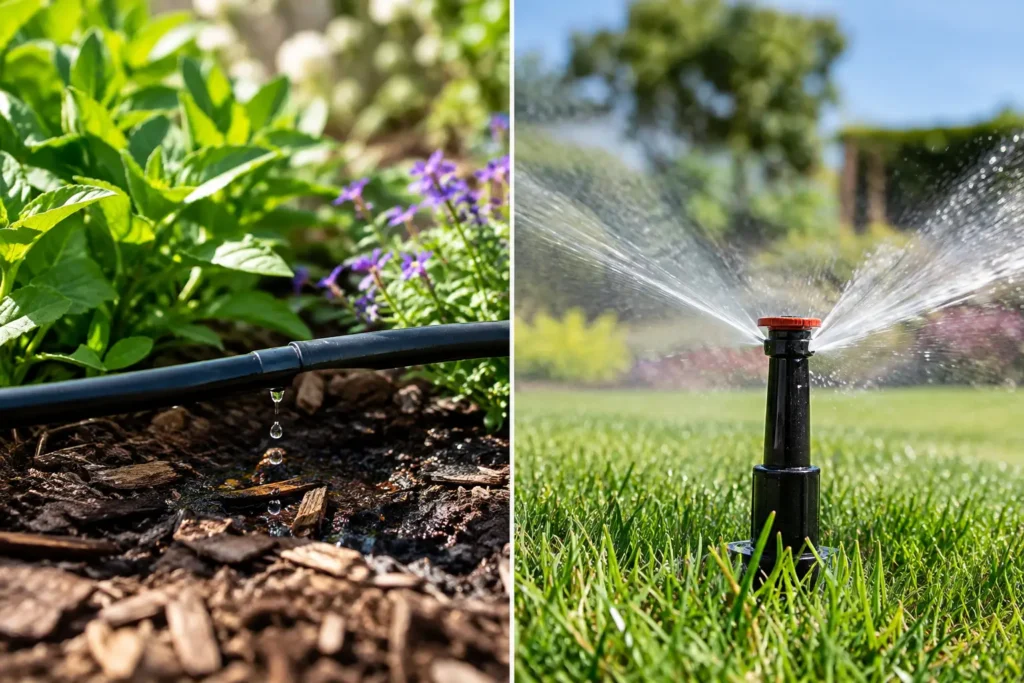
Drip irrigation sends water slowly through pipework fitted with emitters or built-in dripline. Instead of spraying water across a large area, it releases a measured amount directly into the soil near plant roots. The pipe can be laid beneath mulch, making it discreet and protected from sun exposure.
Where Drip Systems Perform Best
Drip irrigation is particularly effective in garden beds, along hedges, around trees, vegetable patches and narrow planting strips beside driveways or buildings. These are areas where spray irrigation can be difficult to contain. It also works well for new plantings, as each plant can receive steady moisture while roots establish.
Because the water enters the soil gradually, drip can reduce runoff on slopes and heavy clay soils. This is useful on sites where water tends to travel across the surface instead of soaking in. Water is less likely to land on foliage too, which can help reduce fungal issues in susceptible plants.
For homeowners looking to keep a low-maintenance garden healthy, dripline under quality mulch is a practical combination. Mulch slows evaporation, while drip irrigation keeps water close to the roots rather than wetting large exposed areas of soil.
The Trade-Offs With Drip
Drip irrigation needs thoughtful design and regular checks. Emitters can clog if water quality is poor or a suitable filter is not installed. Roots may grow around lines over time, and a damaged pipe can be harder to spot when it is buried under mulch. A system may appear to be working while one section receives little or no water.
It is also not the right primary solution for most natural lawns. Turf needs consistent coverage across the whole surface, and dripline beneath lawn can be more complex to install, repair and manage. For lawn areas, sprinklers are usually the more practical choice.
Sprinkler Systems for Lawns and Larger Areas
Sprinklers distribute water through pop-up heads, fixed sprays or rotating nozzles. When designed correctly, they provide even coverage across natural turf, broad garden areas and open commercial landscapes. Pop-up heads sit below ground when not in use, preserving a clean finish around lawns and outdoor living spaces.
Why Sprinklers Suit Turf
Natural turf has a dense root system spread across the entire lawn. It needs coverage that overlaps consistently, particularly during warmer, drier periods. Properly spaced sprinkler heads create that coverage and can be divided into zones based on lawn size, sun exposure and soil conditions.
Modern rotating nozzles can apply water more slowly than traditional sprays, giving the ground time to absorb it. That can reduce puddling and runoff, particularly on compacted soil or sloping blocks. A programmed controller can also run zones in the early morning, when evaporation and wind drift are generally lower.
Sprinklers are convenient for larger spaces. For commercial properties, shared green areas and wide front lawns, they can cover a lot of ground efficiently and create a consistent presentation without relying on hoses or manual watering.
The Trade-Offs With Sprinklers
Sprinklers can waste water if they are poorly positioned, incorrectly adjusted or run in windy conditions. A head spraying onto a footpath, fence or driveway is watering the wrong thing. Overspray is not just inefficient, it can leave slippery surfaces and contribute to staining or unnecessary moisture near buildings.
Spray irrigation also wets foliage and open soil. In some planted areas this is not ideal, especially where plants are closely spaced or prone to disease. Heads may need occasional adjustment as plants mature, lawn edges change or landscaping work is completed. Mowers, vehicles and general garden activity can also damage poorly located heads.
Drip Versus Sprinklers: Which Should You Choose?
For most well-planned residential landscapes, the strongest answer is not drip or sprinklers. It is both, with each system used in the areas where it performs best. Sprinklers can service natural turf and broad open spaces, while dripline supports garden beds, hedges and feature planting.
This combined approach gives property owners more accurate control over watering. Lawn zones can run according to turf needs, while drip zones can operate for longer at a lower flow rate. A rain sensor or weather-aware controller can add another layer of control, pausing irrigation when conditions do not require it.
If your property has artificial grass, irrigation is obviously not required for the surface itself. However, drip irrigation may still be valuable for surrounding garden beds, screening plants and feature trees. Planning the pipework before artificial turf, decking, paving or concreting is installed can avoid disruptive and costly changes later.
Budget also matters. A simple sprinkler setup for a small lawn may cost less initially than a detailed multi-zone system. However, lower upfront cost should not be the only consideration. Replacing stressed plants, repairing washed-out garden beds or regularly hand-watering difficult areas can quickly reduce the savings.
Design Details That Make Irrigation Work Better
A reliable irrigation system begins with the site, not a standard layout. Water pressure and flow need to be assessed so each zone can operate correctly. Too many sprinkler heads on one line can produce weak coverage, while an oversized zone can lead to uneven watering from one end to the other.
Garden beds need different emitter spacing depending on soil type and plant density. Sandy soils often benefit from closer spacing or longer run times because water drains quickly. Clay soils may require shorter cycles with breaks between them so water can soak in rather than run off. These details make a noticeable difference to water use and plant performance.
Controllers should be easy to understand and adjusted through the year. A schedule that works in January can be excessive in a cool, wet spell. Check sprinklers seasonally, clear mulch away from drip emitters where needed and inspect filters before summer. Small maintenance tasks prevent the common problem of discovering a failed zone only after plants have started struggling.
For larger commercial or industrial sites, zoning is especially valuable. Different areas may have separate usage patterns, such as entry landscaping, lawn verges, loading areas and staff outdoor spaces. A tailored system keeps each area presentable without overwatering low-priority zones.
Make Watering Part of the Landscape Plan
Irrigation works best when it is considered alongside planting, drainage, turf selection and hardscaping rather than fitted around them at the end. Australian Landscape Hub can design irrigation as part of a complete landscape build, helping ensure pipework, valves and controls suit the finished outdoor space instead of competing with it.
Before choosing a system, walk through the property at different times of day and look for the areas that dry first, stay wet longest or receive the strongest sun. That simple observation gives you a far better starting point than choosing irrigation by habit. A system designed around the way your garden actually behaves will save water, protect your investment and keep the outdoor space looking cared for when it matters most.