A synthetic lawn can look perfect on the day it is installed, then reveal puddles, soft patches or unpleasant pet odours after the first sustained Melbourne downpour. So, does artificial grass need drainage? Yes. Artificial grass itself may be permeable, but it still needs a properly prepared drainage system beneath it to move water away efficiently.
Drainage is not an optional extra added only to problem yards. It is a core part of a durable artificial grass installation. The right base keeps the surface firm, helps rainwater disperse, and protects the investment you have made in your outdoor space.
Why artificial grass drainage matters
Natural turf absorbs some rainfall through its root zone. Artificial grass has no roots or soil biology to manage moisture. Instead, water passes through drainage holes in the backing and into the prepared base below. If that base is poorly graded, compacted incorrectly or built over unsuitable ground, water has nowhere useful to go.
The result can be standing water on the surface, a lawn that feels spongy underfoot, or water tracking towards a house, garage or paved area. Over time, trapped moisture may also encourage algae around shaded edges, create odours in pet areas and cause the base to shift.
For homes, rental properties and commercial sites, these issues affect both appearance and usability. A lawn that cannot be used after rain does not deliver the low-maintenance, all-weather result most people expect from synthetic turf.
How a drainage system works under artificial grass
Good drainage begins before the turf is rolled out. The finished surface is only as reliable as the layers beneath it.
First, the area is excavated to create enough depth for a stable base. The existing ground is assessed for soil type, compaction and natural fall. Melbourne properties often have clay-heavy soils, which can hold water for long periods. In these yards, relying on the ground to absorb excess water is rarely enough.
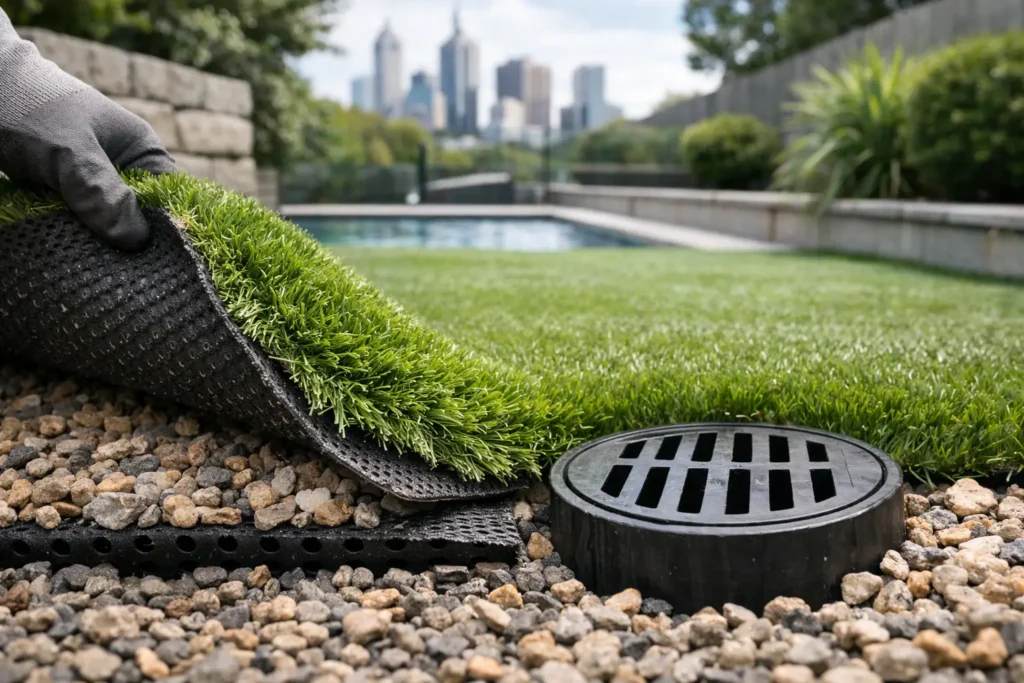
A compacted crushed rock base is then installed and shaped with a gentle fall towards an appropriate drainage point. Water that passes through the grass backing moves through this porous layer rather than sitting directly beneath the turf. A finer levelling layer helps create a smooth, even finish before the artificial grass is secured.
The goal is not to make water disappear instantly. It is to give it a clear path away from the lawn and prevent it from pooling beneath or on top of the surface.
The fall matters as much as the materials
Even quality drainage materials will struggle if the site is flat in the wrong direction. The base needs a controlled gradient so water moves away from buildings and towards garden beds, existing stormwater systems or another approved discharge point.
This is particularly important beside patios, decks, retaining walls and house slabs. Water should never be directed towards foundations simply because it is convenient during installation. A professional site assessment identifies the right fall before excavation starts, rather than trying to correct drainage after the lawn is down.
Permeable backing is part of the equation
Most quality landscape-grade artificial grass has perforations in its backing that allow water to drain through. However, drainage rates vary between products. A dense product with limited perforations may not suit an area that receives heavy rainfall, frequent hosing or regular pet use.
The backing is only one component. Fast-draining turf installed on an impermeable or badly compacted base can still hold water. Conversely, a well-built base may not perform as intended if the grass backing does not allow enough water through. Product selection and base preparation need to work together.
When extra drainage is needed
Not every installation requires agricultural drains or major stormwater works. A small, open area with free-draining soil and a suitable fall may only need a correctly built crushed rock base. However, some sites need additional drainage measures to perform properly.
Extra drainage is often worthwhile where the area has heavy clay soil, lies at the bottom of a slope, stays shaded and damp, or regularly receives runoff from roofs and paving. It is also common around pools, courtyards enclosed by walls, narrow side yards and commercial spaces that experience high foot traffic.
In these situations, drainage cells, agi pipes, spoon drains or connections to a legal stormwater point may be considered as part of the broader landscape design. The appropriate solution depends on where the water comes from, how much is expected and where it can safely go.
A drainage system should not be used to mask an underlying site problem. If a downpipe is discharging across the lawn or a neighbouring property is directing runoff into the yard, those issues need to be addressed first. Installing turf over the top will not solve them.
Pet areas need careful planning
Artificial grass is a practical choice for dog runs and family backyards, but pet areas place extra demands on drainage. Urine needs to pass through the turf and base rather than collecting near the surface. Without sufficient drainage, odours can become more noticeable during warm weather.
A permeable turf product, well-compacted free-draining base and regular rinsing provide a strong starting point. In some cases, an odour-control infill or a dedicated drainage layer may be suitable. The best option depends on the number and size of pets, how often they use the space and whether the area is exposed to sun and rain.
Avoid assuming that artificial grass is maintenance-free. It needs occasional brushing, removal of leaves and debris, and cleaning where pets use it. Good drainage makes that maintenance simpler and more effective.
Common drainage mistakes to avoid
The most expensive mistakes usually happen below the surface, where they are difficult to see once the job is complete. Installing grass straight over soil may save time initially, but it can lead to uneven ground, poor drainage and premature wear. Using the wrong base material can have a similar effect.
Over-compacting every layer is another issue. The base must be stable, but it also needs to remain permeable. A base that is hard as concrete can restrict water movement. Poor edging can also allow the turf and base to shift, creating low spots where water collects.
It is equally risky to ignore existing levels. Raising an area too high can trap water against a fence, paving or building. Lowering it without a drainage plan can turn the lawn into the lowest point of the yard. These details are why drainage should be planned alongside excavation, retaining walls, paving and garden works, not treated as a separate afterthought.
Signs your existing artificial grass has drainage problems
Water remaining on the surface long after rain is the clearest warning sign. Other clues include a squelching feeling underfoot, dips in the lawn, lifting seams, algae growth around edges, persistent dampness or recurring odours in pet zones.
Some problems can be improved with cleaning, brushing or repairing minor low spots. If the issue comes from an inadequate base or incorrect falls, however, a more substantial repair may be required. Lifting and reinstating sections of turf is often the only reliable way to correct the drainage layer underneath.
Addressing the cause early is usually more cost-effective than waiting for the surface to deteriorate. It also helps protect nearby hardscaping, garden beds and structures from ongoing water exposure.
Does artificial grass need drainage on concrete?
Artificial grass can be installed over concrete, but drainage still matters. Concrete does not absorb water, so the slab needs a suitable fall and a clear drainage path. If water pools on the concrete before the turf is installed, it will continue to pool after installation.
A drainage underlay may help improve comfort and water movement in some applications, particularly balconies, courtyards and rooftop areas. However, it cannot compensate for a slab that is cracked, flat in the wrong direction or unable to drain safely. Check the condition and falls of the concrete before choosing the installation method.
Build the lawn from the ground up
Artificial grass should make an outdoor area easier to enjoy, not create a hidden water problem. The right turf, base depth, compaction, edging and fall all contribute to a surface that stays neat, firm and usable through Melbourne’s changing weather.
For a new lawn or a drainage repair, Australian Landscape Hub can assess the site as part of a complete landscaping plan. A careful look at what is happening below the surface gives your finished lawn the best chance of looking good and performing well for years to come.