A small backyard can feel cramped when every element competes for room: a clothesline, outdoor setting, lawn, garden beds, bins and the path to the gate. The best backyard landscaping for small spaces does not try to squeeze in everything. It sets clear priorities, makes each square metre work harder and creates a space that feels generous rather than busy.
For Melbourne properties, a good small-yard plan also needs to handle hot summers, cool winters, variable rainfall and the practical demands of everyday life. Whether the goal is a quiet garden retreat, a family-friendly courtyard or a low-maintenance entertaining area, thoughtful design makes the difference.
Start with how the space needs to work
Before choosing pavers, plants or a new deck, decide what the backyard needs to do most often. A compact outdoor area rarely performs well when it is designed for every possible use. It performs well when it is designed around the uses that matter most to the household.
A townhouse courtyard may need a table for four, a barbecue zone and enough open space for children to play. A rental investment may benefit more from durable paving, artificial grass and easy-care planting. For a home with limited indoor living space, the priority might be an outdoor room that can be used for meals, entertaining and relaxing across much of the year.
Measure the site carefully and note where doors, drains, services, windows and existing trees sit. Also observe sun and shade at different times of day. A sunny corner may suit a productive herb garden, while a narrow shaded edge may be better used for a bench, vertical greenery or storage. This early planning prevents costly changes once construction begins.
Create one strong layout, not several small zones
The temptation in a small backyard is to divide it into many separate areas. In practice, too many borders, paths and materials can make the space look fragmented. A simpler layout usually feels larger and is easier to maintain.
Choose one main surface as the foundation. Decking can bring warmth and create a level entertaining area where the ground slopes. Paving is hard-wearing, easy to clean and well suited to barbecue areas or high-traffic access paths. Artificial grass can provide a neat, green finish where natural lawn would struggle due to shade, wear or limited room for mowing equipment.
Keeping the main surface consistent helps the eye travel across the full yard. If different materials are needed, use them with purpose. For example, a paved dining area can lead into a small artificial turf play zone, with matching edging to tie the two together.
Let pathways do double duty
In tight spaces, a pathway should not consume valuable room without adding function. A side access path can be wide enough for wheelbarrow access, guide water away from the home and provide a clean route to bins or a shed. Large-format pavers with planted joints can soften a narrow area without creating visual clutter.
Avoid winding paths simply to make the garden seem larger. In a very compact yard, direct and well-proportioned access often looks cleaner. Curves work best where there is enough depth to make them feel intentional rather than awkward.
Use vertical space for privacy and greenery
Boundary fencing is often the largest visible surface in a small backyard. Treating it as a design feature can dramatically improve the feel of the space. Fresh fencing, painted screens, timber battens or carefully selected climbers create a stronger backdrop than rows of unrelated pots.
Vertical planting is particularly useful where there is little room for garden beds. Wall-mounted planters, trellises and climbing plants allow greenery without sacrificing floor space. The right choice depends on sunlight, irrigation access and the level of maintenance you are prepared to take on. A lush climber can soften a fence beautifully, but it needs support, pruning and occasional checks to ensure it is not damaging structures.
Privacy screens are also valuable in closely built Melbourne suburbs. They can block an overlooking window, conceal a service area or shelter a dining nook from prevailing winds. Slatted timber or aluminium screening offers a more open feel than a solid wall, while planted screening provides softness and cooling benefits. In many cases, combining a screen with a narrow garden bed delivers the best result.
Make planting purposeful
Small gardens benefit from restraint. Instead of buying a wide mix of plants, select a compact palette that suits the conditions and repeat it throughout the space. Repetition creates calm and makes a backyard feel more considered.
Use layers where room allows: low groundcovers at the front, medium shrubs in the middle and taller plants along boundaries. This approach adds depth without needing a deep garden bed. Choose plants that suit the available light and your maintenance expectations, rather than forcing a sun-loving plant into a shaded corner or relying on thirsty species in a hot, exposed yard.
For many Melbourne gardens, evergreen structure plants paired with seasonal colour offer a practical balance. Native and drought-tolerant varieties can reduce water demand once established, but they are not maintenance-free. All gardens need occasional pruning, mulching, feeding and weed control to stay tidy.
Raised garden beds can be useful when soil quality is poor, drainage is limited or the homeowner wants herbs and vegetables close to the kitchen. They do take up visual and physical space, though, so keep their size proportionate. One well-built bed often works better than several small containers scattered around the yard.
Choose furniture and features at the right scale
Oversized outdoor furniture is one of the quickest ways to make a small yard unusable. Measure the space around a table and chairs before purchasing. People need room to pull chairs out and move through the area comfortably, especially near doors and gates.
Built-in seating is often a smart option because it follows the edge of the site and can include concealed storage. A bench along a boundary can provide seating for several people without the visual bulk of multiple chairs. Adding outdoor cushions, a small table and considered lighting can turn that corner into a genuine extension of the home.
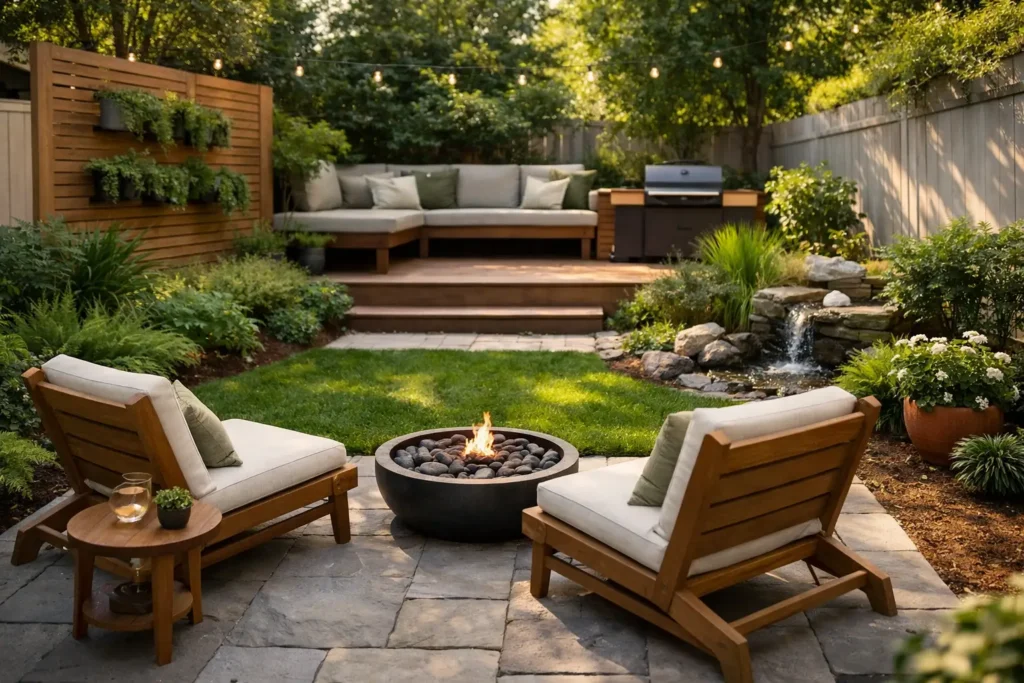
Water features, fire pits and outdoor kitchens can all work in compact landscapes, but only where they support the main purpose of the yard. A fire pit needs clear safety space and may not suit a tightly enclosed courtyard. A compact barbecue bench may be more useful than a full outdoor kitchen if cooking is occasional. Good design is not about adding every feature. It is about choosing the features that will actually be used.
Improve the sense of space with light and sightlines
A small backyard should have at least one point that draws the eye beyond the immediate patio or door. This could be a feature tree in a planter, a statement pot, a sculptural screen or a carefully lit garden bed at the far boundary. It gives the space depth and stops it feeling like a box.
Lighting is equally practical and atmospheric. Low-voltage path lights improve safe access, while warm wall lights or discreet uplighting can highlight planting and make the garden usable after dark. Keep fittings simple and avoid placing too many lights at different heights. A restrained lighting plan looks more polished and creates less glare for neighbours.
Mirrors are sometimes used to make a courtyard look larger, but they need careful placement. They can reflect harsh sun, create maintenance issues and look artificial if used too prominently. In most cases, an open fence treatment, layered planting and a clear sightline will achieve a more natural result.
Plan drainage, irrigation and maintenance from day one
Small spaces can expose poor workmanship quickly. A puddle near the back door, water running toward the house or loose pavers can affect the whole yard. Levels, drainage and surface preparation should be addressed before the finishing materials are installed.
Irrigation is worth considering for gardens with several plants, vertical greenery or raised beds. A simple drip system delivers water efficiently to root zones and reduces the time needed for hand watering. It should be matched to the plant types and adjusted as seasons change. Artificial grass also needs correct base preparation and drainage to perform properly over time.
Think honestly about maintenance. Natural turf can look excellent but needs mowing, edging, watering and fertilising. Dense planting provides privacy but requires pruning. Decking needs periodic cleaning and, depending on the material, ongoing protection. Lower-maintenance does not mean no maintenance, but it can mean fewer weekend jobs and a more dependable result.
Backyard landscaping for small spaces needs a complete plan
The most successful compact backyards are designed as a whole. Hardscaping, drainage, planting, privacy, lighting and access should work together from the start, rather than being added one at a time. This is where engaging an experienced landscaper can save both space and unnecessary expense.
Australian Landscape Hub helps Melbourne property owners turn limited outdoor areas into practical, well-finished landscapes, from design and plant selection through to decking, turf, paving, retaining walls and irrigation. A tailored plan ensures the finished yard suits the site, the budget and the way it will be lived in.
A small backyard does not need to imitate a large garden to feel inviting. Give it a clear purpose, use durable materials, leave room to move and choose greenery that will thrive in its position. The result can be a space that feels calm, functional and genuinely worth stepping outside for.