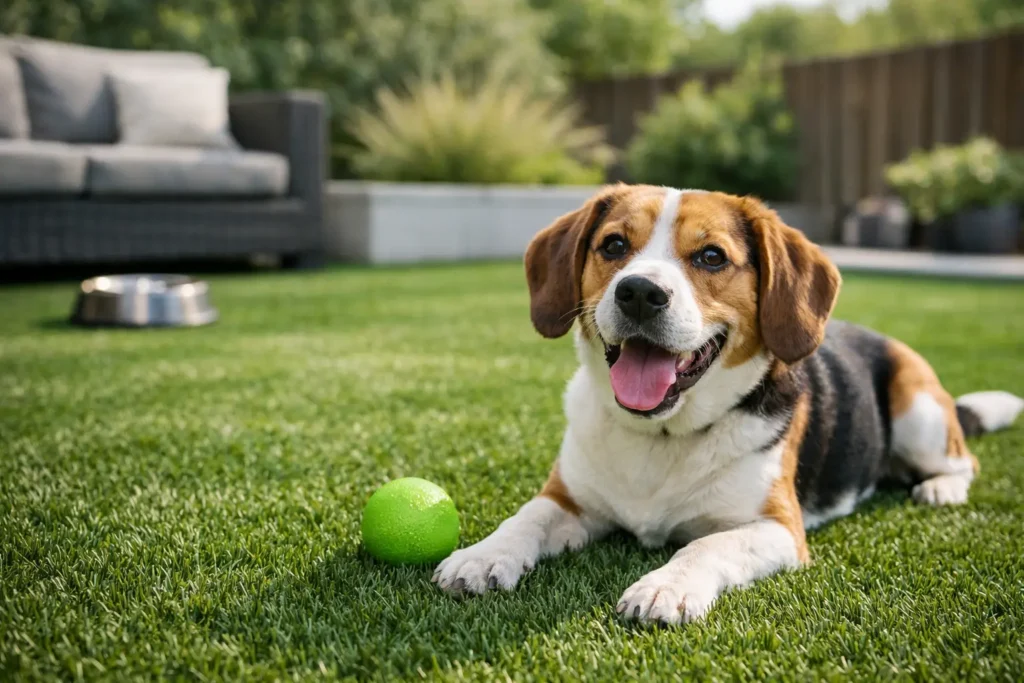
If your backyard has turned into a muddy racetrack, an artificial grass for dogs review is a practical place to start. Dog owners usually reach this point after the same cycle – patchy lawn, worn tracks along the fence, wet paws through the house, and a yard that never quite recovers. Artificial turf can solve a lot of that, but not every product performs well once dogs are part of the equation.
The short version is this: good artificial grass for dogs can work extremely well, but only when the turf, base preparation and drainage are all right. If one part of the system is wrong, the surface can hold odour, stay damp, overheat or wear out faster than expected. That is why it pays to review the whole setup, not just the look of the grass sample.
What matters most in an artificial grass for dogs review
A dog-friendly lawn gets tested differently from a decorative front yard. It has to cope with repeated running, toilet use, digging behaviour, claw traffic and regular cleaning. For most Melbourne households, the key performance areas are drainage, durability, hygiene and comfort.
Drainage is usually the make-or-break factor. When dog urine cannot move through the turf and base quickly, smells build up and the surface stays unpleasant. A quality pet-friendly product should have a strong perforated backing or full-flow drainage design, but that alone is not enough. The crushed rock base underneath needs to be prepared properly so liquid can move away rather than sit trapped under the turf.
Durability comes next. Dogs do not move lightly across a lawn. They sprint, pivot, skid and scratch at entry points. A turf that looks thick and soft in a showroom can flatten quickly if the yarn quality is poor. You want a product with good stitch rate, solid backing strength and fibres that spring back after wear.
Comfort matters more than many buyers expect. Some synthetic turf feels harsh underfoot, especially in cheaper ranges with stiff fibres. For dogs that spend a lot of time lying outside, texture counts. There is always a balance here – softer grass can feel nicer, but it still needs enough resilience to handle daily use.
The pros are real, but so are the trade-offs
A fair artificial grass for dogs review should not pretend synthetic turf is perfect. It offers clear advantages, especially for busy households and high-use yards, but there are also trade-offs that need to be understood before installation.
The biggest benefit is consistency. Natural grass struggles in shaded runs, narrow side paths and compacted areas where dogs repeatedly toilet or pace. Artificial turf gives you a stable, usable surface year-round. No mud, fewer bare patches, and far less mess tracked indoors after rain.
It also cuts ongoing maintenance. You are not mowing around dog damage, reseeding worn spots or trying to revive turf that has been burned by urine. For many homeowners and property managers, that reduced upkeep is a major reason to make the switch.
The trade-off is that synthetic grass still needs cleaning. It is lower maintenance, not no maintenance. Solid waste has to be removed promptly, the area should be rinsed regularly, and occasional deodorising may be needed depending on how many dogs use the space. If a supplier suggests you can simply lay it and forget it, that is not a realistic review.
Heat is the other issue worth being honest about. Artificial turf can get hotter than natural grass in direct summer sun. Some products perform better than others, and surrounding design choices such as shade sails, planting and lighter-coloured hardscape can make a difference. But if the area receives harsh afternoon sun, this should be part of the decision.
How different products actually compare
Not all artificial grass is made for pets, even when it is marketed that way. The difference often comes down to pile height, fibre shape, density and backing design.
Short to mid-pile turf is usually the better choice for dog areas. Very long grass can look lush at first, but it tends to flatten where dogs run and can be harder to clean thoroughly. A more moderate pile height often gives a neater finish and better long-term performance.
Dense turf can feel premium, though density should not be judged in isolation. If the fibres are too tightly packed without enough support, waste can sit closer to the surface instead of washing through well. On the other hand, a sparse product may drain quickly but wear out sooner. The best-performing dog turf usually sits in the middle – durable enough to handle traffic, open enough to clean and rinse efficiently.
Backing quality is one of the most overlooked details. A strong backing helps the turf stay stable under repeated movement and reduces the risk of stretching or lifting. In dog zones, especially around edges and joins, this matters a great deal.
In practical terms, the best option is rarely the cheapest roll available. Low-cost turf can be tempting for rental properties or budget-conscious upgrades, but replacement costs rise quickly if the product mats down, holds smell or separates at the seams.
Installation quality matters as much as the turf itself
This is where many dog owners get caught out. They compare turf samples carefully, then underestimate the importance of installation. A premium product laid over a poor base can still fail.
The base needs to be excavated and compacted correctly, with the right profile for drainage. If the ground beneath is uneven or soft, the finished lawn can dip, pool or shift over time. In pet areas, that creates ideal conditions for odour and hygiene problems.
Edging also needs attention. Dogs often test the perimeter first, either by pacing, scratching or trying to dig at corners. Secure edges help prevent lifting and keep the lawn looking sharp. This is especially important where turf meets garden beds, fences or paving.
For households with multiple dogs, larger breeds or heavy daily use, the installation approach should reflect that level of traffic. A one-size-fits-all method rarely delivers the best result. An experienced installer will look at how the yard is used, where the dogs run, where shade sits, and how water already moves through the space.
What to expect day to day
Once installed properly, artificial grass can make life noticeably easier. Most owners notice the same benefits straight away – cleaner paws, less dirt indoors and a yard that stays presentable without constant repair.
Day-to-day care is straightforward. Pick up waste as you normally would, hose down the area as needed, and brush high-traffic spots if fibres start to lean. In homes with one or two dogs, this is usually manageable without much effort. In busier properties, boarding environments or commercial sites, a more regular wash-down routine may be needed.
Odour control depends on habits as much as product quality. A well-draining lawn helps, but routine rinsing is still part of keeping it fresh. During warmer months, this becomes more important. It is not difficult, though it does need to be factored in honestly.
Is it worth it for Melbourne properties?
For many Melbourne homes, yes – particularly where natural turf has already failed more than once. Cooler months, winter rain and clay-heavy soils can make traditional lawns difficult to maintain in dog-friendly backyards. Artificial grass offers a more dependable surface when the space needs to stay usable across all seasons.
It is also a strong option for investment properties and managed sites where presentation matters but maintenance time is limited. A neat, durable lawn with less mud and wear can improve both usability and appearance.
That said, it is not the right fit for every yard. If your dog is a persistent digger, if the area has extreme sun exposure with no shade plan, or if you want a fully natural landscape at all costs, another solution may suit you better. Good landscaping decisions come from matching the surface to the way the space is actually used.
Final verdict on artificial grass for dogs
The best artificial grass for dogs is not just about choosing a soft-looking product. It is about building a lawn that drains properly, handles rough use and stays easy to clean over time. When those boxes are ticked, synthetic turf can be a smart long-term upgrade for households that want a cleaner, tougher and more reliable backyard.
If you are comparing options, look past the brochure claims and ask how the turf will perform after wet weather, daily toilet use and months of running paws. That is where the real review begins, and that is what separates a quick cosmetic fix from a lawn that genuinely works.