A cheap quote can look great until the turf starts lifting at the seams, holding water, or flattening out within months. If you are asking how much does artificial grass installation cost, the real answer is not just about square metre rates – it is about what sits underneath, how well the area is prepared, and how long you want the result to last.
For Melbourne homes, commercial sites, and multi-use outdoor areas, artificial grass is often chosen for one reason above all: lower maintenance without giving up presentation. But pricing varies because every site is different. A flat courtyard with easy access is a very different job from a sloping backyard with drainage issues, old concrete to remove, and curved garden edges.
How much does artificial grass installation cost in Melbourne?
In most cases, artificial grass installation in Melbourne falls somewhere between $80 and $150+ per square metre supplied and installed. Smaller or more complex jobs can sit above that range, while straightforward larger areas may come in lower on a per-square-metre basis.
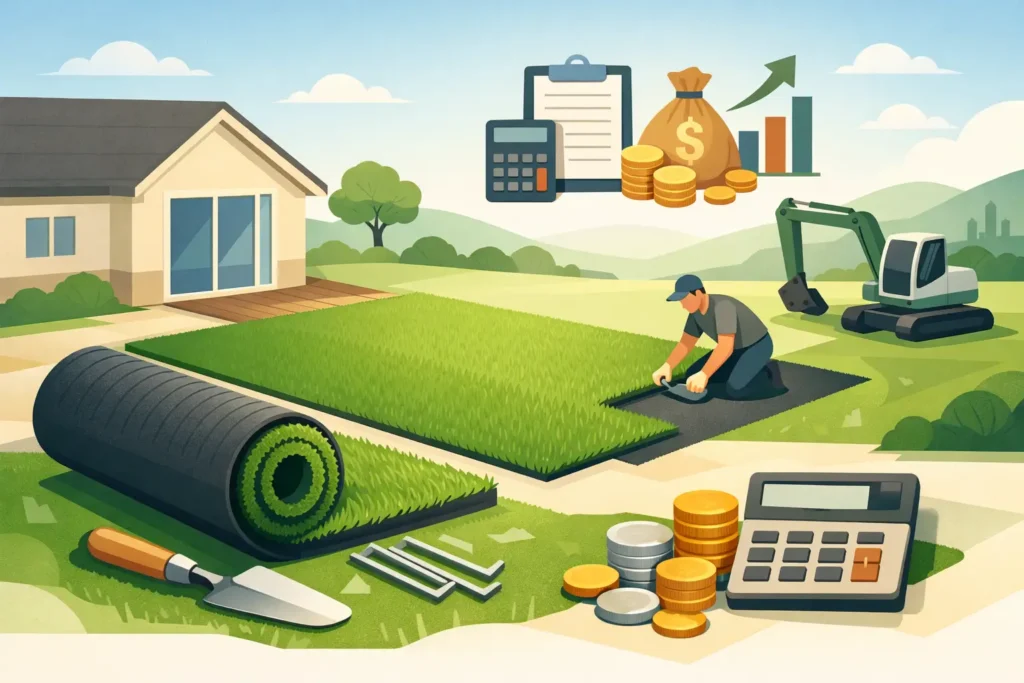
That range usually reflects more than just the turf itself. It can include excavation, base preparation, compaction, weed barrier installation, turf laying, joining, fixing, and infill where required. If a quote looks significantly cheaper than others, it is worth checking what has been left out.
A price at the lower end may suit a simple decorative area with good access and minimal preparation. A higher-end installation is more likely when the project involves premium turf, heavy-use areas, custom shapes, detailed edging, or problem-solving work such as drainage correction.
What affects artificial grass installation cost?
The biggest cost factors are usually site preparation, product quality, access, and finishing detail. This is why two jobs with the same square metre size can end up priced very differently.
1. The type and quality of artificial grass
Not all synthetic turf is made to the same standard. Lower-cost products may look acceptable from a distance, but they often have a flatter pile, less realistic colour variation, and reduced durability under foot traffic. Premium turf generally costs more because it is designed to look more natural, recover better after use, and hold up longer in Australian conditions.
For a front yard where street appeal matters, or a family backyard used regularly by kids and pets, paying more for a better product often makes sense. For a small display area that gets limited use, a mid-range option may be enough.
2. Site preparation
This is where much of the real work happens. Good artificial grass installation depends on a stable, well-draining foundation. If the existing ground is uneven, full of weeds, soft underfoot, or poorly drained, more labour and materials are needed before the turf can go down.
Site prep can include removing existing lawn, stripping soil, disposing of spoil, levelling the area, importing crushed rock or road base, compacting the sub-base, and creating the correct fall for drainage. Skipping these steps may reduce the upfront cost, but it usually increases the chance of future problems.
3. Drainage requirements
Drainage matters more than many people expect. Artificial grass does not solve drainage issues by itself. If water already pools in the area, the installer may need to reshape the ground, improve the base, or add drainage solutions before laying turf.
On some sites, this is a small adjustment. On others, especially low-lying backyards or commercial spaces with high runoff, drainage work can add a noticeable amount to the total cost. It is money well spent if it prevents ongoing waterlogging and surface movement.
4. Size of the area
Bigger areas often have a lower rate per square metre because setup, delivery, and labour can be spread across more space. Small jobs can seem expensive on a rate basis because many fixed costs still apply.
For example, a compact courtyard may require the same trip, machinery, cutting, and edge finishing attention as a much larger lawn area. That does not mean the quote is inflated – it means small projects do not always benefit from scale.
5. Access to the site
Easy access helps keep installation efficient. If the team can bring materials straight into the area, the work is faster and simpler. If access is tight, such as through a narrow side passage, apartment courtyard, or fenced commercial lot, labour can increase quickly.
When every barrow of base material and every roll of turf has to be moved by hand, the installation takes longer. Limited access does not stop the project, but it often affects cost.
6. Shape, edges, and obstacles
A plain rectangular area is quicker to install than a yard with curves, garden beds, trees, paving transitions, drainage pits, and multiple corners. Detailed cutting and fitting takes time, and neat edge work is one of the biggest differences between an average result and a professional one.
This is especially relevant in residential landscaping where artificial grass is being integrated with decking, stepping stones, retaining walls, or feature planting. The cleaner the finish required, the more careful labour is involved.
What is usually included in the installation price?
A proper quote should clearly show what is included, rather than just giving a lump sum with no detail. In many cases, the supply and installation price covers ground preparation, base materials, compaction, turf supply, cutting, joining, fixing, and site clean-up.
Some quotes also include removal of existing grass or old surfaces, edging, and minor drainage correction. Others treat these as separate items. That is why comparing quotes on price alone can be misleading.
If you are reviewing estimates, check whether GST is included, whether spoil removal is covered, and what product is actually being installed. One quote may look cheaper simply because it uses a lower-grade turf or excludes necessary prep work.
The trade-off between cheap and long-lasting
Artificial grass is not the kind of project where the cheapest option usually represents the best value. A poor installation can lead to rippling, weed growth through seams, visible joins, drainage issues, or an uneven feel underfoot. Fixing those problems later often costs more than doing it properly the first time.
On the other hand, the highest quote is not automatically the best either. What matters is whether the contractor explains the process, specifies the product, and shows a clear understanding of your site conditions. Good pricing should reflect workmanship, preparation, and a result that lasts.
For many Melbourne property owners, the best value sits in the middle – a quality turf product, installed over a properly prepared base, by a team that knows how local conditions affect long-term performance.
How much does artificial grass installation cost for different spaces?
A small residential courtyard will usually cost more per square metre than a standard backyard lawn because access and cutting detail are often tighter. Front yards can vary depending on shape and kerb appeal requirements. Family backyards may need a softer, more realistic turf with stronger drainage performance.
For commercial and industrial settings, pricing depends heavily on intended use. A display area outside an office has different demands from a childcare play space, rooftop breakout area, or high-traffic site entrance. In these jobs, durability and neat presentation are usually just as important as upfront affordability.
This is also where working with a full-service landscaper can help. If artificial turf needs to tie in with concreting, edging, retaining, irrigation changes, or broader landscape works, a coordinated approach often saves time and reduces rework.
How to get an accurate quote
The fastest way to get a reliable figure is with a site inspection. Online price guides are useful for broad expectations, but they cannot measure slope, drainage, access, demolition needs, or finishing detail.
A proper quote should look at the existing surface, measure the area correctly, and discuss how the space will be used. A backyard for pets and children needs a different solution from a decorative strip beside a driveway. The more clearly the installer understands the end use, the more accurate the recommendation will be.
If you are comparing quotes, ask simple questions. What turf product is included? What base will be used? Is drainage addressed? Are edges secured properly? Is rubbish removal part of the price? Clear answers usually indicate a more reliable contractor.
Is artificial grass worth the cost?
For many property owners, yes – especially when ongoing lawn mowing, watering, patch repairs, and seasonal upkeep are becoming a hassle. Artificial grass can provide a consistently neat look with far less maintenance, which is a strong advantage for busy households, rental properties, and commercial spaces that need to stay presentable year-round.
That said, it is not the right fit for every project. Natural lawn may still suit clients who prefer a living landscape, want cooler surface temperatures in full sun, or enjoy hands-on garden care. The right choice depends on how you use the space, what level of maintenance you want, and how important year-round appearance is to you.
If you want artificial grass to look good and perform properly over time, cost should be judged against the full result – not just the install day. A professionally prepared base, quality turf, and experienced installation team will always make a difference. For Melbourne property owners who want a practical, clean, and durable outdoor surface, that is where the real value sits.