
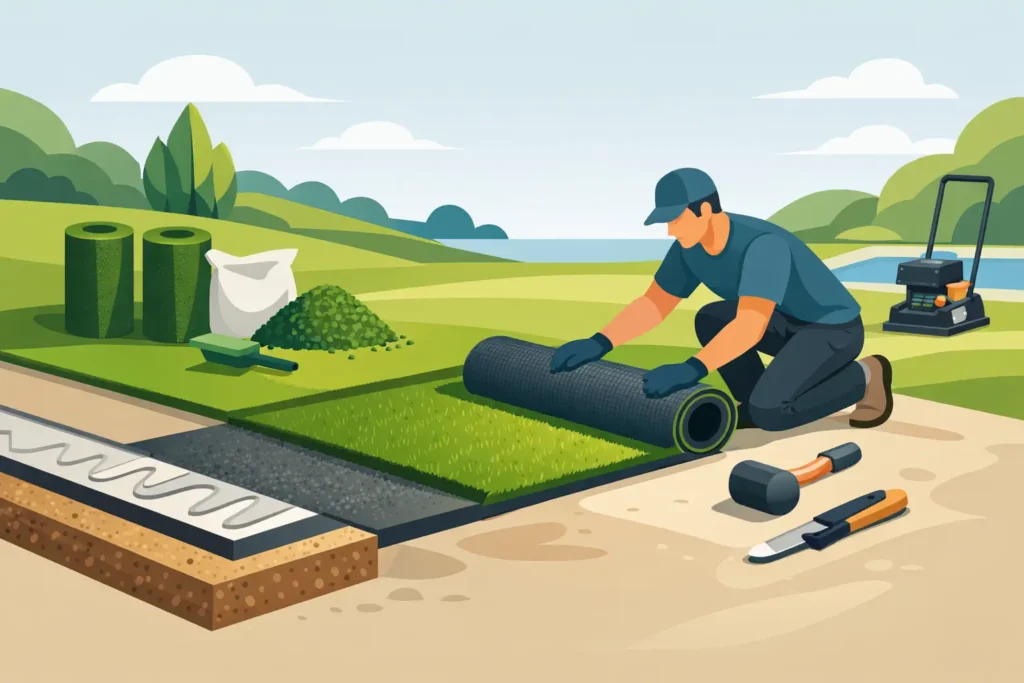
If you are asking how is artificial grass installed, the short answer is that the finished look depends far more on the groundwork than the turf itself. A neat, long-lasting lawn is built from the base up. When the preparation is right, artificial grass sits flat, drains well and handles daily foot traffic without shifting or looking patchy.
That is why professional installation matters. On the surface, synthetic turf can seem straightforward – roll it out, trim it and pin it down. In practice, there is a proper sequence, and each stage affects how the lawn performs over time, especially in Melbourne conditions where drainage, soil movement and usage all need to be considered.
How is artificial grass installed from start to finish?
Artificial grass installation usually begins with measuring the area and assessing what sits underneath. Existing lawn, old paving edges, irrigation lines, tree roots and low spots all affect the approach. A small courtyard, a family backyard and a commercial frontage may all use artificial turf, but the base preparation can differ depending on drainage needs and expected traffic.
The first physical step is excavation. Existing grass, weeds, loose soil and any unsuitable material are removed to create space for the new base. Depth matters here. If too little is excavated, the finished turf can sit too high against paths, driveways or garden edging. If the shape of the area is not corrected at this stage, lumps and dips tend to show through once the grass is laid.
After excavation, the surface is graded. This helps create a level finish while still allowing water to move away correctly. A completely flat-looking lawn is not always the goal. In some areas, a subtle fall is needed so water does not sit under the turf after rain.
Base preparation is where the job is won or lost
Once the area is cleared and shaped, a compacted base is installed. This is one of the most important parts of the process. The base gives the turf stability, helps with drainage and reduces the chance of sinking or rippling later on.
In most installations, a crushed rock or similar road base material is spread and compacted in layers. Compacting in stages is better than dumping in the full depth at once, because it creates a firmer and more even result. On some sites, extra attention is needed if the ground is soft, reactive or previously disturbed.
A layer of fine crusher dust or toppings may then be added to refine the surface. This helps create a smoother finish beneath the turf. The goal is not softness. It is consistency. Artificial grass only looks good when the base under it is stable and even.
For many Melbourne properties, weed control is also part of this stage. A weed mat or suppression layer may be used depending on the site. It is not a cure-all, but it can help reduce unwanted growth pushing up around the edges or through joins over time.
Edging, drainage and the details that matter
Before the grass goes down, the perimeter needs to be sorted. Good edging gives installers something secure to fix the turf to and helps keep the lines clean. This might be concrete, steel edging, timber or an existing hard edge such as paving. Without a solid perimeter, turf can move, curl or lose its shape around the borders.
Drainage also needs to be resolved before the final surface is laid. Artificial grass is permeable, but that does not mean it can overcome poor site drainage on its own. If the sub-base holds water, the lawn can remain damp or develop odours in problem areas. On some properties, additional drainage measures are needed, particularly where the site is low, shaded or heavily used by pets.
This is where experience counts. A professional installer does not just focus on how the turf will look on day one. The goal is a lawn that still looks right after repeated use, heavy rain and seasonal changes.
Laying the artificial grass
Once the base is compacted and the area is ready, the artificial grass is rolled out and left to settle. This helps remove creases from transport and allows the material to relax before cutting. The direction of the pile also needs to be considered. Turf laid in the wrong orientation can reflect light unevenly and make joins more noticeable.
Each section is then positioned carefully and cut to fit the space. This is precision work. Borders, curves, garden beds, pavers and fixed structures all need accurate trimming. Cutting too tight can cause tension and edge lift. Cutting too loose can leave gaps that spoil the finish.
Where more than one piece of turf is required, joins are created using jointing tape and adhesive. This needs a steady hand and attention to the pile direction so the seam is as discreet as possible. Poorly joined turf is one of the first things people notice in a rushed installation. A good join should not draw the eye from normal standing height.
Securing and finishing the surface
After the turf is cut and joined, it is secured around the perimeter. Depending on the surface below and the edging available, this may be done with fixing pins, nails or adhesive methods. The aim is to hold the turf firmly in place without creating visible tension or puckering.
An infill material is often added next. Not every product uses the same infill, and not every site needs the same amount, so this is one of those it-depends parts of the job. Infill helps weigh the turf down, support the blades and improve the finished appearance. On some installations it also helps with heat reduction and wear performance.
The lawn is then power brushed or groomed so the fibres stand upright and the infill settles evenly. This is the stage where the surface starts to look like a proper lawn rather than freshly rolled material. Final trimming and cleanup complete the installation.
How long does artificial grass installation take?
For a straightforward residential area, installation can often be completed within a day or two. Larger yards, difficult access, drainage work or detailed shaping around garden features can extend the timeline. Commercial sites may also require staging to reduce disruption.
Speed should never come at the expense of base preparation. The visible part of artificial grass installation happens quickly. The hidden part is what determines whether the lawn still looks tidy months and years later.
Common mistakes in DIY installations
Many property owners look at synthetic turf and assume it is a simple weekend project. Sometimes it can be, particularly for very small areas. But the common failures are usually not in rolling out the grass. They happen underneath.
Insufficient excavation, poor compaction, weak edging and rushed joining are the big ones. Another common issue is setting the level too high, which can create an awkward lip against paving or cause water to move towards the house rather than away from it. Choosing a turf product without thinking about usage is another mistake. A decorative front strip and a backyard used by kids and pets do not always need the same product.
That is why many clients prefer a full-service team that can assess the whole landscape, not just the turf in isolation. If drainage, edging, paving transitions or surrounding garden works need attention, it is easier when one experienced contractor manages the result from start to finish.
What makes a quality artificial grass installation?
A quality installation looks natural, feels stable underfoot and drains properly after rain. The joins should be hard to spot, the edges should sit neatly and the surface should not dip or wrinkle. Just as importantly, it should suit the way the space is used.
For a family home, that may mean a soft, durable surface with clean transitions to paths and alfresco areas. For a commercial or industrial property, it may mean a tidy, hard-wearing finish that improves presentation while keeping maintenance low. The process is similar, but the specifications can shift depending on the outcome needed.
At Australian Landscape Hub, projects are approached with that broader view in mind. Artificial grass is not just installed to fill a space. It is fitted as part of a practical, lasting outdoor solution that works with the property as a whole.
If you are planning synthetic turf for your home or site, the best results come from treating installation as a construction job, not a cosmetic shortcut. A well-prepared base, proper drainage and careful finishing are what turn artificial grass into a surface that keeps its shape, looks sharp and earns its place in the landscape.