A backyard that stays boggy long after rain is not just inconvenient. Water can soften paving bases, stain retaining walls, damage turf, create slippery paths and leave garden beds struggling. This guide to backyard drainage solutions explains how to identify the source of excess water before choosing a fix that suits your block, soil and plans for the space.
For Melbourne properties, drainage needs to account for heavy downpours, compacted clay soils and the way neighbouring sites, driveways and new construction can redirect water. A good result is rarely about adding one drain in isolation. It is about creating a clear path for water to move away from usable areas and into a lawful discharge point.
Start by finding where the water comes from
The wettest spot is not always the source of the problem. Watch the yard during moderate rain, then inspect it again a few hours later. Look for water flowing from downpipes, pooling beside a patio, running off a paved area or collecting at the base of a slope.
Pay attention to how long water remains. A shallow puddle that clears within a few hours may be a minor surface-level issue. Ground that stays saturated for days can point to compacted soil, poor grading, a blocked drainage line or an underground water issue. Take photos after rain if you are planning a landscaping upgrade. They give a clear picture of what needs to be resolved before turf, decking, garden beds or hardscaping is installed.
Common warning signs
Poor drainage often shows itself before a major puddle appears. You may see lawn thinning in low areas, moss on paving, water marks on fences, soil washing from garden beds or mulch repeatedly floating away. Cracked concrete and movement in pavers can also indicate that water is affecting the base below.
On commercial and industrial sites, standing water near entries, loading zones and pedestrian routes needs prompt attention. It affects presentation, access and safety, particularly where foot traffic is high.
Match the drainage solution to the cause
The right approach depends on whether water is falling onto the area, flowing across it or sitting beneath the surface. In many backyards, a combination of methods delivers the most reliable outcome.
Regrade the ground for surface flow
Regrading means reshaping the soil so water naturally falls away from buildings and toward a suitable drainage point. This is often the first step where a lawn, garden or newly built outdoor area has a low spot.
Small changes in level can make a major difference, but levels must be planned carefully. Water should not be directed towards a neighbour’s property, under a fence or onto a footpath. The finished grade also needs to work with pathways, retaining walls, existing structures and access points. Regrading is particularly effective before laying natural turf or preparing garden beds, because the finished surface can be built correctly from the beginning.
Install agricultural drains for wet soil
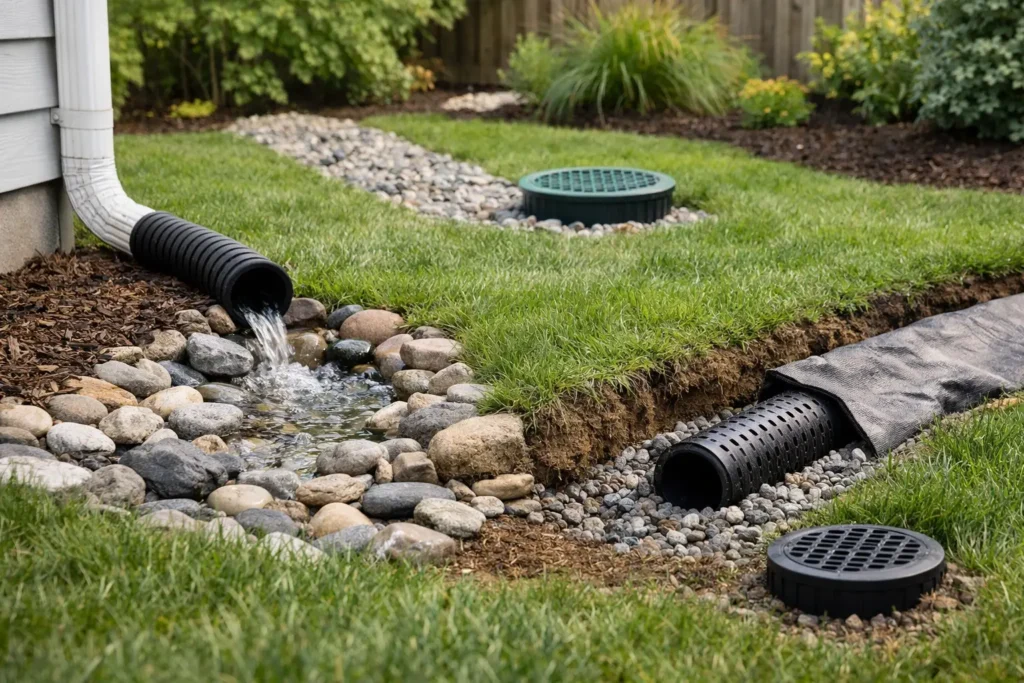
An agricultural drain, often called an agi drain, is a perforated pipe laid in a gravel-filled trench and wrapped in filter fabric. It collects water moving through the soil and carries it towards an approved outlet. It is a practical choice for persistently soggy lawn, waterlogged garden beds and areas at the bottom of a slope.
Agi drains work below ground, so they can preserve an open lawn or garden layout. However, they are not a cure for water that has nowhere legal or practical to go. The outlet, pipe fall, trench depth and surrounding material all matter. If the pipe is installed flat or becomes clogged with fine soil, it will not perform as intended.
Use channel drains around hard surfaces
Channel drains are long, narrow surface drains usually installed along the edge of paving, concrete, driveways or outdoor entertaining areas. Their grated top captures runoff before it reaches a doorway, pools against a wall or crosses a walking surface.
They are useful where a patio or concrete area cannot be regraded enough to create natural runoff. The trade-off is that grates need occasional cleaning. Leaves, mulch and silt can build up over time, especially near garden beds. Selecting a grate that suits the expected foot or vehicle traffic is also essential.
Connect and manage roof water properly
Downpipes can release a surprising amount of water into a small section of yard. If a downpipe finishes beside a wall or discharges onto soft soil, it can quickly create erosion and ponding. Connecting roof water into an appropriate stormwater system, where permitted, is often one of the most effective improvements a property owner can make.
Some homes may suit a rainwater tank that captures roof runoff for garden use, with appropriate overflow arrangements for heavy rain. This can reduce demand on mains water while supporting a healthier garden. It still needs to be designed so an overflowing tank does not simply move the drainage problem to another part of the yard.
Improve soil and garden bed construction
Compacted clay is common across many Melbourne suburbs. It holds water near the surface, which can make turf muddy and plant roots unhealthy. Soil improvement can help, particularly in garden beds, but it should be realistic. Adding a thin layer of topsoil over dense clay will not solve a drainage issue on its own.
Raised garden beds, well-placed organic matter and suitable plant selection can make wet areas more functional and attractive. In some cases, a shallow swale – a gently shaped, planted channel – can guide surface water while becoming part of the garden design. This option works best where there is enough space and the yard can be shaped without affecting nearby structures.
Plan drainage before the landscape is finished
Drainage is far easier and more cost-effective to install before new paving, artificial grass, decking or turf goes down. A quality landscape build considers levels, sub-base preparation, edging and water movement as one system. Trying to add pipes after a completed courtyard or lawn is possible, but it may require lifting and reinstating finished surfaces.
Artificial grass deserves particular attention. It is low maintenance, but it still requires a properly prepared base with correct falls and drainage layers. Water that cannot pass through or escape from the base may lead to odours, movement or visible pooling. Natural turf also benefits from careful preparation, including suitable soil depth and a finished level that allows runoff without stripping the lawn during rain.
Retaining walls are another area where drainage cannot be treated as an afterthought. Water pressure building behind a wall can cause staining, bowing or structural failure. Drainage aggregate, agricultural pipe and appropriate outlets behind the wall help relieve this pressure and protect the investment.
Avoid quick fixes that shift the problem
Filling a puddle with extra soil may temporarily hide it, but the water will often reappear at the new lowest point. Likewise, cutting a trench without an outlet can leave a muddy channel through the yard. Directing water beneath a fence or into a neighbour’s yard can create disputes and may not comply with local requirements.
Be cautious with DIY drainage near electrical services, gas lines, irrigation, pools and building footings. Before excavation, confirm the location of underground services and consider whether the work could affect drainage around the home. Where stormwater connections or significant earthworks are involved, check the applicable council and regulatory requirements.
A practical process for a lasting result
A drainage project should begin with a site assessment, not a generic product choice. The assessment should consider levels, soil type, existing outlets, roof water, paving, retaining walls and how the property will be used. From there, the work can be staged around the broader landscape plan.
For example, a backyard renovation may involve regrading the lawn area, installing agi drains beneath a low section, adding channel drainage beside new concrete and connecting downpipes before turf and planting are completed. This coordinated approach avoids duplicate excavation and delivers a cleaner finish.
Australian Landscape Hub helps property owners across Melbourne plan drainage alongside practical landscape improvements, from paving and retaining walls to lawns, gardens and irrigation. With the right preparation, drainage becomes part of a backyard that is easier to use, easier to maintain and ready for Melbourne’s changing weather.
The best time to address a wet backyard is before the next landscape project, not after the first heavy rain exposes what sits beneath it.