
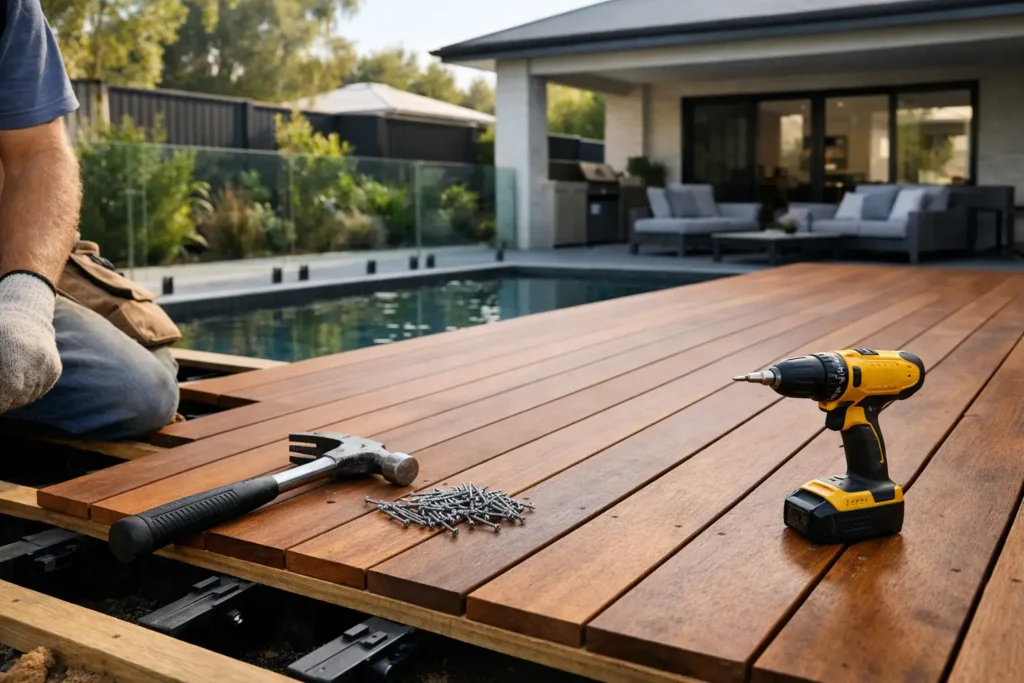
A new deck can turn an unused patch of backyard into the place where family dinners run late, kids spread out after school, and weekends feel easier. But decking installation is not simply a matter of laying boards over soil. The quality of the structure underneath, the way water moves around it, and the material selected all determine whether the finished space stays safe, level and attractive for years.
For Melbourne property owners, the right approach starts with the site. Sloping blocks, reactive soil, established trees, drainage paths and access restrictions can all affect the design and cost of a deck. A well-planned deck should look like a natural extension of the property while standing up to changing weather, daily use and ongoing maintenance.
Start With How You Want to Use the Deck
The best deck designs solve a practical problem before they make a visual statement. A compact deck outside a kitchen may be designed for morning coffee and a barbecue, while a larger raised platform can create a proper entertaining zone overlooking the garden. Commercial properties may need an entry deck or outdoor break area that handles higher foot traffic and supports safe access.
Think about furniture, circulation and shade early. A dining setting needs enough space to pull chairs out without blocking the doorway. If the deck will sit beside a pool, lawn or artificial grass, the transitions between surfaces should be planned so the whole yard feels connected rather than pieced together.
Height also matters. A low deck can provide a clean, ground-level finish, but it still needs airflow beneath it and a stable base. A raised deck can make the most of views or manage a sloping site, although it may require steps, balustrades and more detailed structural work. The right option depends on the block, the intended use and applicable building requirements.
Choosing Materials for Decking Installation
Timber and composite decking are both strong options, but they suit different priorities. There is no single best material for every Melbourne backyard.
Natural timber brings warmth, character and an authentic finish that works beautifully with planting, stone and other landscape materials. Hardwood species are valued for their durability, while treated pine can be a more cost-effective choice for some projects. Timber does require regular care. Cleaning, oiling or staining helps preserve its appearance and reduces the effects of weathering.
Composite boards are made to provide a consistent, low-maintenance surface. They do not need oiling, and many homeowners prefer them where time for upkeep is limited. They are available in a broad range of colours and grain styles, which can make it easier to match existing fencing, cladding or outdoor finishes.
The trade-off is that composite decking often has a higher upfront material cost and can retain heat in direct summer sun. Timber may involve more maintenance, but it can be repaired, refreshed and altered with greater flexibility over time. A practical recommendation considers the budget, the amount of sun the deck receives, expected traffic and the look you want to achieve.
The Frame Matters as Much as the Boards
A deck is only as reliable as its subframe. The visible boards receive the attention, but the posts, bearers, joists, fixings and footings carry the load. Poor support can lead to movement, squeaks, uneven boards and premature failure.
The subframe needs to suit the ground conditions and the deck’s height. On some sites, concrete footings are required to establish stable support. On others, careful levelling and suitable structural framing may be the main priority. Durable fixings are equally important, particularly where moisture exposure is likely. Hidden fastening systems can offer a sleek finish, while face-fixed boards may be a practical and cost-effective solution depending on the material.
Drainage Is Not an Afterthought
Water is one of the main reasons decks deteriorate sooner than expected. A deck should not trap water against the house, cover existing drainage problems or direct runoff towards neighbouring properties. The surface and surrounding landscape need to work together.
A small gap between boards allows water to drain through, but the area below the deck also needs consideration. Adequate clearance and ventilation help timber dry out, reducing the risk of moisture damage. Where a deck adjoins the home, flashing, falls and drainage details must be handled carefully to protect the building.
This is where an end-to-end landscaping approach makes a real difference. If the project also includes paving, retaining walls, lawn, garden beds or irrigation, the levels should be designed as one system. Correct drainage is far easier to build in from the start than to repair after a heavy downpour exposes an issue.
Permits, Boundaries and Safety Requirements
Before work begins, check whether the proposed deck requires a building permit or other approval. Requirements can vary based on deck height, size, location, proximity to boundaries and whether balustrades or stairs are included. Properties with easements, overlays or unusual site conditions may also need further consideration.
A professional site assessment helps identify these issues before materials are ordered or construction is underway. It also provides an opportunity to confirm underground services, access for equipment and any impact on existing trees or structures.
Safety should be built into the design rather than added as a late adjustment. Stairs should be comfortable and consistent underfoot, balustrades need to meet relevant requirements where they are needed, and edge details should suit the people using the space. This is especially important for family homes, rental properties, hospitality venues and commercial sites where the deck may see frequent use.
A Clear Process Delivers Better Results
Quality decking installation follows a considered sequence. The process begins with a consultation to understand the property, budget, style preferences and intended use. From there, the design can establish dimensions, levels, materials and the way the deck connects with the wider landscape.
Once the scope is confirmed, the site is prepared and the structural base is installed. This stage should not be rushed. Accurate footings, level framing and sound connections create the foundation for a clean finished surface. Boards are then laid with correct spacing and alignment, followed by steps, screening, handrails or finishing details where required.
The final check should focus on more than appearance. The deck should feel solid underfoot, have clean edges and transitions, drain properly, and leave the outdoor area tidy and ready to use. A contractor who manages related landscaping works can also coordinate the finishes around the deck, avoiding the delays and mismatched levels that can occur when several trades are working separately.
Maintenance That Protects Your Investment
Every deck benefits from regular inspection and basic care. Sweep away leaves and debris, particularly between boards and around drainage points. Keep garden beds and mulch from building up against the frame, and trim back plants that hold moisture against the surface.
Timber decks should be cleaned and recoated as needed, with the frequency depending on exposure and the product used. Look for signs of splintering, loose fasteners, fading or water staining before they become larger issues. Composite decks need less finishing work, but they should still be washed periodically and checked for surface marks, movement and debris in the gaps.
For busy households and property managers, planned maintenance is often the simplest way to protect the original workmanship and keep the area presentable year-round.
Build a Deck That Belongs in the Landscape
The strongest deck projects do more than add square metres of outdoor flooring. They make the backyard easier to use, improve the relationship between the home and garden, and give the property a more finished appearance. Australian Landscape Hub brings more than 20 years of hands-on landscaping experience to projects across Melbourne’s north-west, with practical advice from the first site discussion through to the completed outdoor space.
Choose materials and a design that suit the way you actually live or operate, not just what looks good in a display photo. With sound preparation and skilled construction, a deck becomes the reliable setting for everyday outdoor life.