Artificial turf earns its reputation as a low-maintenance surface, but it is not a no-maintenance surface. Knowing how to maintain artificial turf properly keeps fibres upright, drainage working and the whole area looking clean through Melbourne’s dry summers, wet winters and busy weekends outside.
A few regular habits will prevent most issues before they become costly. Whether the turf is installed around a family backyard, rental property, childcare area, business frontage or commercial outdoor space, the goal is the same: remove debris, manage spills quickly and protect the surface from unnecessary wear.
Start With a Simple Weekly Clean
Leaves, twigs, soil and windblown rubbish settle into synthetic grass just as they do on a natural lawn. Left in place, organic debris breaks down, holds moisture and can encourage weeds to grow around the edges or through small gaps in the base.
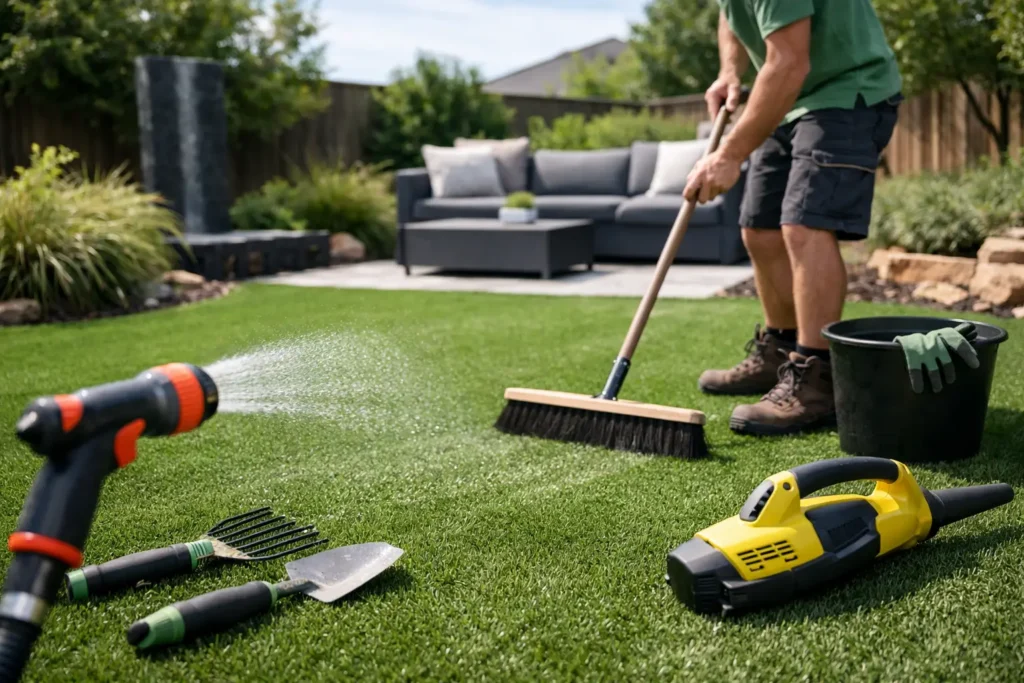
Use a leaf blower on a low setting, a plastic rake or a soft outdoor broom to clear the surface once a week. A blower is often the quickest option for larger areas, while a broom gives more control around garden beds, decking, paving and furniture. Avoid sharp metal rakes, as they can pull at fibres or catch the backing.
For smaller residential lawns, a quick sweep before entertaining is usually enough. Commercial sites, pet areas and heavily used courtyards may need attention several times a week, particularly in autumn when leaf drop is heavier.
How to Maintain Artificial Turf With Regular Brushing
Artificial grass fibres naturally flatten over time, especially on walkways, in front of sliding doors, around outdoor tables and where children or pets play. Brushing lifts the pile and restores a more even, natural-looking finish.
Brush against the direction the fibres are leaning, using a stiff-bristled broom designed for synthetic turf. Work gently and consistently rather than forcing the brush down into the surface. For a typical home lawn, brushing every four to six weeks is a sensible starting point. Areas with frequent foot traffic may benefit from fortnightly brushing.
Do not mistake flat fibres for a failed installation. Some compression is normal. However, if the turf looks uneven across a large area, develops ripples or feels soft in isolated patches, it is worth having the base and drainage checked. Surface maintenance cannot correct a sub-base problem.
Watch the infill level
Many artificial turf systems use fine sand or another approved infill material to support the fibres, add weight and help the surface perform as intended. Brushing gradually redistributes this material, but high-use zones can lose infill over time.
If fibres are no longer standing well despite brushing, or the backing is becoming visible, a top-up may be needed. The right material and amount depend on the turf product and installation method. Using the wrong sand, or adding too much, can make the surface feel hard and affect drainage. This is one job where professional advice is worthwhile.
Rinse Dust, Pollen and Everyday Spills
A light rinse with a garden hose removes dust, pollen and fine debris that a blower or broom will not shift. In Melbourne’s warmer, drier periods, this can also freshen the surface and reduce static. There is no need to soak the lawn every day. A rinse every few weeks, or when it looks dusty, is generally sufficient for most households.
For food, drink or muddy footprints, act early. Blot liquid spills with a clean cloth, then rinse the area with cool water. Use a small amount of mild, pH-neutral detergent for sticky marks, followed by a thorough rinse. Avoid harsh solvents, bleach and strong acidic cleaners, which can discolour fibres or compromise the backing.
Oil, paint, chewing gum and construction residue need a more careful approach. Do not scrub aggressively or pour unknown chemicals onto the lawn. Test any suitable cleaner in an inconspicuous section first, and seek professional guidance for stains that do not lift easily.
Manage Pet Waste Without Damaging the Lawn
Artificial turf is a practical choice for many pet owners because it does not develop bare, muddy patches. It still needs regular cleaning to stay hygienic and odour-free.
Pick up solid waste promptly and rinse the affected spot. Urine passes through a well-built turf system, but frequent use in the same location can create odours if residues remain in the infill or drainage layer. Rinsing favourite pet spots several times a week is usually effective. For persistent smells, use an artificial-turf-safe enzymatic cleaner, following the product directions carefully.
Odour that returns quickly after cleaning may point to inadequate drainage, compacted infill or a poorly prepared base. Adding fragrance only masks the problem. Resolving the drainage or infill issue delivers a better long-term result.
Keep Weeds and Edges Under Control
Quality artificial turf installation includes a prepared base and weed-control measures, but no outdoor surface is completely immune to weeds. Seeds can settle on top of the turf, particularly beside garden beds, fences and paving. Small weeds may also appear at joins or perimeter edges.
Remove weeds by hand when they first appear. If treatment is needed, choose a suitable water-based weed killer and apply it sparingly, taking care around surrounding plants. Avoid broad spraying where possible. The more effective approach is to keep surrounding garden beds mulched, clear fallen leaves and inspect the edges every month.
Pay attention to edging as well. Loose pegs, lifting joins or gaps along concrete and garden borders allow debris into the system and create a trip risk. Early repairs are generally straightforward; waiting can allow a minor edge issue to spread.
Protect Turf From Heat, Weight and Sharp Objects
Artificial grass is durable, but it has limits. Reflected heat from windows, glass fencing, polished metal or reflective pool surrounds can create very hot spots. In severe cases, concentrated reflection can melt or distort synthetic fibres. If one patch becomes unusually hot or changes colour, identify the reflective source rather than repeatedly replacing the turf.
Outdoor furniture is fine on artificial grass, but move heavy items occasionally to avoid permanent compression. Use wide, stable furniture feet instead of narrow legs that concentrate weight. Avoid placing hot barbecues, fire pits, charcoal trays or heat-producing appliances directly on the turf. Heat damage is immediate and cannot be brushed out.
Keep sharp tools, nails and blades away from the surface. When gardening nearby, place a tarp down before cutting timber, mixing concrete or handling soil. Artificial turf is easy to clean, but preventing building residue and stains is far easier than removing them later.
Adjust Your Care Routine for Melbourne Weather
Winter rain is a useful test of drainage. Water should move through the surface without pooling for long periods. After a heavy downpour, inspect lower areas and joins. Puddles that remain after the surrounding ground has dried can indicate compacted infill, blocked drainage or an issue below the turf.
During summer, rinsing can cool the surface before children or pets use it. Synthetic grass can become hot in direct sun, particularly during heatwaves. Check the temperature with the back of your hand before use, and provide shade where practical. A hose-down offers short-term cooling, while shade structures and thoughtful landscape design provide a more reliable solution.
Autumn requires more frequent leaf removal, while spring is a good time to brush the fibres, check edges and deal with any weeds before they establish. This seasonal routine keeps maintenance manageable rather than turning it into a major clean-up.
Know When Professional Maintenance Helps
Most day-to-day artificial turf care is straightforward. Professional maintenance becomes valuable when there are persistent odours, sinking sections, ripples, loose seams, drainage problems or widespread flattening that brushing will not fix.
For properties across Melbourne’s north-west, Australian Landscape Hub can assess the turf surface alongside its edging, drainage and surrounding landscaping. This matters because artificial grass performs best as part of a properly planned outdoor area, not as an isolated layer.
A clean, well-brushed lawn should look inviting without demanding your whole weekend. Give the surface a little consistent attention, respond quickly to spills and drainage changes, and it will continue to provide a tidy, usable outdoor space year after year.